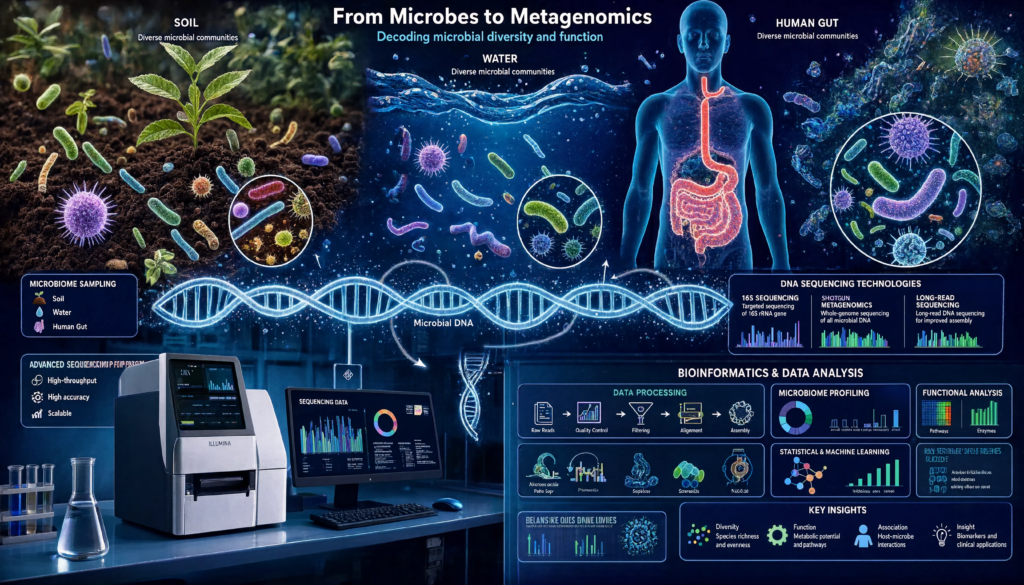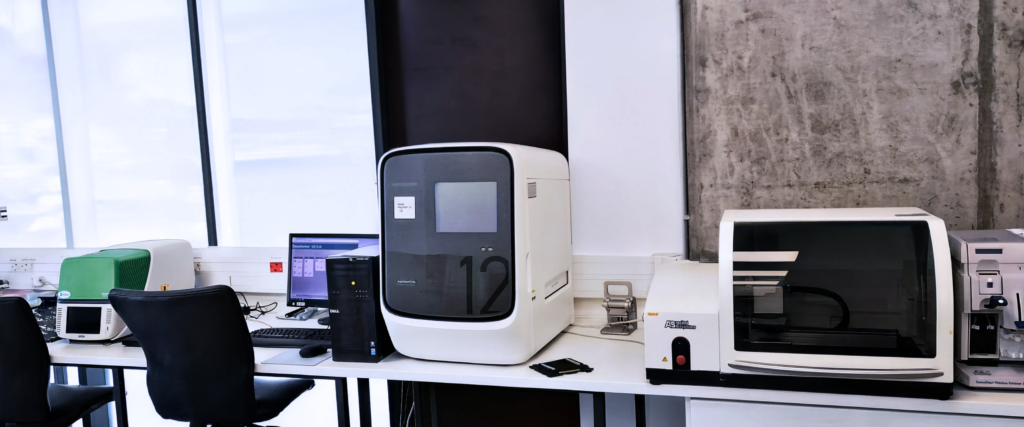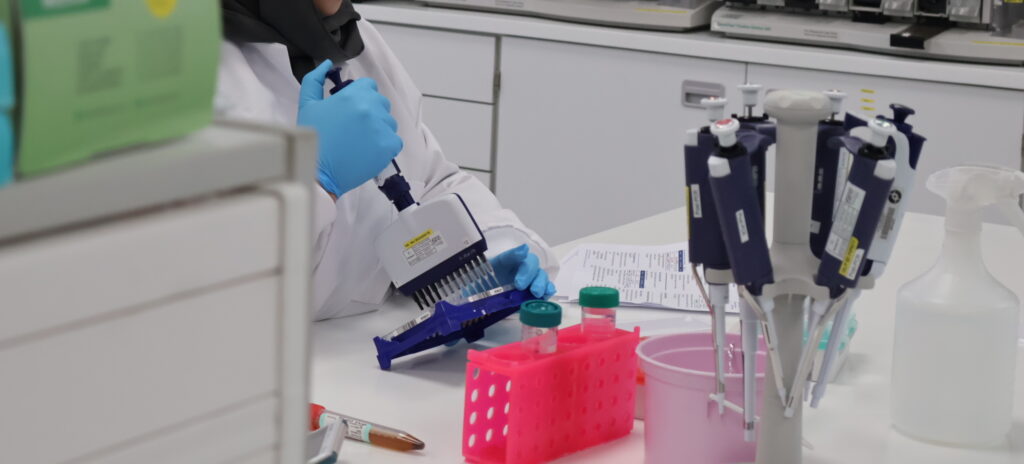
The quality of sequencing data begins long before a sample reaches the sequencing instrument.
Whether a research project involves whole-genome sequencing, RNA sequencing, amplicon sequencing or metagenomics, the quality and suitability of the starting material can influence every stage that follows. A sequencing platform can generate millions of reads, but the resulting data is only useful when the input material is appropriate for the intended workflow.
This is why sample preparation and quality control (QC) are critical components of a successful sequencing project.
Quality control allows researchers and laboratory teams to assess whether a sample meets the requirements for downstream processing and sequencing. It can help identify issues such as insufficient concentration, degradation, contamination or unsuitable fragment characteristics before resources are invested in library preparation and sequencing.
What Does Sample Quality Mean in Sequencing?
Sample quality is not simply about having “enough” DNA or RNA.
A sample must be suitable for the specific sequencing workflow being used. Depending on the project, this can involve assessing factors such as:
- Concentration – whether sufficient nucleic acid is available for the intended workflow
- Purity – whether contaminants could interfere with downstream reactions
- Integrity – whether DNA or RNA remains sufficiently intact
- Fragment size – whether the DNA or RNA has characteristics appropriate for the selected library preparation
- Specificity – particularly for targeted or amplicon workflows, where the expected product needs to be confirmed
- Contamination – whether unwanted DNA, RNA or other substances are present
The importance of each parameter depends on the sequencing application. A sample requirement for whole-genome sequencing may differ from one prepared for RNA sequencing or targeted amplicon sequencing.
Why Is Quality Control Important Before Sequencing?
Sequencing workflows involve several stages between the original biological sample and the final dataset.
A simplified workflow is:
Biological sample → Nucleic acid extraction → Quality control → Library preparation → Sequencing → Data QC → Bioinformatics analysis
Quality control provides an opportunity to identify problems before they progress through this workflow.
If unsuitable material is taken forward, problems can potentially affect library preparation, sequencing performance and the quality or interpretability of the resulting data.
By assessing samples early, researchers can make informed decisions about whether material is ready for sequencing, requires additional processing or should be replaced.
Quality Control Can Help Prevent Low-Quality Outputs
Significant costs can be associated with sample collection, extraction, library preparation, sequencing and computational analysis.
Identifying a poor-quality sample before sequencing can therefore prevent resources from being spent on material that may not produce the desired outcome.
For example, a sample with inadequate nucleic acid concentration may require additional extraction or concentration. A degraded sample may require a different workflow or, depending on the research objective, a replacement sample.
The specific response depends on the type of sample, sequencing application and quality-control results.
DNA Quality Control
For DNA sequencing projects, researchers generally need to consider both the quantity and quality of the extracted DNA.
DNA concentration indicates how much DNA is present, while DNA purity indicates how free the DNA is from contaminants that may interfere with downstream applications. DNA integrity, separately, indicates whether the DNA strands remain intact or have been degraded.
The required DNA characteristics can vary considerably depending on the sequencing technology and application.
For example, long-read sequencing can place particular emphasis on preserving DNA integrity when long molecules are important to the research objective. Oxford Nanopore guidance for different sequencing workflows specifies different input requirements depending on the library preparation method and intended application.
This illustrates an important principle:
There is no single definition of a “good” sequencing sample.
The sample must be evaluated against the requirements of the specific sequencing workflow.
RNA Quality Control
RNA requires additional consideration because it is generally more susceptible to degradation than DNA.
For RNA sequencing projects, researchers may need to consider:
- RNA concentration
- RNA purity
- RNA integrity
- The type of RNA being investigated
- Whether unwanted DNA or other contaminants are present
- The requirements of the selected RNA-sequencing workflow
RNA integrity can be particularly important because degradation can affect the representation of transcripts in the resulting sequencing library.
The appropriate quality threshold depends on the experimental design and sequencing workflow. Researchers should therefore establish sample requirements before collection and processing, rather than treating QC as an afterthought.
Quality Control in Amplicon Sequencing
Quality control is also important when preparing targeted sequencing libraries.
In an amplicon sequencing workflow, researchers need to confirm that the expected target has been successfully amplified and that the resulting material is suitable for downstream library preparation and sequencing.
CPGR’s practical NGS training workflow demonstrates several QC stages during a 16S amplicon workflow, including initial 16S amplicon QC, bead cleanup, second PCR setup, second-amplicon QC, pooling and qPCR quality control before the sequencing stage.
This illustrates why sample preparation should be viewed as a series of controlled steps rather than a single laboratory procedure.
Quality Control Is More Than One Test
It can be tempting to think of QC as simply measuring DNA or RNA concentration.
In reality, a single measurement rarely provides enough information to determine whether a sample is ready for sequencing.
A sample may have sufficient concentration but still contain contaminants. Similarly, a sample may have an acceptable concentration but show degradation or other characteristics that make it unsuitable for a particular workflow.
For this reason, sample assessment should consider the combination of measurements relevant to the intended sequencing application.
The goal is not simply to obtain a passing QC result. It is to establish whether the sample is fit for purpose.
How Are Samples Assessed Before Sequencing?
Quality control involves several checks designed to determine whether nucleic acid and sequencing libraries are suitable for the next stage of the workflow. The exact tests required depend on whether the project involves DNA, RNA, amplicons or another sequencing application.
Rather than relying on a single measurement, researchers can assess multiple characteristics of the sample to build a more complete picture of its suitability.
1. Measuring DNA and RNA Concentration
The first consideration is often how much nucleic acid is available.
Concentration measurements help determine whether there is sufficient DNA or RNA to proceed with the intended library preparation workflow. Insufficient input may affect the ability to generate an appropriate sequencing library, while excessive input may also require adjustment depending on the protocol.
However, concentration alone does not establish sample quality. A sample can contain sufficient nucleic acid while still having issues with purity or integrity.
This is why concentration should be considered alongside other QC measurements.
2. Assessing Purity and Potential Contamination
DNA and RNA extracts can contain substances carried over from the original biological material or introduced during extraction and processing.
Depending on the sample type, potential contaminants may include proteins, salts, residual reagents or other compounds that can interfere with downstream enzymatic reactions.
Purity measurements can therefore provide an indication of whether the extracted nucleic acid is sufficiently clean for the intended application.
For challenging biological samples, appropriate extraction methods and QC procedures are particularly important because sample composition can vary substantially between matrices.
3. Evaluating Nucleic Acid Integrity
Integrity refers to how intact the DNA or RNA molecules are.
This is particularly relevant for applications where the size and continuity of nucleic acid molecules influence the sequencing workflow.
For RNA sequencing, degradation can alter the representation of transcripts available for library preparation. For long-read sequencing, preserving long DNA or RNA molecules can be particularly important because the technology is capable of generating reads from individual long molecules.
Consequently, researchers should consider integrity alongside concentration and purity when determining whether a sample is suitable for sequencing.
4. Determining Fragment Size
Fragment size relates to integrity. Different library preparation methods may require DNA or RNA molecules within particular size ranges. Fragment-size assessment can therefore help identify whether the material matches the requirements of the selected protocol.
Fragmentation of nucleic acids refers to the breakdown or shearing of DNA or RNA into smaller fragments, which can occur during extraction or PCR-based processes. While fragmentation is sometimes intentional and required for certain analytical procedures, excessive or unintended fragmentation may indicate that the nucleic acids have been exposed to enzymatic, chemical, or environmental stress, resulting in degradation and potentially insufficient intact templates for downstream analysis.
This becomes especially relevant during library preparation, where the resulting fragments may need to be assessed before sequencing.
The appropriate fragment characteristics are therefore determined by the sequencing technology and library preparation strategy, rather than by a single universal standard.
5. Amplicon-Specific Quality Control
Amplicon sequencing introduces additional QC considerations because the sequencing target has been deliberately amplified.
Researchers need to establish whether the expected amplicon has been generated and whether the resulting material is suitable for subsequent processing.
This staged approach helps ensure that material progresses through the workflow only after the relevant quality checks have been performed.
6. Library Quantification and QC
Quality control does not stop once the original DNA or RNA has passed its initial assessment.
After library preparation, the sequencing library itself may need to be quantified and assessed before it can be pooled or loaded onto a sequencing platform.
In the standard workflow, qPCR setup and QC are followed by a pre-sequencing checklist and preparation before sequencing.
The distinction between sample and library QC:
Sample QC asks:
Is the starting material suitable?
Library QC asks:
Has the sequencing library been prepared appropriately for the next stage?
Both are important because problems can arise at different points in the workflow.
Why QC Requirements Differ Between Sequencing Applications
There is no universal checklist that applies identically to every sequencing project.
A researcher preparing DNA for long-read sequencing may have different priorities from someone preparing RNA for transcriptomics or amplicons for microbiome profiling.
For example:
| Sequencing application | Important considerations |
|---|---|
| Whole-genome sequencing | DNA quantity, purity, integrity and suitability for the selected library preparation |
| Long-read sequencing | Preservation of sufficiently long, high-quality nucleic acid molecules |
| RNA sequencing | RNA quantity, purity and integrity, alongside the type of RNA being studied |
| Amplicon sequencing | Successful target amplification, amplicon quality and library preparation |
| Microbiome sequencing | Sample matrix, extraction quality, target strategy and downstream workflow |
| Metagenomics | DNA quality and quantity, alongside requirements of the selected sequencing approach |
The important principle is that QC should be designed around the research question and sequencing workflow.
What Happens When a Sample Does Not Meet QC Requirements?
A failed QC result does not always mean that a research project has to stop.
The appropriate response depends on the reason for the failure and the type of sample.
Depending on the workflow, options may include:
- Repeating or optimising the extraction
- Cleaning or concentrating the nucleic acid
- Adjusting the library preparation approach
- Repeating amplification where appropriate
- Requesting a replacement sample
- Selecting a sequencing strategy better suited to the available material
This is why it is valuable to assess sample requirements before sample collection and submission.
Understanding the requirements of the intended sequencing workflow can help researchers plan collection, storage, extraction and handling procedures accordingly.
Quality Control as Part of Experimental Design
QC should not be treated as a final laboratory checkpoint.
It is better viewed as a continuous component of the sequencing workflow, beginning with sample collection and continuing through extraction, library preparation and sequencing.
For researchers, this means considering questions such as:
- What sample type am I working with?
- What sequencing technology will I use?
- What input does the library preparation require?
- What QC measurements are needed at each stage?
- What will happen if the sample does not meet the requirements?
Answering these questions before laboratory processing can help reduce avoidable delays and ensure that the resulting sequencing data are aligned with the research objectives.
From Sample QC to Sequencing: How CPGR Supports Quality
For researchers, preparing samples for sequencing involves more than extracting DNA or RNA and sending it to a sequencing platform. The quality of the starting material, the selected workflow and the checks performed throughout library preparation can all influence the success of the sequencing project.
At the Centre for Proteomic and Genomic Research (CPGR), sample preparation and quality control form part of the broader genomics workflow, supporting researchers as samples progress towards sequencing and downstream analysis.
Nucleic Acid Extraction and Sample Assessment
The first step is obtaining nucleic acid that is appropriate for the intended sequencing application.
Different biological sample types can present different extraction challenges. Soil, stool, tissue, water and other sample matrices may contain substances that can affect nucleic acid recovery or downstream reactions.
This means that extraction and quality assessment need to be considered together with the research question and sequencing strategy.
CPGR’s genomics workflows support nucleic acid extraction and sequencing applications across different sample types, with the appropriate workflow determined by the project requirements.
Matching Sample Quality to the Sequencing Strategy
A sample that is suitable for one sequencing application may not necessarily be suitable for another.
For example, researchers interested in long-read sequencing may need to prioritise the preservation of long DNA molecules, while RNA sequencing projects require consideration of RNA integrity and the specific RNA population being investigated.
Similarly, targeted amplicon workflows require successful amplification of the intended region before the material progresses to sequencing.
This makes it important to determine the sequencing strategy before finalising sample preparation requirements.
QC Throughout the Sequencing Workflow
Quality control continues after the initial DNA or RNA assessment.
Library preparation introduces additional stages where the resulting material can be evaluated before sequencing. In CPGR’s practical 16S sequencing workflow, this includes amplicon QC, bead cleanup, additional PCR, further QC, pooling, qPCR and a final pre-sequencing preparation step.
This staged approach helps identify potential issues before the sequencing run and demonstrates why QC is best understood as an ongoing process rather than a single measurement.
Sequencing and Data Quality
Once a sequencing library has passed the relevant checks, it can proceed to sequencing.
However, quality control does not end when the sequencing instrument generates the reads.
The sequencing run itself produces metrics that can be reviewed to assess whether the run performed as expected.
This creates a broader quality pathway:
Sample QC → Library QC → Sequencing QC → Data QC → Bioinformatics → Biological interpretation
Each stage provides an opportunity to identify issues and assess whether the data are suitable for the research objectives.
A Practical Pre-Sequencing Checklist
Before submitting samples for sequencing, researchers can consider the following questions:
Sample
- What biological material is being submitted?
- Has the sample been stored and handled appropriately?
- Is sufficient material available?
Nucleic Acid
- Has the DNA or RNA been extracted appropriately?
- Is the concentration sufficient for the intended workflow?
- Has purity been assessed?
- Has integrity been assessed where relevant?
Sequencing Strategy
- What sequencing technology will be used?
- Is the project whole-genome, targeted, transcriptomic or metagenomic?
- Does the selected workflow have specific input requirements?
Library Preparation
- Does the material meet the requirements for the selected library preparation?
- For amplicon sequencing, has the target region been successfully amplified?
- Has the resulting library undergone the required QC?
Before Sequencing
- Has the library been appropriately quantified?
- Has the final library passed the relevant QC checks?
- Are samples correctly identified and prepared for pooling where required?
After Sequencing
- Will sequencing metrics and data quality be assessed?
- Is an appropriate bioinformatics workflow available for the resulting data?
Planning these requirements in advance can help researchers avoid preventable delays and ensure that the sequencing workflow is aligned with the intended biological question.
Why Quality Control Matters
Sequencing technologies continue to generate increasingly large and detailed datasets. However, more sequencing data does not automatically mean better research outcomes.
If the starting material is degraded, contaminated or otherwise unsuitable for the intended workflow, generating additional sequencing reads may not resolve the underlying problem.
Quality control therefore plays a foundational role in sequencing research. It helps researchers establish whether their samples, libraries and sequencing runs are producing data that are appropriate for the questions they want to answer.
For this reason, sample preparation should be considered part of the experimental design rather than an administrative step before sequencing.
Conclusion
Successful sequencing begins before the sequencing instrument is switched on.
From DNA and RNA extraction to concentration, purity, integrity, library preparation and final data assessment, quality control provides checkpoints throughout the sequencing workflow.
The appropriate QC requirements depend on the sample type, research question, sequencing technology and library preparation strategy. A workflow designed for long-read sequencing may have different priorities from one designed for RNA sequencing or targeted amplicon sequencing.
At CPGR, sample preparation and quality control are integrated into the broader genomics workflow, with QC considerations extending from amplicon and library preparation through to sequencing and data evaluation.
Ultimately, investing in sample quality and appropriate QC helps researchers build a stronger foundation for the stages that follow: sequencing, bioinformatics and biological interpretation.
Ready to prepare your samples for sequencing?
Speak to CPGR about your sample type, sequencing requirements and quality-control considerations before starting your project. https://calendly.com/justin-naicker-cpgr/cpgr-chat