August is Appendix Cancer Awareness Month, providing an opportunity to raise awareness of a rare and often poorly understood cancer while highlighting the importance of continued research.
Appendix cancer, also known as appendiceal cancer, develops when abnormal cells grow in the appendix. Although the appendix is a small structure connected to the large intestine, tumours that develop there can vary considerably in their biology, behaviour and clinical characteristics.
Because appendiceal cancer is rare and may not cause obvious symptoms in its early stages, it can be difficult to recognise. Some cases are discovered unexpectedly following surgery for suspected appendicitis or during investigations for another condition.
But awareness is only part of the picture.
For rare cancers, research is essential to understanding what makes these tumours different, how they develop and which molecular characteristics may influence their behaviour. Advances in genomics and molecular profiling are providing researchers with new ways to investigate these questions.
What Is Appendix Cancer?
The appendix is a small, finger-shaped pouch attached to the cecum, which forms part of the large intestine. Appendiceal cancer occurs when cells within the appendix become abnormal and begin growing uncontrollably.
Appendiceal cancers are not a single disease. They include different tumour types, including epithelial cancers and neuroendocrine tumours, each with distinct biological characteristics. Some epithelial tumours produce mucin, a jelly-like substance. When mucin accumulates within the abdomen, it can contribute to a condition called pseudomyxoma peritonei (PMP).
This diversity is one reason why research into appendix cancer is important. Understanding the molecular and genetic differences between tumour types can provide researchers with a clearer picture of how these cancers develop and behave.
Why Is Appendix Cancer Considered a Rare Cancer?
Appendiceal cancer is uncommon compared with many other gastrointestinal cancers. Its rarity can create challenges for research, including smaller patient populations and limited datasets compared with cancers that occur more frequently.
However, rare does not mean insignificant.
Studying rare cancers can reveal biological characteristics that may otherwise remain poorly understood. It can also contribute to broader cancer research by showing how tumours that develop in the same part of the body can have very different molecular profiles.
Research has already demonstrated that appendix cancers can be genetically distinct from colorectal and other gastrointestinal cancers. In a study by Ang et al. (2018), researchers analysed 703 appendiceal cancer specimens and identified molecular differences across appendiceal tumour subtypes, with the aim of identifying potential biomarkers and therapeutic targets.
These findings reinforce an important principle in modern cancer research: understanding where a tumour develops is only part of understanding the disease. Researchers also need to understand its molecular characteristics.
Recognising and Diagnosing Appendix Cancer
One of the challenges of appendix cancer is that it may not cause noticeable symptoms when it first develops. Because of this, some appendiceal tumours are discovered incidentally after an appendix has been removed for suspected appendicitis or during imaging performed for another reason.
When symptoms do occur, they can vary depending on the type of tumour and whether the cancer has spread. Possible symptoms include:
- Abdominal pain or discomfort
- Abdominal bloating or an increase in abdominal size
- A mass in the abdomen
- Nausea or vomiting
- Feeling full soon after beginning to eat
These symptoms can also be caused by many conditions that are not cancer. Persistent or unusual symptoms should therefore be assessed by a healthcare professional rather than assumed to indicate appendix cancer.
How Is Appendix Cancer Diagnosed?
There is no single test that can diagnose every type of appendix cancer. Depending on the circumstances, healthcare professionals may use a combination of imaging, laboratory tests, surgical procedures and examination of tissue by a pathologist.
Imaging: CT and MRI scans can help doctors examine the appendix and surrounding areas and determine whether there are signs of disease elsewhere in the abdomen.
Pathology: Examining tumour tissue under a microscope helps determine whether cancer is present and identify the type and characteristics of the tumour. Because obtaining a biopsy directly from the appendix can be difficult, tissue from another area may sometimes be examined if there is concern that the cancer has spread.
Laboratory testing: Blood tests may also be used to assess certain proteins and support staging and treatment planning.
Accurate diagnosis is particularly important for a rare cancer such as appendiceal cancer because different tumour types can behave differently. Understanding the type and extent of disease provides an important foundation for determining appropriate clinical management.
Why Genomic Research Matters in Appendix Cancer
For a rare and biologically diverse cancer, understanding the tumour at a molecular level can provide researchers with information that cannot be obtained from its location or appearance alone.
Genomic research allows scientists to examine the DNA changes within tumour cells and investigate how these alterations may influence tumour development, progression and behaviour.
This is particularly relevant to appendiceal cancer because research has shown that its molecular characteristics can differ substantially from those of colorectal cancer, despite the two cancers occurring in closely related parts of the gastrointestinal system.
What Have Researchers Discovered?
A landmark genomic study by Ang et al. (2018), analysed 703 appendiceal cancer specimens, comparing mutation profiles across different appendiceal tumour subtypes and with colorectal cancer. Researchers identified differences in the frequency of important genetic alterations, including KRAS, GNAS, APC and TP53. The findings demonstrated that appendiceal cancers have distinct molecular profiles and highlighted the potential value of molecular profiling in identifying prognostic biomarkers and therapeutic targets.
These findings demonstrate why rare cancers should not simply be assumed to behave like more common cancers.
Instead, researchers can use genomic data to ask more specific questions:
- Which genetic alterations are associated with particular tumour subtypes?
- Which molecular features are associated with tumour progression?
- Can genetic or molecular signatures help distinguish different disease subtypes?
- Which biomarkers could potentially support future research into diagnosis, prognosis or treatment?
- How do appendiceal tumours differ from other gastrointestinal cancers at a molecular level?
Answering these questions requires continued research and access to high-quality molecular data.
From Genomic Data to Deeper Biological Understanding
Genomics is only one part of the wider OMICS landscape.
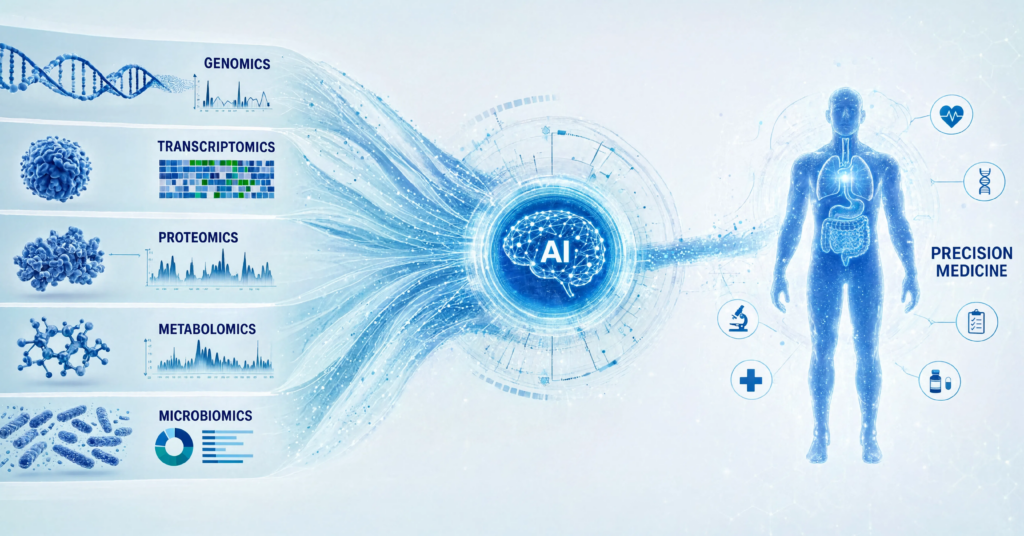
Researchers can combine genomic information with other molecular datasets to investigate cancer from multiple biological perspectives. Transcriptomics can provide information about gene activity, while proteomics can help researchers investigate changes at the protein level. Bioinformatics then provides the computational framework needed to analyse and interpret these complex datasets.
This integrated approach, often referred to as Multi-OMICS, can provide a more comprehensive view of tumour biology than studying a single molecular layer in isolation.
For rare cancers such as appendix cancer, these approaches may be particularly valuable as researchers work to build larger datasets and identify biological patterns that could otherwise remain difficult to detect.
Supporting Cancer Research Through Genomics
At the Centre for Proteomic and Genomic Research (CPGR), genomics, proteomics and bioinformatics capabilities support research into complex biological questions across human health and disease.
Cancer research is one area where molecular data can help researchers investigate genetic variation, biological mechanisms and potential biomarkers. By generating and analysing high-quality molecular datasets, research organisations can contribute to the growing evidence base needed to better understand diseases that remain under-researched.
For appendix cancer, continued research is especially important because its rarity and biological diversity create challenges that cannot always be addressed using approaches developed for more common cancers.
Conclusion
Appendix Cancer Awareness Month is an opportunity not only to raise awareness of a rare cancer, but also to highlight the research needed to understand it.
Appendix cancer is not a single, uniform disease. Different tumour types can have different molecular characteristics, and genomic studies have already demonstrated important differences between appendiceal cancers and colorectal cancer.
As genomics, bioinformatics and Multi-OMICS technologies continue to advance, researchers have more opportunities to investigate these differences at a deeper level. The goal is not simply to generate more data, but to turn molecular information into biological insight that can support future discoveries.
For rare cancers, every new dataset can contribute to a better understanding of the disease.
This August, Appendix Cancer Awareness Month provides an important reminder that increasing awareness and advancing research go hand in hand.