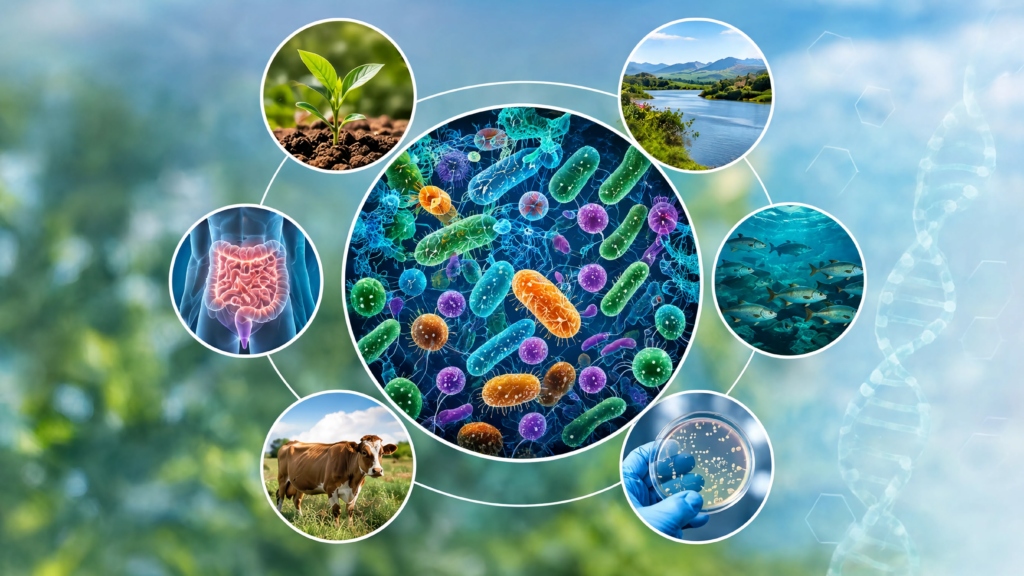
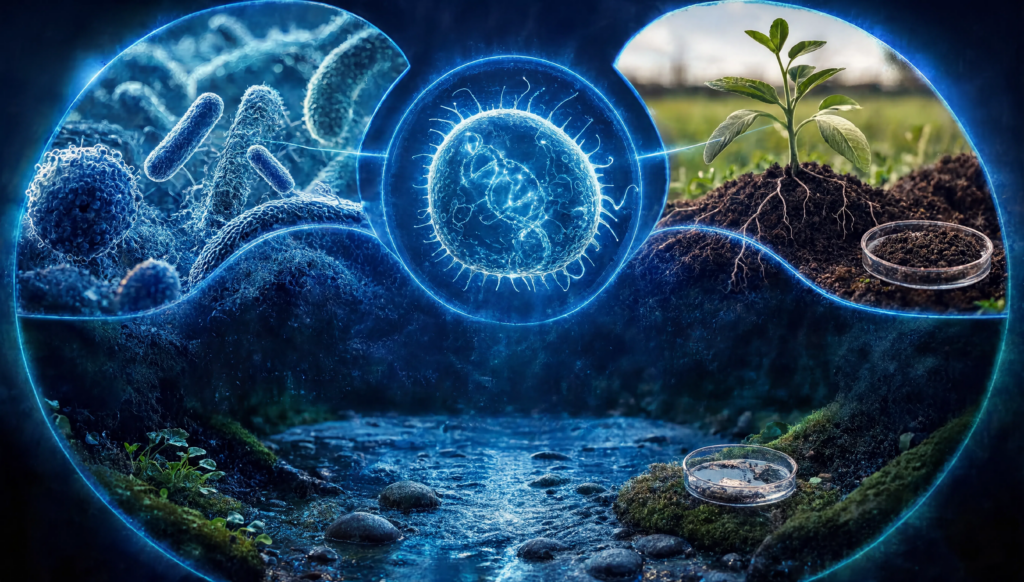
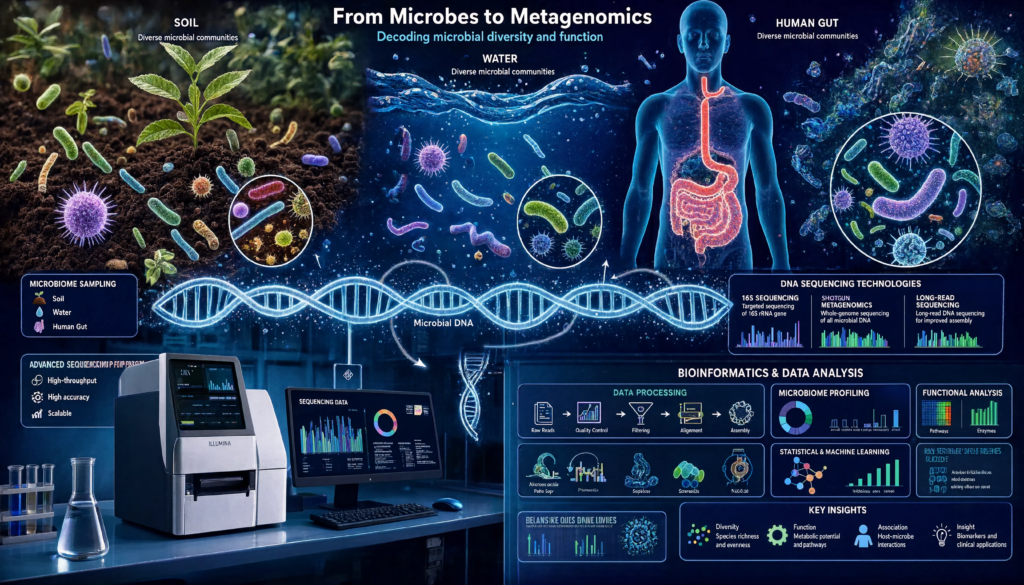
Microorganisms are everywhere. They inhabit soil, oceans, rivers, plants, animals, and the human body, influencing everything from ecosystem health to disease susceptibility. Yet most microbial species cannot be easily cultured in a laboratory, making them difficult to study using traditional microbiological methods.
Metagenomics has transformed this field by allowing researchers to sequence all genetic material present within a sample, providing a comprehensive view of entire microbial communities without the need for cultivation.
Whether studying soil biodiversity, wastewater systems, infectious diseases, or the human microbiome, metagenomics enables researchers to investigate the hidden microbial world in unprecedented detail.
However, while metagenomics has revolutionised microbial research, traditional sequencing approaches still face important limitations.
The Challenges of Traditional Metagenomic Sequencing
For many years, metagenomic studies relied primarily on short-read sequencing technologies.
Short-read platforms generate millions of DNA fragments, typically ranging from 100 to 300 base pairs in length. These fragments are then assembled computationally into larger genomic sequences.
While highly accurate and cost-effective, short-read sequencing presents several challenges when analysing complex microbial communities.
Fragmented Genome Assemblies
Complex microbial samples often contain hundreds or thousands of species. Short DNA fragments can make it difficult to reconstruct complete genomes, leading to fragmented assemblies.
Difficulty Distinguishing Similar Species
Closely related microorganisms may share large portions of their genomes. Short reads often lack sufficient context to accurately separate these species.
Challenges Identifying Mobile Genetic Elements
Plasmids, bacteriophages, antimicrobial resistance genes, and genomic islands can be difficult to assign to their correct microbial hosts using short-read data alone.
Limited Structural Information
Large structural variants, repetitive genomic regions, and complex genomic rearrangements are often missed or incorrectly assembled.
These limitations can restrict biological interpretation and slow scientific discovery.
What Is Long-Read Sequencing?
Long-read sequencing represents a major advancement in genomic technology.
Unlike traditional short-read platforms, long-read technologies can generate DNA sequences thousands, tens of thousands, or even hundreds of thousands of base pairs in length.
By capturing substantially longer stretches of DNA, researchers gain a more complete view of microbial genomes and genomic architecture.
Long-read sequencing technologies have become increasingly important in fields such as:
- Microbial genomics
- Human genomics
- Cancer research
- Environmental genomics
- Agricultural biotechnology
- Infectious disease surveillance
For metagenomics specifically, long-read sequencing provides solutions to many of the challenges that have historically limited microbial community analysis.
Why Long-Read Sequencing Is Changing Metagenomics
Long-read sequencing is fundamentally changing how researchers study microbial ecosystems.
Improved Genome Assembly
Longer reads can span repetitive genomic regions and connect fragmented DNA sequences that would otherwise remain unresolved.
This enables researchers to reconstruct near-complete microbial genomes directly from environmental samples.
Better Species Resolution
Closely related microbial species can be distinguished more accurately, allowing researchers to characterise communities with greater confidence.
Enhanced Detection of Antimicrobial Resistance Genes
Antimicrobial resistance is one of the most significant global health threats.
Long-read sequencing can identify resistance genes and determine which organisms carry them, providing critical information for public health surveillance and infection control.
Accurate Characterisation of Mobile Genetic Elements
Plasmids and bacteriophages play major roles in gene transfer between microorganisms.
Long-read sequencing allows researchers to trace these elements more effectively and understand how traits such as antimicrobial resistance spread through microbial populations.
Discovery of Novel Microorganisms
Many microbial species remain undiscovered because traditional sequencing methods cannot fully resolve their genomes.
Long-read metagenomics enables researchers to recover high-quality genomes from previously unknown organisms, expanding our understanding of microbial diversity.
Key Applications of Long-Read Metagenomics
The impact of long-read sequencing extends across multiple research disciplines.
Human Health and Microbiome Research
Researchers can investigate how microbial communities influence health, disease progression, immune responses, and treatment outcomes.
Infectious Disease Surveillance
Long-read metagenomics supports rapid pathogen identification and detailed analysis of antimicrobial resistance mechanisms.
Environmental Monitoring
Water systems, marine ecosystems, wastewater treatment plants, and conservation projects can benefit from comprehensive microbial profiling.
Agricultural Genomics
Understanding soil microbiomes helps researchers improve crop productivity, nutrient cycling, and environmental sustainability.
Biotechnology Innovation
Novel enzymes, metabolic pathways, and industrially valuable microorganisms can be identified through high-resolution metagenomic analysis.
The Impact on African Research
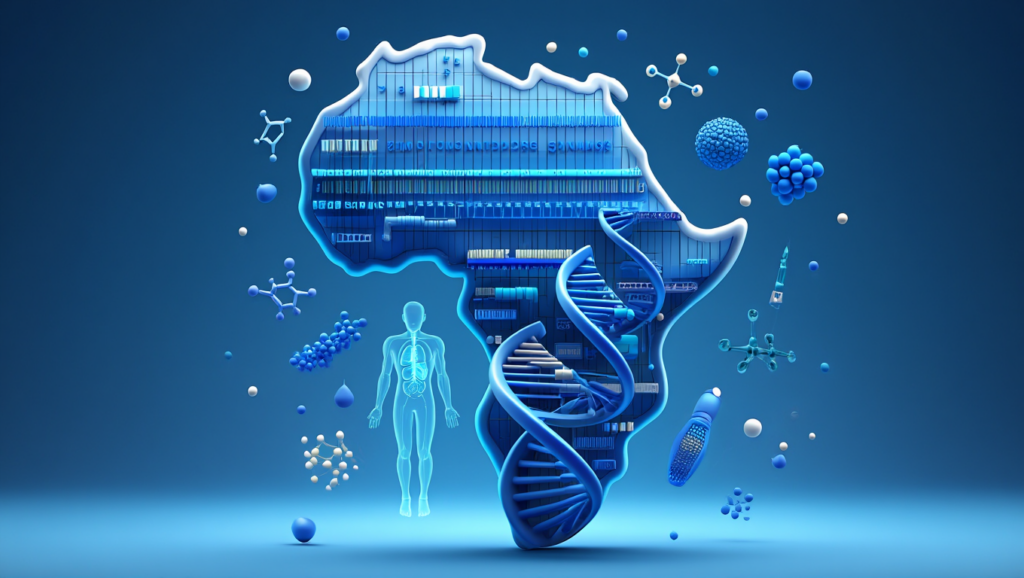
Africa contains some of the world’s most biologically diverse environments, yet many of its microbial ecosystems remain underexplored.
Long-read sequencing presents a unique opportunity for African researchers to investigate:
- Indigenous microbial biodiversity
- Agricultural ecosystems
- Emerging infectious diseases
- Antimicrobial resistance
- Environmental sustainability
As genomic infrastructure continues to expand across the continent, long-read metagenomics will play an increasingly important role in generating locally relevant scientific knowledge and supporting evidence-based decision-making.
For South Africa specifically, the technology offers significant opportunities across healthcare, agriculture, conservation, and biotechnology sectors.
Long-Read Sequencing and the Future of Microbial Discovery
The future of metagenomics is moving beyond simply cataloguing microbial species.
Researchers increasingly seek to understand how microbial communities function, interact, evolve, and influence their environments.
Long-read sequencing is accelerating this shift by enabling more complete genome reconstruction, improved taxonomic resolution, and deeper insights into microbial ecology.
As sequencing technologies continue to improve and computational tools become more sophisticated, long-read metagenomics will become an essential component of microbial research workflows worldwide.
The ability to recover complete genomes from complex communities is transforming how scientists investigate biodiversity, disease, environmental change, and biotechnology opportunities.
Long-read sequencing is transforming metagenomics research by providing a clearer and more complete view of microbial communities. By overcoming many of the limitations associated with traditional short-read sequencing, researchers can reconstruct genomes more accurately, identify novel organisms, investigate antimicrobial resistance, and generate deeper biological insights.
As microbial research continues to evolve, long-read metagenomics will play an increasingly important role in advancing scientific discovery, supporting public health initiatives, improving agricultural sustainability, and unlocking the full potential of the microbial world.
Book a Consultation with CPGR
Interested in exploring long-read sequencing for your metagenomics research project?
Contact the CPGR team to discuss your project requirements and discover how advanced genomic technologies can help accelerate your research goals: https://calendly.com/justin-naicker-cpgr/cpgr-chat