Decode the microbial world.
From who is there to what they can do.
There is a world living in and around us that we are only beginning to understand.
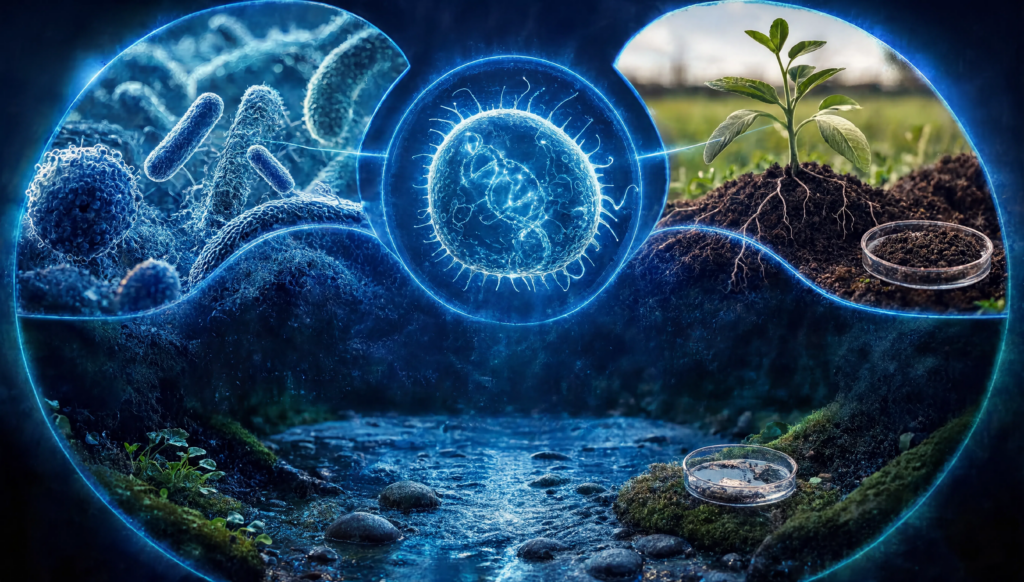
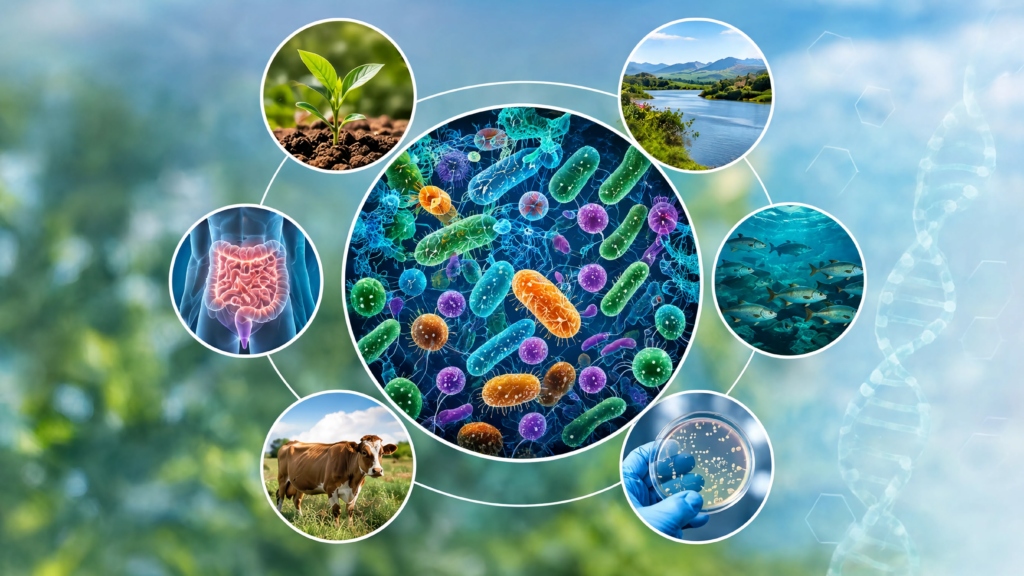
Bacteria, archaea, fungi and viruses exist as complex communities across our bodies, soils, water systems, agricultural environments and other biological ecosystems. These communities influence biological processes ranging from nutrient cycling and ecosystem health to host-microbe interactions and antimicrobial resistance.
For much of microbiology’s history, however, we could only study the organisms we could grow.
Many microorganisms do not grow readily under standard laboratory conditions. As a result, researchers have historically had access to only part of the microbial world.
Metagenomics changed the question.
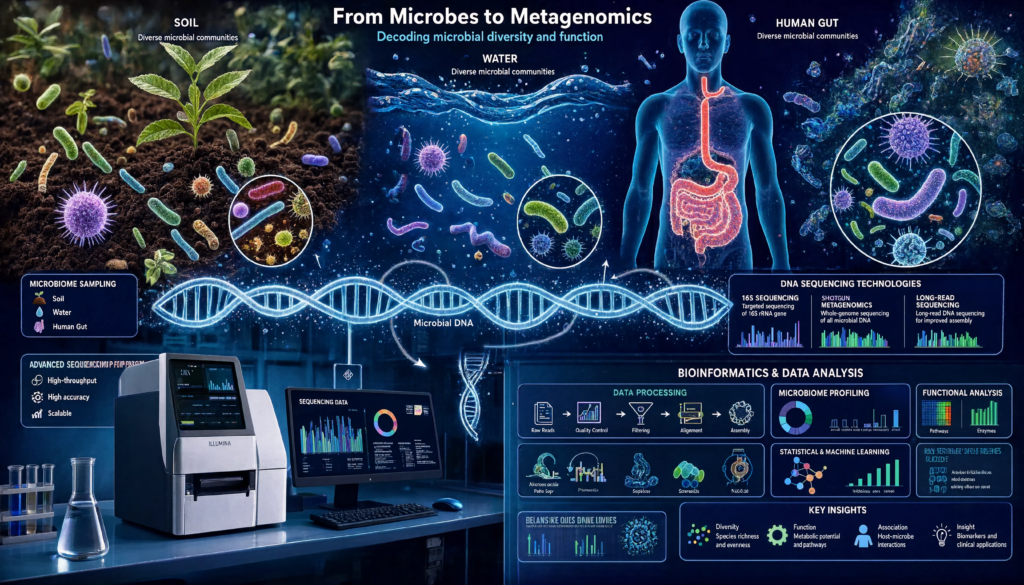
Instead of isolating organisms one at a time, researchers can sequence genetic material directly from a sample and investigate the microbial community as a whole.
The invisible becomes measurable.
And with long-read sequencing, researchers can gain greater sequence context to investigate microbial communities in more detail.
At CPGR, we combine microbiomics expertise, long-read sequencing and bioinformatics to help researchers move from a simple question who is there? towards a deeper understanding of what those communities may be capable of doing.
Two approaches. Different questions.
There is no single sequencing approach that is right for every microbiome study.
The starting point should always be the research question.
16S rRNA Sequencing
Who is there?
16S rRNA sequencing targets a conserved marker gene found in bacteria and archaea. By sequencing this region across a sample, researchers can characterise the bacterial and archaeal composition of a microbial community and compare communities across samples, environments or experimental conditions.
CPGR offers full-length 16S sequencing, covering the V1-V9 region using Oxford Nanopore long-read technology.
16S is particularly useful when your study focuses on:
- Microbial community composition
- Bacterial and archaeal diversity
- Comparing microbial communities between groups
- Changes in community composition over time
- Environmental or biological community profiling
The question:
Which microorganisms are present, and how does the community differ between samples?
Shotgun Metagenomics
Who is there and what can they do?
Shotgun metagenomics takes a broader approach. Rather than targeting a single marker gene, it sequences DNA from across the microbial community.
This can provide information about:
- Taxonomic composition
- Functional genes and pathways
- Antimicrobial resistance genes
- Virulence-associated genes
- Mobile genetic elements
- Microbial genome reconstruction
- Organisms that may be difficult to characterise using targeted approaches
Shotgun metagenomics is therefore particularly valuable when knowing who is present is only part of the question.
The question:
What organisms are present, what genetic functions do they carry, and what might that tell us about the biology of the community?
Why long reads matter
Both of CPGR’s microbiomics services are enabled by Oxford Nanopore long-read sequencing.
The significance of long reads is straightforward:
More sequence context can provide more information.
Short-read sequencing breaks DNA into relatively small fragments. While short reads are highly useful for many applications, complex microbial communities can present challenges when closely related organisms, repetitive regions, mobile genetic elements or gene-host relationships need to be resolved.
Long-read sequencing can preserve much larger stretches of the original DNA molecule.
This can help researchers:
- Resolve microbial genomes with greater continuity
- Improve taxonomic discrimination
- Investigate genomic regions that are difficult to assemble from short fragments
- Associate genes with the organisms carrying them
- Characterise plasmids and other mobile genetic elements
- Support genome reconstruction from complex microbial communities
For microbiomics, this additional sequence context can make the difference between identifying a signal and understanding where that signal sits within the microbial community.
From fragments to context.
That is the value of long-read sequencing.
From sample to insight
A microbiomics project does not begin with a sequencer.
It begins with a research question.
At CPGR, projects can be supported across the workflow from study design and sample preparation through sequencing and downstream analysis.
01 – Define the question
We begin with a study design consultation to understand your research objective, sample type, experimental design and the information you need from the data.
02 – Prepare the sample
Where required, CPGR can support DNA extraction and quality control before sequencing.
03 – Sequence
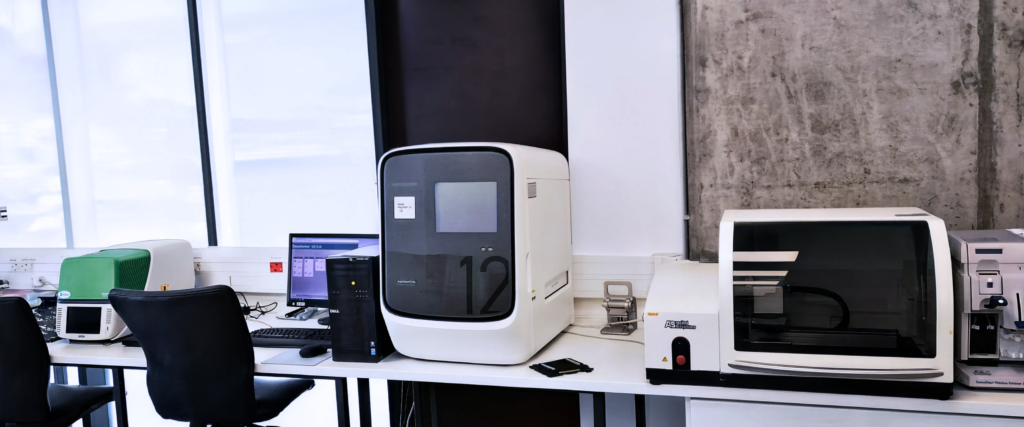
Samples are prepared for long-read sequencing and processed using CPGR’s Oxford Nanopore PromethION 24 platform.
04 – Analyse
Sequencing data can be processed through bioinformatics workflows to support taxonomic, functional and other project-specific analyses.
05 – Interpret
The goal is not simply to produce a FASTQ file.
It is to generate data that helps you answer the biological question that brought you to the project in the first place.
Microbiomics across research and innovation
Microbial communities are relevant across disciplines.
Agriculture & Aquaculture
Investigate the microbial communities associated with soil, plants, animals, water and aquatic production systems.
Potential questions include:
- How does microbial community composition change between environments?
- Which microorganisms are associated with healthy or stressed systems?
- What functional potential exists within an agricultural or aquatic microbiome?
- How does a treatment or environmental change affect the community?
Biomedical & Health Research
Microbiomics can provide another lens through which to investigate health, disease and host–microbe interactions.
Research applications can include:
- Gut microbiome studies
- Human-associated microbiomes
- Infectious disease research
- Antimicrobial resistance
- Host-microbe interactions
- Microbial community changes associated with disease or treatment
Biotechnology
Microbial communities represent an enormous source of biological diversity and functional potential.
Metagenomics can support research into:
- Microbial discovery
- Functional metagenomics
- Bioprospecting
- Fermentation
- Industrial microbiology
- Environmental biotechnology
- Microbial enzymes and other biological functions
Why African microbiomes matter
Microbiomes do not exist in isolation from their environments.
The microbial communities found in African soils, waters, food systems, agricultural environments and human populations reflect the ecological, environmental and biological contexts in which they exist.
Understanding these communities therefore requires more than generating sequence data. It requires building datasets that represent the environments and populations being studied.
For African researchers, microbiomics presents an opportunity not only to investigate individual research questions, but to contribute to a stronger body of African microbial knowledge.
At CPGR, we want to help make those investigations possible.
South African samples. Advanced sequencing infrastructure. Scientific expertise. Data generated for research questions that matter.
Start with the question
The right microbiomics approach depends on what you are trying to understand.
If you are unsure whether 16S sequencing or shotgun metagenomics is appropriate for your study, CPGR offers a free study design consultation to help you think through the research question, sample type, experimental design and sequencing approach.
Have a microbiomics question?
Book a study design consultation → https://calendly.com/justin-naicker-cpgr/cpgr-chat
Or explore:
16S vs Shotgun Metagenomics →https://www.cpgr.org.za/metagenomics-sequencing-16s-vs-shotgun-explained/
CPGR · Centre for Proteomic and Genomic Research
Cape Town, South Africa
ISO 9001:2015 · SARIR · DIPLOMICS · TIA Technology Platform