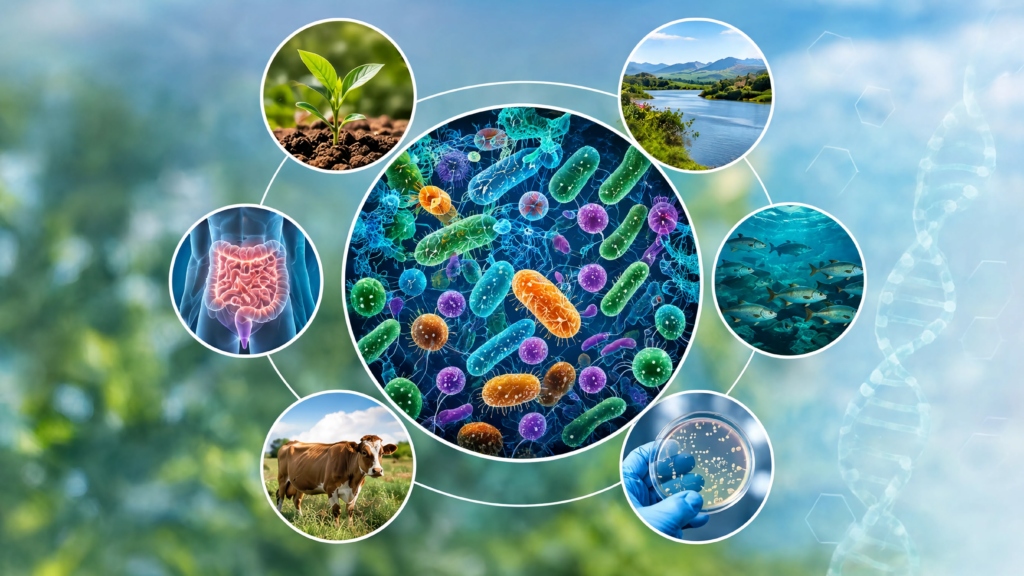
Microorganisms are found throughout the world, from the human body and agricultural environments to soil, freshwater and marine ecosystems. Understanding these microorganisms and the genetic information they carry can provide researchers with valuable insights into health, disease, agriculture and environmental processes.
Microbial genomics uses sequencing and genomic analysis to investigate the genetic composition of microorganisms and understand how their genomes relate to their characteristics, functions and interactions with their environments.
Advances in next-generation sequencing have made it possible to investigate microbial genomes at increasing scale and resolution. Researchers can examine individual microbial genomes, compare strains and populations, and analyse the genetic composition of complex microbial communities.
These approaches are contributing to research questions ranging from antimicrobial resistance and infectious disease to crop health, soil biology and environmental monitoring.
What Is Microbial Genomics?
Microbial genomics is the study of the genetic material of microorganisms, including bacteria, archaea, fungi, protists and viruses.
Rather than examining microorganisms only through their physical characteristics or laboratory growth, genomic approaches allow researchers to investigate their DNA directly.
Depending on the research question, this may involve sequencing:
- The genome of an individual microorganism
- Genomes from multiple microbial strains
- Specific genetic regions or markers
- The combined genetic material of microorganisms within a sample
The sequencing strategy therefore depends on what researchers need to discover.
For example, a study investigating a specific bacterial strain may require genomic information from that organism, while a study investigating the microorganisms present in soil may require an approach capable of examining a complex microbial community.
Why Is Microbial Genomics Important?
Microorganisms interact continuously with their hosts and environments. Their genetic characteristics can influence how they survive, adapt, interact with other organisms and respond to environmental pressures.
Genomic analysis provides a way to investigate these characteristics at the molecular level.
Researchers can use microbial genomic data to investigate questions such as:
- Which microorganisms are present?
- How are microbial strains genetically related?
- What genetic differences exist between populations?
- Which genes are associated to particular microbial traits?
- How do microbial communities change under different conditions?
- How do microorganisms adapt to their environments?
The answers can contribute to a better understanding of biological systems and support the development of applications in health, agriculture and environmental science.
Microbial Genomics in Health Research
Microbial genomics has become an important tool for investigating microorganisms associated with human health and disease.
Understanding Pathogens
Genomic sequencing can provide detailed information about the genetic composition of pathogens.
Researchers can compare pathogen genomes to investigate relationships between strains, identify genetic variation and understand how microbial populations change over time.
This can support research into infectious diseases by providing information that may not be apparent from conventional microbiological methods alone.
Investigating Antimicrobial Resistance
One major area of microbial genomic research is antimicrobial resistance (AMR).
Microorganisms can acquire genetic changes that allow them to survive exposure to antimicrobial drugs. Genomic analysis can help researchers investigate the genes and mutations associated with antimicrobial resistance and examine how resistance determinants occur across microbial populations.
Understanding these genetic patterns can contribute to research into the emergence, transmission and evolution of antimicrobial resistance.
Studying Host-Microbe Interactions
Microorganisms do not exist independently of their hosts.
The human body contains complex microbial communities that interact with host cells and the surrounding environment. Genomic approaches can help researchers investigate these microorganisms and explore how microbial interactions relate to biological processes.
This is particularly relevant to research into the microbiome, where sequencing can be used to investigate microbial communities associated with different health conditions or environmental factors.
From Genomes to Biological Insight
Generating microbial sequencing data is only one part of the research process.
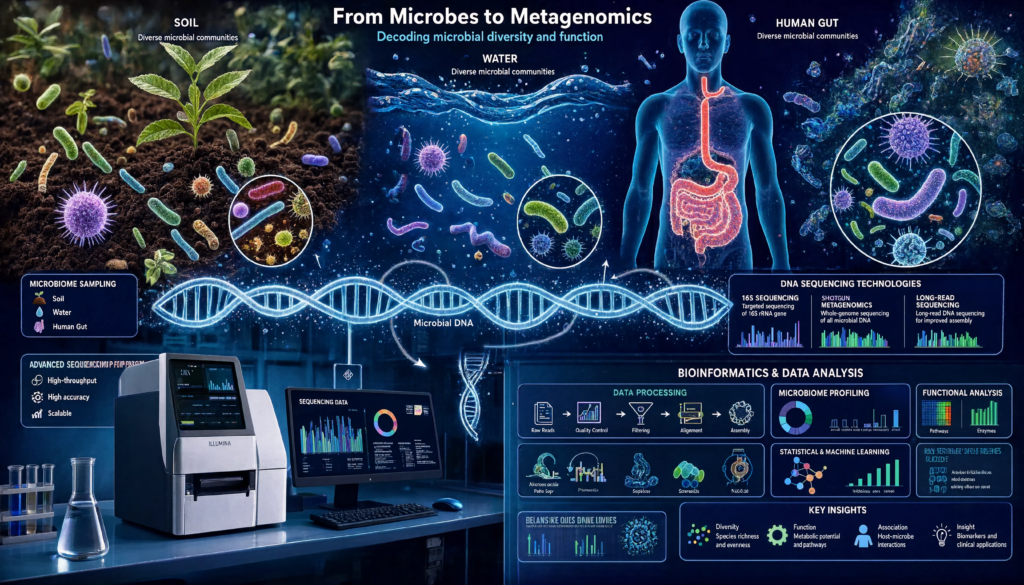
Once sequencing is complete, researchers need to process and analyse the resulting data to identify organisms, compare genomic variation and interpret biological patterns.
This is where bioinformatics becomes essential.
Depending on the sequencing strategy, microbial genomic analysis may involve:
Sequencing → Quality control → Sequencing → Bioinformatics → Interpretation
The appropriate analytical workflow depends on the research question and the type of sequencing data generated.
For example, researchers investigating a single microbial genome may focus on genome assembly and annotation, while community-based studies may require taxonomic profiling, diversity analysis or functional profiling.
This connection between sequencing and bioinformatics allows researchers to move from raw sequence data towards biological questions that can be investigated and tested.
Microbial Genomics in Agriculture
Microorganisms play important roles in agricultural ecosystems. They can influence soil nutrient cycling, plant health, disease development and interactions between plants and their surrounding environment.
Microbial genomics provides researchers with tools to investigate these organisms at the genetic level and explore how microbial communities and individual microorganisms contribute to agricultural systems.
Understanding Soil Microbial Communities
Soil contains diverse microbial populations that contribute to processes such as nutrient cycling and organic matter decomposition.
Genomic sequencing can help researchers investigate the microorganisms present in different soils and examine how microbial communities vary according to environmental conditions, crop types or agricultural practices.
This can provide insights into the biological processes occurring within agricultural soils and help researchers investigate relationships between microbial communities and soil health.
Plant-Microbe Interactions
Plants interact with microorganisms both above and below the soil surface.
Some microorganisms can support plant growth, while others may contribute to plant disease. Understanding the genetic characteristics of these microorganisms can help researchers investigate the mechanisms underlying plant-microbe interactions.
Microbial genomic approaches can therefore support research into beneficial microorganisms, plant-associated microbial communities and microbial factors associated with plant health.
Agricultural Disease Research
Microbial pathogens can have significant effects on animal/agriculture health and livestock.
Genomic sequencing allows researchers to investigate the genetic characteristics of microbial pathogens and compare strains associated with different outbreaks, hosts or environments.
This can help researchers investigate pathogen diversity, transmission patterns and genetic changes associated with disease.
Supporting Sustainable Agriculture Research
As agriculture faces challenges including soil degradation, changing environmental conditions and the need to improve resource efficiency, understanding the microbial component of agricultural ecosystems is increasingly important.
Microbial genomics can contribute to research investigating how microbial communities respond to different agricultural practices and environmental conditions.
This information may help researchers identify microbial characteristics or populations that could be relevant to future agricultural strategies.
Microbial Genomics in Environmental Research
Microorganisms are fundamental components of natural ecosystems. They participate in nutrient cycling, decomposition and interactions that influence the functioning of soil and aquatic environments.
Genomic approaches allow researchers to investigate microbial populations within these environments and examine how they respond to changing conditions.
Environmental Microbial Diversity
Environmental samples can contain complex microbial communities that may be difficult to characterise using traditional culture-based methods alone.
Sequencing-based approaches can provide researchers with information about microorganisms present within soil, freshwater, marine and other environmental samples.
Researchers can compare microbial communities across locations or time points to investigate changes in microbial diversity and composition.
Monitoring Environmental Change
Microbial communities can respond to changes in their surrounding environment.
Factors such as temperature, nutrient availability, pollution and other environmental pressures can influence microbial populations.
By comparing genomic data from samples collected under different conditions, researchers can investigate how microbial communities respond to environmental change.
This can provide molecular-level information that complements physical and chemical measurements of environmental systems.
Pollution and Bioremediation Research
Some microorganisms possess genetic characteristics that allow them to interact with or transform particular environmental compounds.
Microbial genomics can help researchers investigate the genes and pathways associated with these capabilities.
This is relevant to bioremediation research, where microorganisms are studied for their potential role in the breakdown or transformation of pollutants.
By examining microbial genomes and the functional potential of microbial communities, researchers can investigate which microbes have remediation potential.
Water and Marine Research
Microbial communities are also important components of freshwater and marine ecosystems.
Genomic sequencing can be used to investigate microbial diversity in water and sediment samples and examine how microbial communities vary between environments.
These approaches can support research into ecosystem health, biodiversity and environmental monitoring.
From Agricultural and Environmental Samples to Genomic Data
Agricultural and environmental samples can be particularly complex because they often contain DNA from many different organisms.
The sequencing strategy therefore needs to be matched to the research question.
A researcher interested primarily in which targeted microorganisms are present may use species-specific marker sequencing to characterise microbial communities.
A researcher seeking broader information about the genetic and functional potential of a microbial community may require a metagenomic approach.
For studies focused on a specific microbial organism, whole-genome sequencing may provide a more appropriate level of genomic information.
Selecting the right approach at the beginning of a project can help ensure that the resulting data answer the intended biological question.
Choosing a Microbial Genomics Approach for Your Research
Microbial genomics encompasses a range of sequencing strategies, and the most appropriate approach depends on the biological question, sample type and level of genomic information required.
Targeted Sequencing
Targeted sequencing focuses on selected genomic regions or marker genes.
For microbial community research, approaches such as 16S rRNA for bacterial/archaeal and ITS for fungal metabarcoding can be used to investigate specific groups of microorganisms and compare community composition across samples.
This can be useful when researchers primarily want to characterise the microbial taxa detected in a sample and how their relative representation differs between samples.
Whole-Genome Sequencing
Whole-genome sequencing provides a more comprehensive view of the genome of an individual microorganism.
Rather than focusing on selected regions, researchers can investigate a much broader range of genetic information. This can support studies of microbial evolution, genetic variation, strain characterisation and genes associated with particular biological characteristics.
Whole-genome sequencing can therefore be appropriate when the research question focuses on the genetic characteristics of a specific microbial organism or strain.
Metagenomic Sequencing
Metagenomic sequencing takes a broader approach by sequencing all genomes within a samples.
Depending on the experimental and analytical approach, this can provide information about microbial DNA detected as well as their potential functional capabilities.
Metagenomics can therefore be particularly useful when researchers want to investigate microbial communities beyond taxonomic composition.
Matching the Technology to the Research Question
The choice between these approaches should be driven by what the research needs to discover.
| Research question | Potential approach |
|---|---|
| Which microbial groups are present? | Targeted marker sequencing |
| How does microbial community composition differ between samples? | Targeted sequencing or metagenomics |
| What genetic characteristics does a specific microbial strain have? | Whole-genome sequencing |
| What genes and functional potential are present within a microbial community? | Metagenomic sequencing |
| How does a microbial population vary genetically? | Whole-genome or targeted sequencing, depending on the research question |
These approaches are not necessarily competing technologies. They can provide outputs for different research objectives and may be complementary within a broader research programme.
Microbial Genomics at CPGR
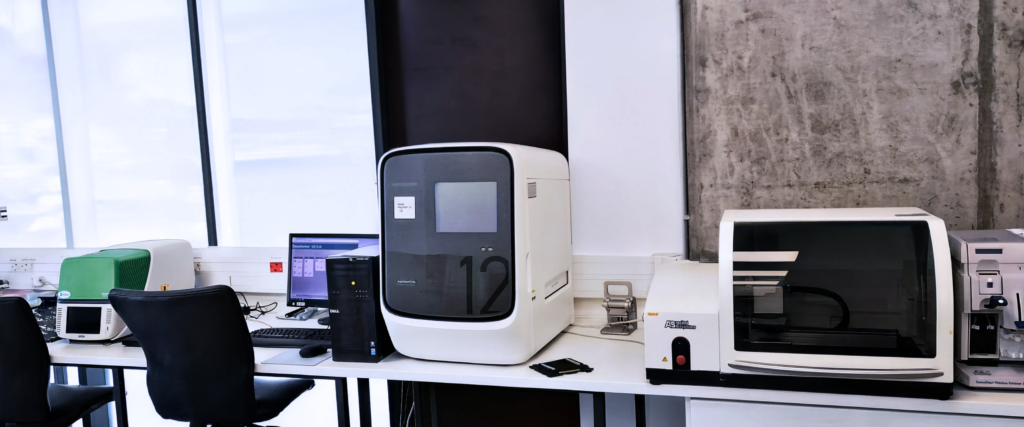
At the Centre for Proteomic and Genomic Research (CPGR), microbial genomics can be supported within our Next Generation Sequencing and Bioinformatics platforms.
The appropriate sequencing strategy depends on the research question and the type of information required. Targeted sequencing can support microbial community profiling, while broader sequencing approaches can be used when researchers require more comprehensive genomic information.
Sequencing is only one component of the process. Once data have been generated, bioinformatics is required to process sequencing reads and extract meaningful biological information.
For example, microbial sequencing datasets may require quality control, taxonomic analysis, comparative analysis or other downstream computational workflows depending on the study design.
This combination of sequencing and bioinformatics helps researchers move from raw genomic data towards interpretable results.
Key Considerations Before Starting a Microbial Genomics Project
Before beginning a microbial genomics project, researchers should consider:
1. What is the biological question?
Clearly defining the research objective is the first step in selecting a sequencing strategy.
2. What sample type is being analysed?
Soil, water, tissue, stool and other biological or environmental samples can contain very different microbial communities and may require different sample preparation and extraction approaches.
3. Do you need targeted or broad genomic information?
If the study focuses on a defined marker, targeted sequencing may be appropriate. If broader genomic or functional information is required, whole-genome or metagenomic approaches may provide broader genomic information.
4. What level of resolution is required?
Researchers should consider whether they need information at the community, species, strain or genomic level.
5. What bioinformatics analysis will be required?
The sequencing strategy should be considered alongside the downstream analysis. Different datasets require different computational workflows, and the intended analysis should be considered before sequencing begins.
From Microbial Genomics to Biological Insight
Microbial genomic research is increasingly moving beyond simply identifying microorganisms.
By combining sequencing with bioinformatics and comparative analysis, researchers can investigate who is present, how microbial populations differ and what genetic characteristics may contribute to their behaviour or interactions with their environment.
In health research, this can support investigations into pathogens, antimicrobial resistance and host-microbe interactions.
In agriculture, it can contribute to research into soil microbial communities, plant-microbe interactions and agricultural disease.
In environmental research, it can support studies of biodiversity, ecosystem change, pollution and microbial processes involved in bioremediation.
The value of microbial genomics therefore lies not only in generating sequence data, but in using those data to answer specific biological questions.
Conclusion
Microorganisms influence biological systems across human health, agriculture and the environment. Their genomes contain information that can help researchers understand their diversity, evolution, interactions and functional potential.
Microbial genomics provides a range of approaches for investigating this information, from targeted marker sequencing to whole-genome and metagenomic sequencing.
The most appropriate strategy depends on the research question, sample type, required resolution and intended analysis. Selecting the right approach before sequencing can help researchers generate data that are relevant to the biological question they are trying to answer.
At CPGR, genomic sequencing and bioinformatics capabilities can support researchers throughout this process from generating high-quality sequencing data to applying appropriate downstream analysis.
Exploring microbial genomics for your research?
Talk to CPGR about your sample, research question and sequencing requirements to identify an approach suited to your project. Book a free consultation: https://calendly.com/justin-naicker-cpgr/cpgr-chat