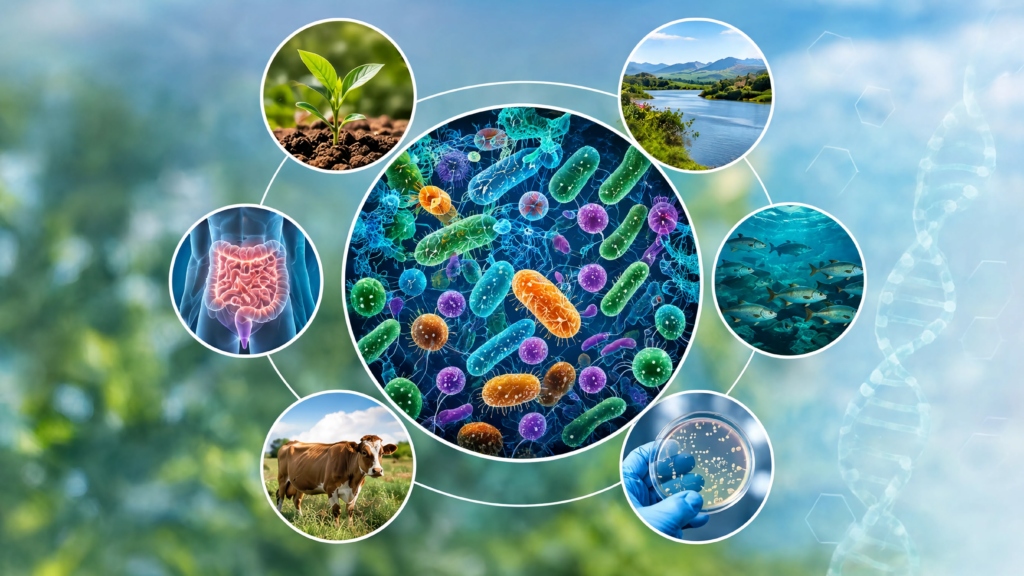
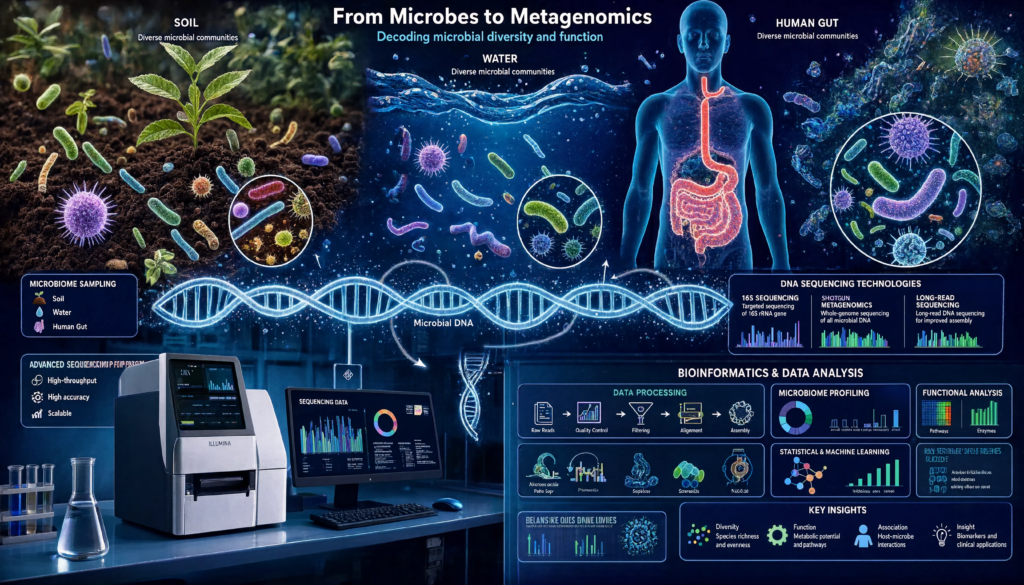
The microbiome plays a fundamental role in human health, agriculture and environmental ecosystems. Communities of bacteria, fungi, viruses and other microorganisms influence digestion, immune function, nutrient cycling and disease susceptibility, making microbiome research one of the fastest-growing fields in life sciences.
Advances in sequencing technologies have transformed our ability to characterise microbial communities, allowing researchers to identify which microorganisms are present within a sample. However, understanding who is there is only the beginning.
Microbial communities are highly dynamic. Their behaviour is influenced by interactions between microorganisms, their host and the surrounding environment. These interactions involve multiple biological processes occurring simultaneously, from gene expression and protein activity to metabolite production and immune responses.
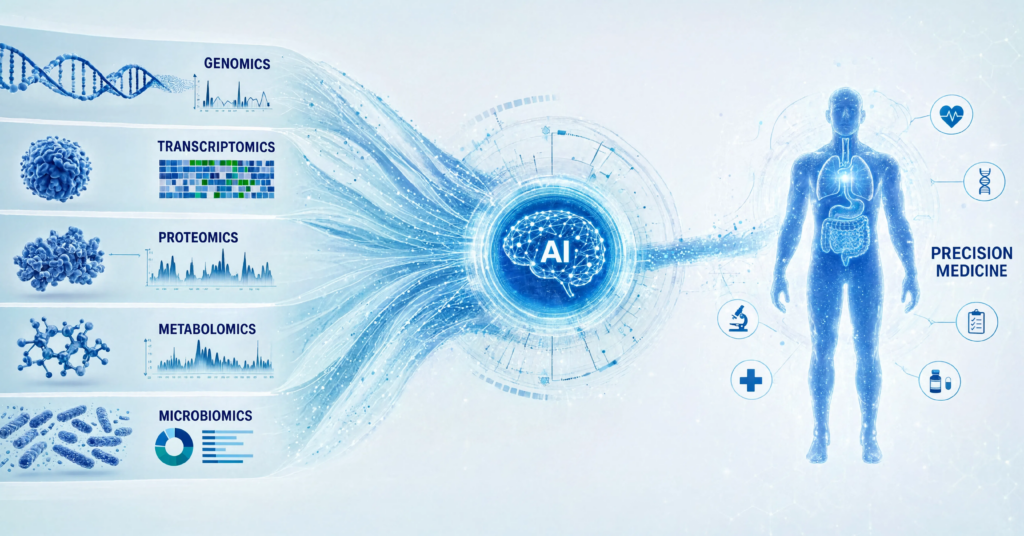
To better understand this complexity, researchers are increasingly adopting multi-OMICs approaches. By integrating genomics, transcriptomics, proteomics, metabolomics and bioinformatics, scientists can move beyond describing microbial composition to investigating how microbial communities function, communicate and influence biological systems.
Recent reviews have highlighted that combining multiple OMICS layers provides a far more comprehensive understanding of host–microbiome interactions than analysing any single dataset in isolation. At the same time, they note that successful integration depends on robust computational methods, standardised workflows and high-quality multi-OMICs datasets.
In this article, we explore how multi-OMICs integration is reshaping microbiome research, the insights it enables and why this systems-level approach is becoming increasingly important across biomedical, agricultural and environmental sciences.
Why Studying the Microbiome Is More Complex Than Ever
For many years, microbiome research focused primarily on identifying which microorganisms were present in a sample. Technologies such as 16S rRNA sequencing and shotgun metagenomics enabled researchers to characterise microbial communities with unprecedented detail, revealing the remarkable diversity of microorganisms inhabiting the human body, soils, oceans and other environments.
These approaches revolutionised microbiome science, but they also raised new questions.
Knowing which microorganisms are present does not necessarily explain what they are doing, how they interact with one another or how they influence their host. Two microbial communities may appear similar in composition while functioning very differently because of changes in gene expression, protein production or metabolic activity.
This shift in thinking has transformed microbiome research from describing microbial composition to understanding microbial function.
Researchers are now asking increasingly sophisticated questions:
- Which microbial genes are actively expressed?
- How do microorganisms communicate with each other?
- Which proteins drive important biological processes?
- What metabolites influence host physiology?
- How does the host respond to microbial activity?
Answering these questions requires looking beyond a single OMICS layer. By integrating multiple molecular datasets, researchers can investigate microbiomes as dynamic biological systems rather than static collections of microorganisms.
Moving Beyond Metagenomics: Why Multi-OMICs Matters
Metagenomics has revolutionised microbiome research by enabling scientists to identify the microorganisms present within a sample and explore their genetic potential. However, while metagenomic sequencing reveals what microorganisms could do, it does not necessarily show what they are actively doing at a given moment.
Microbial communities are constantly responding to changes in their environment, interacting with one another and communicating with their host. Understanding these dynamic processes requires researchers to examine multiple layers of biological information simultaneously.
This is where multi-OMICs integration provides a significant advantage.
Rather than relying on a single dataset, multi-OMICs combines complementary molecular information to generate a more complete understanding of microbial ecosystems and their biological activity.
Each OMICS Layer Tells Part of the Story
Every OMICS technology contributes a different perspective to microbiome research. Individually, each provides valuable information, but together they reveal how microbial communities function as interconnected biological systems.
Genomics and Metagenomics: Understanding Who Is There
Genomics and metagenomics provide the foundation for microbiome research by identifying the microorganisms present within a sample and revealing the genes they possess.
These approaches help researchers investigate:
- Microbial diversity and community composition.
- Functional genes within microbial populations.
- Evolutionary relationships between microorganisms.
- Potential biological capabilities of the microbiome.
While this information is essential, the presence of a gene does not necessarily mean it is active.
Transcriptomics: Understanding Which Genes Are Active
Transcriptomics examines RNA molecules to determine which genes are being actively expressed under specific conditions.
In microbiome research, transcriptomic analysis enables researchers to investigate how microbial communities respond to environmental changes, disease or interactions with their host.
This provides insight into:
- Active biological pathways.
- Microbial responses to environmental stress.
- Host immune responses.
- Changes in microbial activity during disease progression.
Rather than measuring potential function, transcriptomics reveals biological activity in real time.
Proteomics: Understanding Cellular Function
Genes and RNA provide important information, but proteins perform most biological functions within cells.
Proteomics allows researchers to identify and quantify proteins produced by both microorganisms and their hosts, providing direct insight into the biological processes occurring within complex microbial communities.
Applications include:
- Characterising microbial enzymes.
- Investigating host immune responses.
- Identifying disease-associated protein biomarkers.
- Understanding microbial communication.
- Exploring protein interactions within the microbiome.
Because proteins represent functional biological activity, proteomics helps bridge the gap between gene expression and observable biological outcomes.
Metabolomics: Measuring Biological Outcomes
Metabolites are the small molecules produced during normal cellular metabolism. They represent the end products of biological activity and provide a direct indication of how microbial communities influence their surrounding environment.
Metabolomic analyses allow researchers to investigate:
- Microbial metabolic pathways.
- Nutrient utilisation.
- Host-microbiome interactions.
- Cell signalling molecules.
- Biomarkers associated with health and disease.
By measuring these metabolic products, researchers gain valuable insight into the functional consequences of microbial activity rather than simply identifying the microorganisms present.
Bringing the Pieces Together
Each OMICS technology answers a different biological question.
- Genomics and metagenomics identify the microorganisms and their genetic potential.
- Transcriptomics reveals which genes are actively expressed.
- Proteomics shows how gene expression is translated into functional proteins.
- Metabolomics captures the biochemical outcomes of these biological processes.
When these datasets are integrated, researchers move beyond describing microbial communities to understanding how microorganisms function, interact with one another and influence their host.
This systems-level perspective is transforming microbiome research by enabling scientists to investigate biological mechanisms that would remain hidden if each dataset were analysed independently.
Real-World Applications of Multi-OMICs in Microbiome Research
Microbiome research has evolved far beyond cataloguing microorganisms. Today, researchers are increasingly interested in understanding how microbial communities influence health, disease and environmental processes. By integrating multiple OMICS technologies, scientists can investigate these interactions at a systems level, generating insights that support advances across medicine, agriculture and environmental science.
Advancing Human Health Research
The human microbiome plays an important role in maintaining health by supporting digestion, regulating immune function and influencing metabolism. Disruptions to these microbial communities, often referred to as dysbiosis, have been associated with a growing number of conditions, including inflammatory bowel disease, obesity, diabetes, allergies and certain cancers.
While traditional microbiome studies can identify changes in microbial composition, multi-OMICs integration helps researchers understand the biological mechanisms behind these observations.
For example, researchers can investigate:
- Which microbial genes are actively expressed during disease.
- Which proteins are involved in host-microbe interactions.
- How microbial metabolites influence immune responses.
- Which molecular pathways contribute to disease progression.
This integrated perspective enables researchers to move beyond association studies and investigate how the microbiome actively contributes to human health and disease.
Supporting Precision Medicine
Precision medicine aims to tailor healthcare to the unique biological characteristics of each individual. The microbiome has emerged as an important contributor to this approach, as microbial communities can influence everything from immune function to drug metabolism.
Multi-OMICs integration enables researchers to combine microbiome data with genomic, proteomic and clinical information to identify biological signatures associated with disease risk, treatment response and patient outcomes.
Current research is exploring how these integrated datasets can support:
- Earlier disease detection.
- Identification of clinically relevant biomarkers.
- Prediction of treatment response.
- Personalised nutrition strategies.
- More targeted therapeutic interventions.
As precision medicine continues to evolve, understanding the relationship between the host and its microbiome will become increasingly important for developing more personalised approaches to healthcare.
Driving Innovation in Agriculture
Microbiome research is also transforming agriculture by improving our understanding of the complex relationships between plants, animals and the microorganisms that support them.
Healthy microbial communities contribute to nutrient cycling, soil fertility and plant resilience, while livestock microbiomes influence digestion, productivity and disease resistance.
By integrating multiple OMICS datasets, researchers can investigate how microbial ecosystems respond to environmental stress and identify biological processes that support sustainable agricultural practices.
Applications include:
- Improving crop resilience to drought and disease.
- Enhancing soil health through beneficial microbial communities.
- Supporting sustainable livestock production.
- Reducing dependence on chemical fertilisers and pesticides.
- Developing climate-resilient agricultural systems.
These advances demonstrate how microbiome research can contribute not only to food security but also to more sustainable agricultural practices.
Understanding Environmental Ecosystems
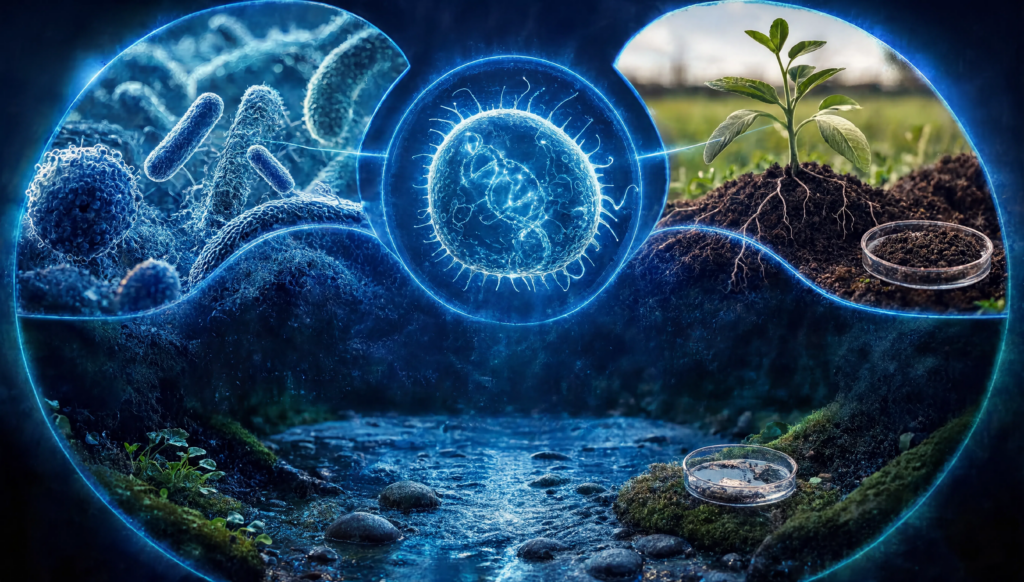
Microbial communities play a fundamental role in maintaining healthy ecosystems. They contribute to nutrient cycling, organic matter decomposition, water quality and the regulation of global biogeochemical processes.
Multi-OMICs approaches are helping environmental researchers understand how these communities respond to pollution, climate change and habitat disturbance.
Integrated microbiome studies support research in areas such as:
- Environmental DNA (eDNA) monitoring.
- Wastewater surveillance.
- Marine and freshwater ecosystems.
- Soil biodiversity.
- Bioremediation and ecosystem restoration.
By combining multiple molecular datasets, researchers can gain a more comprehensive understanding of ecosystem function and develop evidence-based strategies for environmental conservation and sustainability.
From Observation to Biological Understanding
The greatest strength of multi-OMICs integration lies in its ability to transform microbiome research from descriptive science into mechanistic science.
Instead of simply identifying which microorganisms are present, researchers can investigate how microbial communities function, how they interact with their host and how these interactions influence health, disease and environmental processes.
This systems-level understanding is enabling scientists to generate more meaningful biological insights, develop stronger hypotheses and accelerate discoveries across multiple research disciplines.
As microbiome research continues to evolve, multi-OMICs integration is expected to play an increasingly important role in uncovering the complex biological networks that shape living systems.
While multi-OMICs integration has opened new possibilities for microbiome research, combining multiple molecular datasets also presents significant scientific and computational challenges. Each OMICS technology generates vast amounts of data using different experimental methods, formats and analytical pipelines. Bringing these diverse datasets together in a meaningful way requires careful study design, robust computational tools and interdisciplinary expertise.
As highlighted in recent microbiome research, the value of multi-OMICs lies not simply in collecting more data, but in ensuring that data from different OMICS layers can be integrated, interpreted and translated into biologically relevant insights.
Managing Complex Biological Data
One of the biggest challenges in multi-OMICs research is the sheer volume and complexity of the data generated. A single study may include genomic sequences, transcriptomic profiles, proteomic measurements and metabolomic data, each providing a unique perspective on the microbiome.
Because these datasets differ in scale, structure and analytical requirements, researchers must carefully harmonise and integrate them before meaningful comparisons can be made.
This requires:
- High-quality experimental design.
- Standardised sample collection and processing.
- Rigorous quality control.
- Reliable data management.
- Advanced computational infrastructure.
Without these foundations, integrating multiple OMICS datasets may introduce variability that affects the reliability and reproducibility of research findings.
The Critical Role of Bioinformatics
As microbiome datasets continue to grow in size and complexity, bioinformatics has become an essential component of successful multi-OMICs research.
Modern bioinformatics workflows enable researchers to:
- Process sequencing and proteomics data efficiently.
- Integrate information across multiple OMICS platforms.
- Identify biological pathways and molecular networks.
- Perform statistical analyses on high-dimensional datasets.
- Visualise complex interactions between microorganisms and their hosts.
Rather than acting as a final step in the research process, bioinformatics now supports every stage of a multi-OMICs study, from experimental planning through to biological interpretation.
This growing reliance on computational biology highlights the importance of interdisciplinary collaboration between molecular biologists, bioinformaticians, statisticians and clinicians.
Artificial Intelligence Is Accelerating Discovery
Artificial intelligence is becoming an increasingly valuable tool for analysing complex microbiome datasets. Machine learning algorithms can identify patterns across multiple OMICS layers that may be difficult to detect using conventional analytical methods.
In microbiome research, AI is helping scientists to:
- Identify novel microbial biomarkers.
- Predict disease risk and treatment response.
- Classify microbial communities more accurately.
- Model host–microbiome interactions.
- Generate new hypotheses for experimental validation.
Importantly, AI complements rather than replaces scientific expertise. The most meaningful discoveries continue to rely on high-quality biological data, rigorous experimental design and expert interpretation.
The Future of Microbiome Research
The future of microbiome research lies in moving beyond isolated molecular measurements towards a more integrated understanding of biological systems.
As sequencing technologies become more accessible and computational methods continue to evolve, researchers will be able to investigate microbial communities with greater depth and precision than ever before.
Future advances are expected to include:
- More sophisticated multi-OMICs integration workflows.
- Greater use of AI-assisted biological interpretation.
- Improved standardisation of microbiome studies.
- Enhanced reproducibility across research institutions.
- Stronger integration of microbiome science into precision medicine, agriculture and environmental monitoring.
Together, these developments will help researchers better understand the complex relationships between microorganisms, their hosts and the environments they inhabit, ultimately supporting more effective scientific discovery and real-world applications.
How CPGR Supports Advanced Multi-OMICs Microbiome Research
As microbiome research continues to evolve, researchers increasingly require integrated solutions that extend beyond a single analytical platform. Generating meaningful biological insights depends not only on producing high-quality data but also on combining multiple OMICS technologies with robust bioinformatics and scientific expertise.
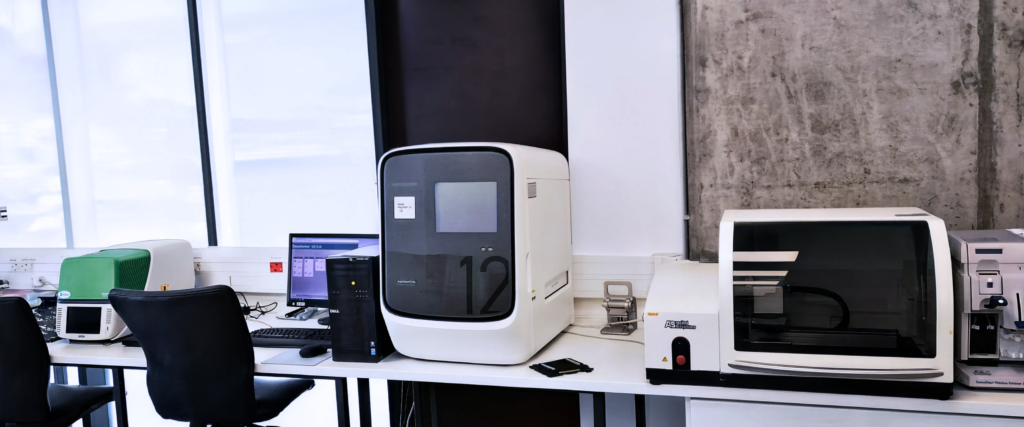
At the Centre for Proteomic and Genomic Research (CPGR), we support researchers throughout the entire research lifecycle, from study design and sample preparation to laboratory analysis and data interpretation. Our multidisciplinary expertise enables researchers to integrate complementary molecular datasets and gain a more comprehensive understanding of complex biological systems.
Our capabilities include:
- Genomics, including targeted sequencing, whole genome sequencing and metagenomic analyses.
- Proteomics, enabling the identification and quantification of proteins involved in host–microbiome interactions.
- Bioinformatics, providing advanced computational workflows for data processing, integration and interpretation.
- Multi-OMICs Integration, supporting systems-level investigations that connect genomic, proteomic and other molecular datasets.
By combining these capabilities, CPGR helps researchers move beyond describing microbial communities towards understanding how they function, interact with their hosts and respond to changing biological and environmental conditions.
Whether supporting studies in human health, agriculture, environmental science or biotechnology, CPGR is committed to delivering high-quality scientific services that enable impactful, reproducible research.
The microbiome is far more than a collection of microorganisms, it is a dynamic ecosystem that influences human health, agriculture and the environment through complex biological interactions. Understanding these systems requires more than identifying which microbes are present; it requires uncovering how genes, proteins, metabolites and microbial communities work together to shape biological outcomes.
Multi-OMICs integration is making this possible. By combining genomics, transcriptomics, proteomics, metabolomics and advanced bioinformatics, researchers can move beyond descriptive analyses towards a systems-level understanding of host-microbiome interactions. This integrated approach is accelerating discoveries across precision medicine, infectious disease research, sustainable agriculture and environmental science.
As these technologies continue to advance, the future of microbiome research will increasingly depend on collaboration between laboratory scientists, bioinformaticians and computational researchers who can transform complex datasets into meaningful biological insights.
At CPGR, we are proud to support this next generation of research through integrated OMICS capabilities, advanced analytical platforms and collaborative scientific expertise. By bringing together genomics, proteomics and bioinformatics, we help researchers unlock the full potential of microbiome science and advance discoveries that make a meaningful impact. Book a free consultation to start with your research https://calendly.com/justin-naicker-cpgr/cpgr-chat