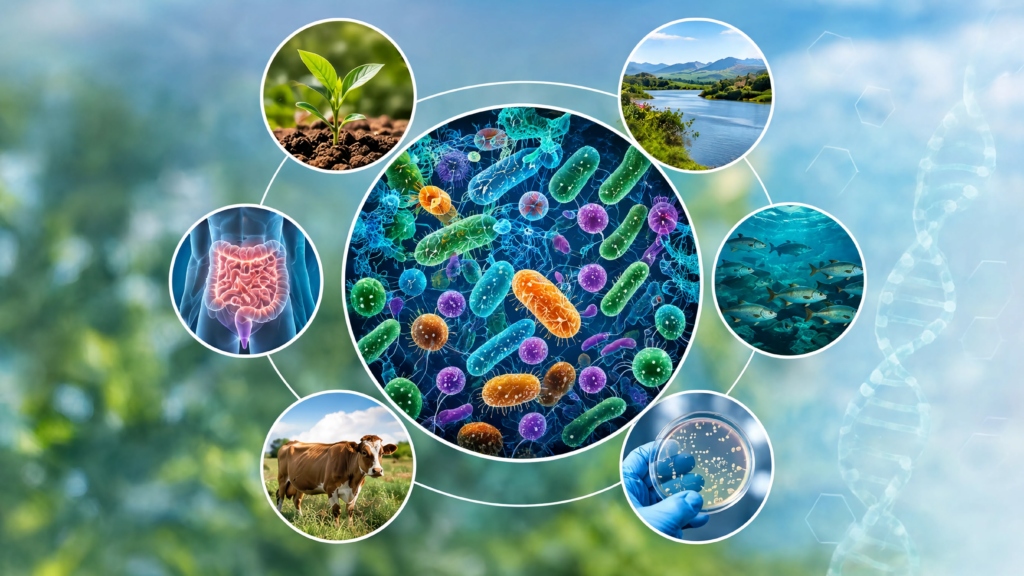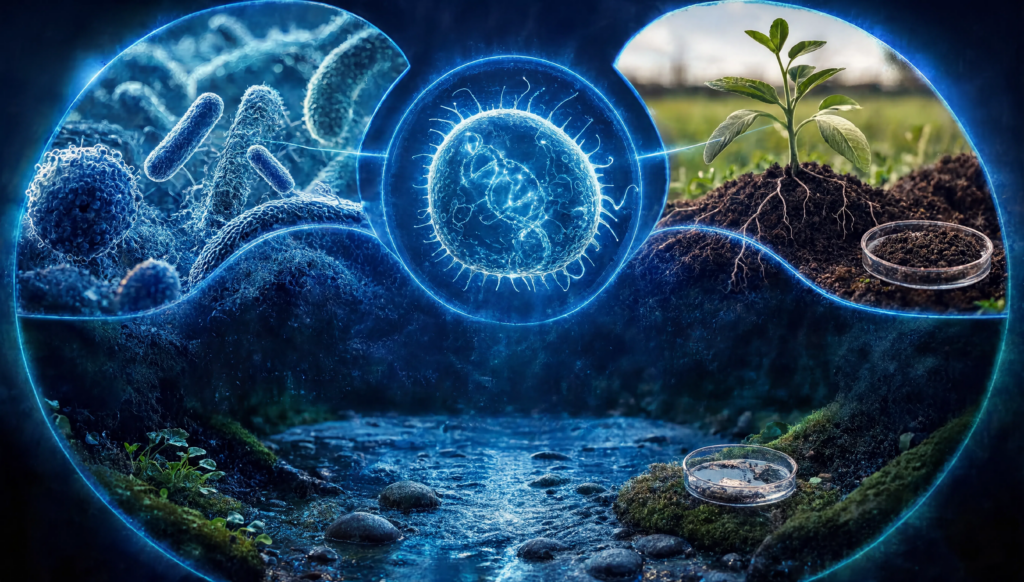
Microorganisms are everywhere. They live in our bodies, inhabit the soil beneath our feet, thrive in oceans and rivers, colonise plants and animals, and play essential roles in maintaining healthy ecosystems. Collectively, these microscopic organisms including bacteria, fungi, viruses, archaea and other microbes form complex communities known as the microbiome.
For decades, scientists could only study a small fraction of these microorganisms because most cannot be grown under standard laboratory conditions. Today, advances in microbiome sequencing have transformed our understanding of these hidden ecosystems by allowing researchers to analyse microbial DNA directly from a sample, without the need for culturing.
Microbiome sequencing is helping scientists answer some of today’s most important biological questions. How does the gut microbiome influence human health? Which microorganisms improve crop productivity? How do microbial communities respond to environmental pollution? Which pathogens are emerging in wildlife or healthcare settings?
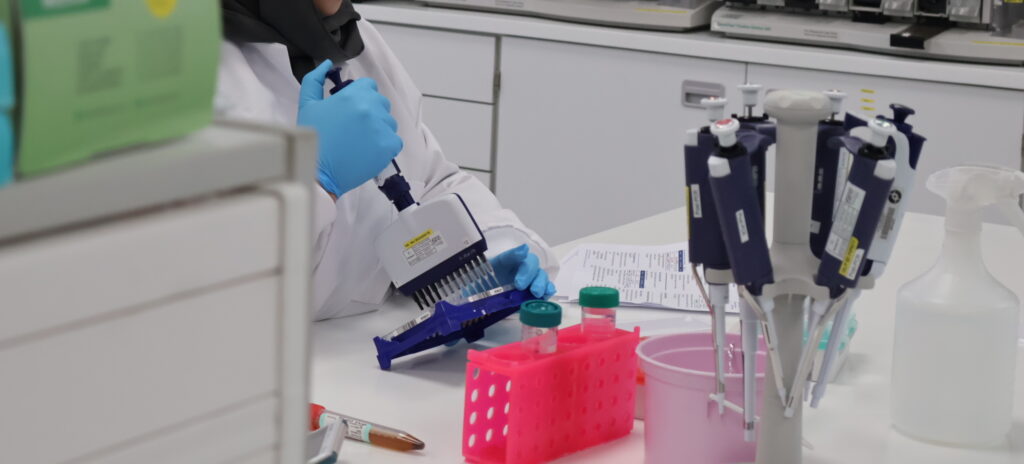
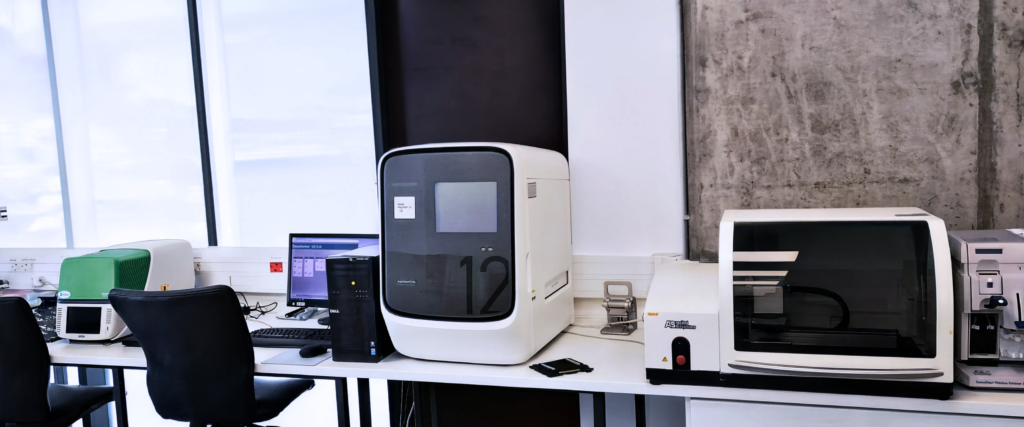
At the Centre for Proteomic and Genomic Research (CPGR), researchers have access to advanced sequencing technologies that support microbiome research across human health, agriculture, environmental science, veterinary medicine and biotechnology. Through high-quality sequencing, robust bioinformatics pipelines and expert scientific support, CPGR helps researchers turn complex microbial data into meaningful biological insight.
Key Takeaways
- Microbiome sequencing identifies microorganisms directly from DNA, without requiring laboratory culturing.
- Microbial communities influence human health, agriculture, environmental sustainability and biodiversity.
- 16S rRNA sequencing and shotgun metagenomics are the two most widely used microbiome sequencing approaches.
- Long-read sequencing is improving microbial genome assembly and species-level identification.
- CPGR provides end-to-end microbiome sequencing and bioinformatics services for researchers across South Africa and internationally.
What Is the Microbiome?
The microbiome is the collection of microorganisms and their genetic material that live within a particular environment. These microbial communities are made up of bacteria, fungi, viruses, archaea and microscopic eukaryotes that interact with one another and with their surrounding environment.
Microbiomes exist almost everywhere, including:
- The human digestive tract
- The skin
- The respiratory system
- The oral cavity
- Plant roots and leaves
- Agricultural soils
- Freshwater and marine environments
- Wastewater systems
- Food production facilities
- Wildlife habitats
Although these microorganisms are invisible to the naked eye, they perform countless biological functions that sustain life.
For example, bacteria within the human gut help digest food, produce vitamins, regulate the immune system and protect against disease-causing organisms. In agriculture, soil microorganisms improve nutrient availability, promote plant growth and contribute to healthy crop production. In oceans and rivers, microbial communities drive nutrient cycling and influence global climate processes.
Understanding these microbial ecosystems is essential for addressing many of today’s scientific, medical and environmental challenges.
Why the Microbiome Matters
Interest in microbiome research has grown rapidly because scientists now recognise that microorganisms play a far greater role in biological systems than previously understood.
Rather than acting independently, microbes form highly interconnected communities that influence the health and function of humans, animals, plants and entire ecosystems.
Human Health
The human microbiome has become one of the most intensively studied areas of biomedical research.
Changes in gut microbial composition have been associated with conditions including:
- Inflammatory bowel disease
- Obesity
- Type 2 diabetes
- Cardiovascular disease
- Cancer
- Autoimmune disorders
- Allergies
- Mental health conditions
By understanding these microbial communities, researchers hope to develop more personalised approaches to disease prevention, diagnosis and treatment.
Agriculture
Healthy microbial communities are equally important for sustainable agriculture.
Microorganisms living around plant roots help plants absorb nutrients, improve drought tolerance, suppress plant pathogens and enhance soil fertility.
Microbiome research supports the development of more sustainable farming practices while reducing dependence on chemical fertilisers and pesticides.
Environmental Science
Microbial communities are essential for maintaining healthy ecosystems.
They contribute to:
- Carbon cycling
- Nitrogen fixation
- Water purification
- Waste decomposition
- Pollution remediation
- Climate regulation
Sequencing these microbial communities allows researchers to monitor environmental change and assess ecosystem health more accurately than ever before.
What Is Microbiome Sequencing?
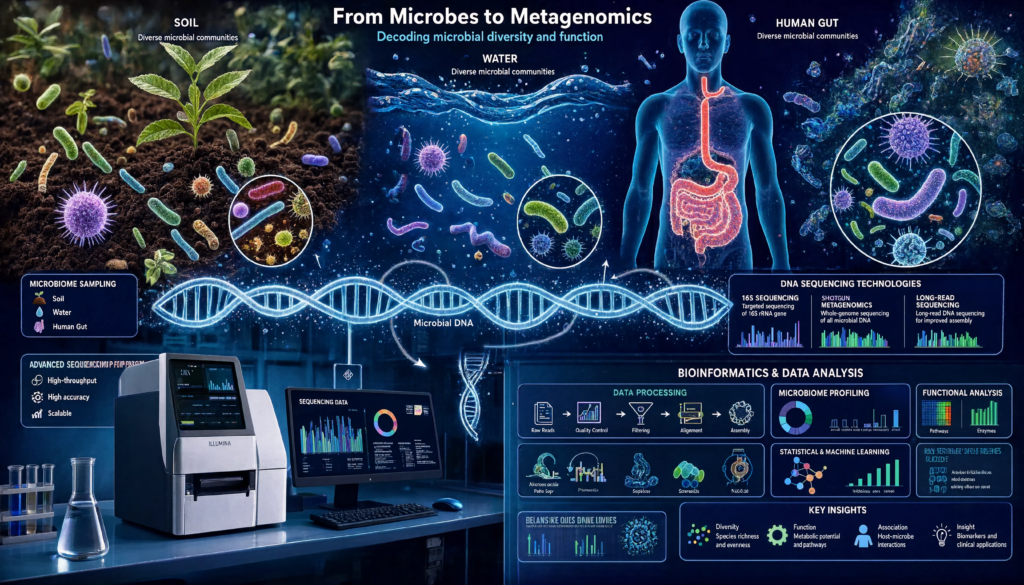
Microbiome sequencing is a genomics-based approach used to identify and analyse microorganisms by sequencing the genetic material present in a sample. Unlike traditional microbiology methods that rely on culturing microorganisms in a laboratory, sequencing allows researchers to study entire microbial communities directly from DNA extracted from environmental or biological samples.
This culture-independent approach has revolutionised microbiology because the vast majority of microorganisms cannot be grown using conventional laboratory techniques. Through sequencing, researchers can investigate the full diversity of microbial life within a sample, including organisms that were previously impossible to study.
Microbiome sequencing can answer questions such as:
- Which microorganisms are present?
- How abundant is each species?
- How do microbial communities change over time?
- Which genes are present?
- What biological functions are these microorganisms performing?
- Are antimicrobial resistance genes present?
- Which metabolic pathways are active within the microbial community?
These insights provide a far more comprehensive understanding of microbial ecosystems than traditional microbiological methods.
Today, microbiome sequencing supports research across medicine, agriculture, veterinary science, food safety, environmental monitoring and biotechnology, making it one of the fastest-growing applications of modern genomics.
Applications
Microbiome sequencing has become an indispensable tool across multiple scientific disciplines, enabling researchers to investigate the composition, diversity and function of microbial communities in complex biological and environmental samples. By identifying microorganisms and analysing their genetic material, researchers can better understand how microbial ecosystems influence health, agriculture and the environment.
Human Microbiome Research
The human body hosts trillions of microorganisms that collectively influence digestion, metabolism, immune function and overall health.
Researchers use microbiome sequencing to investigate microbial communities found in:
- The gastrointestinal tract
- The oral microbiome
- The respiratory tract
- The skin
- The reproductive system
These studies are improving our understanding of conditions such as inflammatory bowel disease, obesity, diabetes, colorectal cancer, allergies and autoimmune disorders, while supporting the development of personalised medicine approaches.
Infectious Disease Research
Microbiome sequencing is also transforming infectious disease research by enabling scientists to characterise pathogens within complex biological samples.
Instead of searching for a single microorganism, sequencing allows researchers to identify entire microbial communities, detect co-infections and monitor changes in microbial populations during disease progression or treatment.
Applications include:
- Respiratory disease surveillance
- Tuberculosis research
- HIV-associated microbiome studies
- Hospital-acquired infections
- Emerging pathogen monitoring
These insights contribute to improved public health surveillance and a better understanding of host-pathogen interactions.
Agricultural Microbiome Research
Healthy crops depend on healthy microbial communities.
Microorganisms living around plant roots influence nutrient uptake, disease resistance and crop productivity, while livestock microbiomes affect digestion, growth and animal health.
Microbiome sequencing is helping agricultural researchers:
- Improve soil fertility
- Identify beneficial microorganisms
- Reduce plant diseases
- Develop sustainable farming practices
- Improve livestock health
- Increase agricultural productivity
As climate change places increasing pressure on food production, understanding agricultural microbiomes has become an important priority for researchers worldwide.
Environmental Microbiome Studies
Environmental microbiomes regulate many of Earth’s most important ecological processes.
Researchers use sequencing to investigate microbial communities within:
- Rivers
- Oceans
- Wetlands
- Wastewater treatment systems
- Mining environments
- Forest ecosystems
- Polar environments
Sequencing allows scientists to monitor biodiversity, assess environmental health and investigate how microbial communities respond to pollution, habitat degradation and climate change.
Environmental microbiome research also supports bioremediation projects, where naturally occurring microorganisms are used to remove pollutants from contaminated environments.
Food and Industrial Biotechnology
Microorganisms play a vital role in food production and industrial biotechnology.
Microbiome sequencing helps researchers monitor microbial populations involved in:
- Fermented food production
- Dairy manufacturing
- Brewing and wine production
- Food safety testing
- Industrial fermentation
- Biofuel development
By understanding microbial communities, researchers can improve product quality, optimise production processes and identify contamination before it becomes a problem.
Choosing the Right Microbiome Sequencing Approach
Not all microbiome studies have the same objectives.
Some projects aim to identify which microorganisms are present within a sample, while others seek to understand the functional capabilities of entire microbial communities. Selecting the most appropriate sequencing strategy depends on the research question, sample type, available budget and desired level of biological detail.
Today, two approaches dominate microbiome research:
- 16S rRNA gene sequencing, which targets a specific bacterial marker gene to identify bacterial communities.
- Shotgun metagenomic sequencing, which sequences all genetic material present in a sample, providing a much more comprehensive view of microbial diversity and function.
Both approaches have distinct advantages and are suited to different research applications. Understanding these differences is essential when designing a successful microbiome study.
16S rRNA Sequencing vs Shotgun Metagenomics
The two most widely used microbiome sequencing approaches each answer different scientific questions.
| Feature | 16S rRNA Sequencing | Shotgun Metagenomics |
|---|---|---|
| DNA analysed | Bacterial 16S rRNA gene | All DNA present in the sample |
| Organisms detected | Primarily bacteria and archaea | Bacteria, fungi, viruses, archaea and other microorganisms |
| Functional analysis | Limited | Comprehensive |
| Species resolution | Moderate | High |
| Cost | Lower | Higher |
| Computational analysis | Moderate | More complex |
| Best suited for | Community profiling | Functional and taxonomic analysis |
16S rRNA sequencing remains an excellent option for studies focused on bacterial community composition and diversity, particularly when analysing large numbers of samples.
Shotgun metagenomics provides a much richer dataset by sequencing all DNA within a sample. This allows researchers not only to identify microorganisms but also to investigate the genes they carry, their metabolic pathways, antimicrobial resistance genes and other functional characteristics.
For researchers seeking the most comprehensive understanding of complex microbial communities, shotgun metagenomics has become the preferred approach.
How Long-Read Sequencing Is Advancing Microbiome Research
Microbiome research has advanced significantly over the past decade, but many microbial communities remain challenging to characterise accurately using traditional short-read sequencing technologies alone. Complex microbial populations often contain closely related species, repetitive genetic regions, and previously unknown microorganisms that are difficult to assemble from short DNA fragments.
The emergence of long-read sequencing is helping researchers overcome these challenges by producing DNA reads that span thousands or even hundreds of thousands of base pairs in a single continuous sequence.
At CPGR, researchers can access advanced long-read sequencing through the Oxford Nanopore Technologies PromethION 24, enabling more complete and informative microbiome analyses.
Unlike short-read sequencing, long-read technologies provide greater continuity across microbial genomes, allowing researchers to reconstruct genomes with higher confidence, resolve complex genomic regions and improve species-level identification.
This has transformed microbiome research in fields ranging from infectious disease surveillance and environmental microbiology to agriculture and biodiversity studies.
Improved Species-Level Identification
One of the greatest challenges in microbiome research is distinguishing between closely related microorganisms.
Many bacterial species share highly similar genetic sequences, making them difficult to differentiate when only short DNA fragments are available. This can result in classifications that stop at the genus level rather than accurately identifying individual species.
Long-read sequencing addresses this challenge by sequencing much larger sections of DNA, capturing more genetic variation within each read. This additional information improves taxonomic resolution and enables researchers to identify microorganisms with greater confidence.
Improved species identification is particularly valuable when studying:
- Human gut microbiomes
- Hospital-acquired infections
- Environmental microbial communities
- Agricultural soil microbiomes
- Wildlife disease surveillance
- Food safety investigations
By providing a clearer picture of microbial diversity, long-read sequencing supports more accurate biological interpretation and better-informed research outcomes.
More Complete Microbial Genome Assembly
Many microbiome studies aim not only to identify microorganisms but also to reconstruct their genomes.
Short-read sequencing often produces fragmented genome assemblies because repetitive DNA regions are difficult to resolve from small DNA fragments. Long-read sequencing overcomes this limitation by spanning these repetitive regions, producing longer contiguous genome assemblies with fewer gaps.
Improved genome assembly enables researchers to:
- Discover previously unknown microorganisms
- Assemble complete bacterial genomes
- Characterise plasmids
- Investigate bacteriophages
- Analyse antimicrobial resistance genes
- Study mobile genetic elements
These capabilities are particularly important for infectious disease research, antimicrobial resistance monitoring and microbial ecology.
Understanding What Microorganisms Can Do
Knowing which microorganisms are present is only one part of microbiome research.
Researchers also want to understand what those microorganisms are capable of doing.
By generating more complete genome assemblies, long-read shotgun metagenomics sequencing improves the identification of genes involved in:
- Nutrient metabolism
- Antibiotic resistance
- Virulence
- Stress response
- Carbon cycling
- Nitrogen fixation
- Plant growth promotion
- Environmental adaptation
These functional insights help scientists better understand how microbial communities influence health, agriculture and ecosystems.
Supporting Multi-OMICs Research
Microbiome studies increasingly combine multiple OMICS technologies to gain a more comprehensive understanding of biological systems.
Rather than analysing microbial and/or host DNA in isolation, researchers integrate microbiome sequencing with:
- Genomics
- Transcriptomics
- Proteomics
- Metabolomics
- Epigenomics
This multi-OMICs approach allows scientists to investigate not only which microorganisms are present but also how they function, interact with their environment and respond to biological or environmental changes.
For example, a microbiome study may combine shotgun metagenomics with transcriptomics to identify which microbial genes are actively expressed, while proteomics can reveal which proteins are being produced. Together, these complementary datasets provide a much richer understanding of microbial ecosystems than any single technology alone.
As multi-OMICs research continues to grow, advanced sequencing platforms and integrated bioinformatics have become essential for generating meaningful biological insights.
Bioinformatics: Transforming Sequencing Data into Biological Insight
Modern microbiome sequencing projects generate millions or even billions of DNA sequences. Without advanced computational analysis, this data would have little practical value.
Bioinformatics is the bridge between raw sequencing data and meaningful scientific discovery.
At CPGR, microbiome sequencing projects are supported by experienced bioinformaticians who use validated analytical workflows to process, analyse and interpret complex microbial datasets.
Depending on the research objectives, bioinformatics analyses may include:
- Sequence quality assessment
- Taxonomic classification
- Microbial diversity analysis
- Genome assembly
- Functional gene annotation
- Metabolic pathway analysis
- Antimicrobial resistance gene detection
- Virulence factor identification
- Comparative microbiome analysis
- Statistical interpretation and visualisation
These analyses allow researchers to move beyond simply identifying microorganisms to understanding how microbial communities function, evolve and influence biological systems.
By combining advanced sequencing technologies with robust bioinformatics expertise, CPGR provides researchers with comprehensive, end-to-end microbiome research solutions.
Why Choose CPGR for Microbiome Sequencing?
Successful microbiome research depends on more than sequencing technology alone. It requires scientific expertise, carefully designed workflows and high-quality data analysis to produce reliable, publication-ready results.
CPGR offers an integrated microbiome sequencing service that supports researchers throughout every stage of their project.
Researchers working with CPGR benefit from:
- Expert consultation and experimental design
- High-quality DNA extraction guidance
- 16S rRNA sequencing and shotgun metagenomics
- Long-read sequencing using the Oxford Nanopore PromethION 24
- Comprehensive bioinformatics analysis
- Data interpretation and reporting
- ISO 9001:2015 certified quality management system
- Support for academic, clinical, agricultural and commercial research
Whether investigating the human gut microbiome, monitoring environmental ecosystems or studying agricultural soils, CPGR provides the expertise and technology needed to generate meaningful microbiome insights.
The Future of Microbiome Research
Microbiome research is rapidly transforming our understanding of health, agriculture and the environment. As sequencing technologies continue to advance, researchers are gaining unprecedented insight into the microorganisms that influence biological systems and ecological processes.
Modern microbiome studies are no longer limited to identifying which microorganisms are present. By integrating advanced sequencing technologies with bioinformatics and multi-OMICs approaches, scientists can investigate how microbial communities function, interact with their hosts and respond to environmental change.
Long-read sequencing, improved computational analysis and integrated OMICS technologies are expanding the possibilities of microbiome research, supporting discoveries that contribute to precision medicine, sustainable agriculture, biodiversity conservation and public health.
At CPGR, we are committed to helping researchers unlock these insights through advanced sequencing technologies, expert scientific support and comprehensive bioinformatics solutions that transform complex microbial data into meaningful scientific discoveries.
Book a Consultation with CPGR
Whether you are investigating the human microbiome, analysing environmental microbial communities, studying agricultural soils, or exploring infectious disease microbiology, choosing the right sequencing strategy is essential for generating high-quality, reliable data.
CPGR provides end-to-end microbiome sequencing solutions, from experimental design and sequencing through to bioinformatics analysis and interpretation. Our experienced team works closely with researchers to recommend the most appropriate sequencing technologies for each project.
Ready to advance your microbiome research?
Contact CPGR to discuss your project, receive expert guidance and request a customised quotation for microbiome sequencing services. https://calendly.com/justin-naicker-cpgr/cpgr-chat