Genomics has transformed modern biological research by enabling scientists to study the complete genetic blueprint of living organisms. Rather than focusing on individual genes, genomics investigates how entire genomes function, evolve and interact with environmental factors to influence health, disease and biological diversity.
The rapid evolution of sequencing technologies has made genomics one of the most powerful tools available to researchers. Today, scientists can sequence entire genomes within days, analyse millions of genetic variants simultaneously and generate biological insights that were unimaginable only a decade ago.
In South Africa, genomics research is playing an increasingly important role in addressing challenges that are unique to the country and the African continent. From infectious disease surveillance and precision medicine to agricultural innovation and biodiversity conservation, genomics is helping researchers generate evidence that supports better healthcare, sustainable food production and environmental management.
This growth has been driven by advances in sequencing technology, improved computational analysis and increased collaboration between research institutions, universities and specialist genomics facilities.
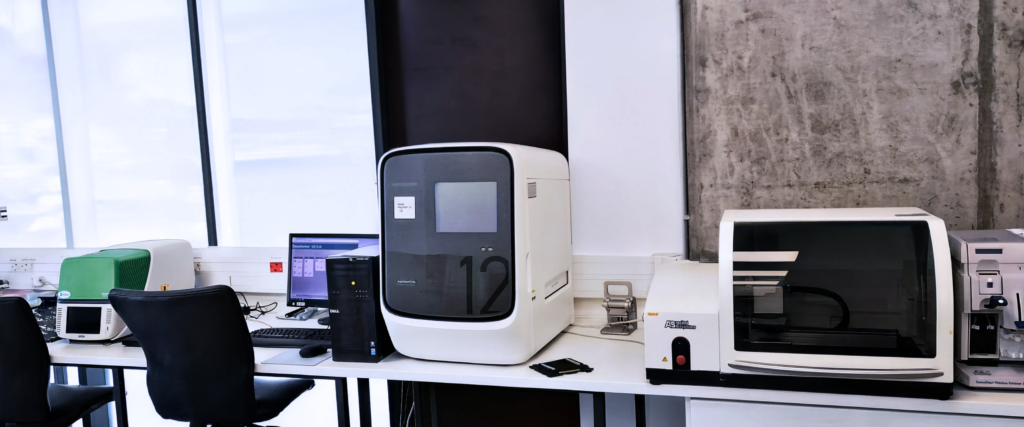
At the Centre for Proteomic and Genomic Research (CPGR), we are proud to support this growing research landscape by providing access to advanced sequencing technologies, expert scientific consultation and comprehensive bioinformatics analysis. Through our integrated genomics services, we help researchers transform biological samples into high-quality genomic data that supports meaningful scientific discovery.
Key Takeaways
- Genomics research investigates the complete genetic makeup of organisms to better understand biological systems.
- South Africa is expanding its genomics research capacity across healthcare, agriculture, environmental science and biodiversity.
- Advances in DNA sequencing and bioinformatics are enabling researchers to generate deeper biological insights.
- Recent South African studies demonstrate how genomics is improving our understanding of population health and microbial diversity.
- CPGR supports researchers through advanced sequencing platforms, bioinformatics expertise and end-to-end genomics services.
What Is Genomics Research?
Genomics research is the study of an organism’s complete genome, the entire collection of DNA that contains the instructions for growth, development and biological function.
Unlike traditional genetics, which often focuses on individual genes or inherited traits, genomics examines how all genes interact with one another and with environmental influences. This systems-level approach allows researchers to investigate complex biological questions that cannot be answered by studying single genes alone.
Modern genomics combines laboratory science with computational biology to analyse enormous amounts of genetic information. High-throughput sequencing technologies generate billions of DNA bases during a single experiment, while bioinformatics tools organise, analyse and interpret these data to identify meaningful biological patterns.
Genomics research now supports scientific discovery across numerous disciplines, including:
- Human health and precision medicine
- Cancer genomics
- Rare disease research
- Infectious disease surveillance
- Agricultural biotechnology
- Veterinary science
- Conservation genetics
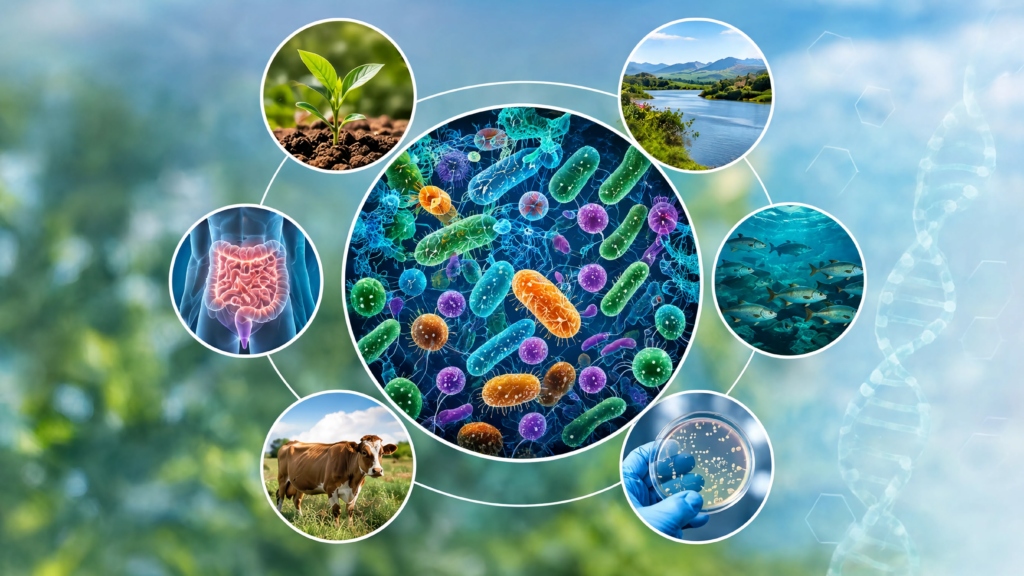
- Microbiome research
- Evolutionary biology
- Environmental genomics
As sequencing technologies continue to evolve, genomics is becoming an increasingly important driver of scientific innovation, helping researchers better understand both human biology and the natural world.
Why Genomics Matters More Than Ever
Many of today’s most significant scientific challenges cannot be solved using traditional laboratory techniques alone.
Diseases such as cancer, tuberculosis and HIV are influenced by complex interactions between genetics, pathogens and environmental factors. Similarly, improving crop resilience, protecting biodiversity and understanding microbial ecosystems require researchers to analyse large-scale genetic information across diverse populations and environments.
Genomics provides the tools needed to answer these questions.
By analysing complete genomes, researchers can identify disease-causing mutations, discover new biomarkers, monitor pathogen evolution and investigate how organisms adapt to changing environments.
These insights are supporting advances in precision medicine, public health, agriculture and environmental conservation while creating opportunities for more personalised and evidence-based approaches to research and healthcare.
For countries such as South Africa, genomics also provides an opportunity to generate locally relevant scientific evidence that reflects the continent’s extraordinary genetic diversity and unique environmental conditions.
Genomics Research in South Africa: A Growing Scientific Landscape
South Africa has established itself as one of Africa’s leading contributors to genomics research. Through investments in scientific infrastructure, collaborative research networks and advanced sequencing technologies, researchers are addressing challenges that are unique to the country while contributing to global scientific knowledge.
One of South Africa’s greatest strengths lies in its extraordinary biological and genetic diversity. The country’s rich human populations, unique ecosystems and agricultural resources provide valuable opportunities for genomic research that can improve healthcare, strengthen food security and support biodiversity conservation.
Genomics research in South Africa spans a wide range of disciplines, including:
- Human genomics and precision medicine
- Infectious disease research
- Cancer genomics
- Agricultural genomics
- Plant and animal genetics
- Microbiome research
- Conservation genomics
- Environmental DNA (eDNA) studies
As sequencing technologies continue to become more accessible, researchers are increasingly able to investigate complex biological systems that were previously difficult or impossible to study.
This progress is helping to position South Africa as an important contributor to genomic science across the African continent.
Case Study: Understanding the Gut Microbiome of South African Children
One example of how genomics research is improving scientific understanding in South Africa is a study published in Scientific Reports, which investigated the gut microbiota of young South African children living in the Western Cape supported by CPGR 16S Metabarcoding services. https://www.nature.com/articles/s41598-021-95409-5.pdf
Using 16S rRNA gene sequencing, researchers analysed stool samples from children between the ages of six months and five years to better understand how environmental and clinical factors influence the composition of the gut microbiome.
Rather than focusing on disease alone, the researchers examined how everyday environmental exposures shape microbial communities during early childhood. Their findings showed that several factors including age, antibiotic exposure and indoor cooking fires were associated with measurable changes in gut microbial diversity.
One of the study’s key findings was that microbial diversity increased naturally as children grew older, reflecting the normal development of a healthy gut microbiome. However, children who had recently received antibiotics or who were exposed to indoor cooking fires showed reduced microbial diversity, suggesting that both clinical interventions and environmental conditions can influence microbial health.
These findings demonstrate how genomics technologies can generate meaningful insights that extend beyond the laboratory. By analysing microbial DNA directly from biological samples, researchers can better understand how genetics, environmental exposures and lifestyle factors interact to influence health.
Importantly, studies such as these provide locally relevant evidence that reflects South African populations rather than relying solely on international datasets. This is essential because environmental conditions, diet, genetics and disease burden vary considerably between populations, making locally generated genomic data critical for evidence-based healthcare and public health research.
Why Studies Like This Matter
The gut microbiome study highlights several important trends that are shaping the future of genomics research in South Africa.
First, it demonstrates how modern sequencing technologies enable researchers to investigate complex biological questions that cannot be answered using traditional laboratory methods alone. Many microorganisms found in the human gut cannot be cultured using conventional microbiological techniques, making sequencing the most effective way to characterise these microbial communities.
Second, the study illustrates the growing importance of integrating genomics with bioinformatics. Generating DNA sequences is only the beginning of the research process. Advanced computational analysis is required to process sequencing data, identify microbial species, compare microbial diversity and interpret the biological significance of the findings.
Finally, the research highlights the value of conducting genomics studies within African populations. Much of the world’s genomic data has historically been generated outside Africa, despite the continent possessing the greatest human genetic diversity. Producing locally relevant genomic datasets helps researchers better understand diseases, environmental influences and biological variation within South African communities while supporting more inclusive scientific discovery.
The Technologies Driving Genomics Research
Behind every successful genomics project is a combination of advanced laboratory technologies and computational expertise.
Today’s researchers have access to a diverse range of sequencing platforms, each designed to answer different scientific questions.
Some of the most widely used genomics technologies include:
Next-Generation Sequencing (NGS)
Next-generation sequencing enables millions of DNA fragments to be sequenced simultaneously, making it possible to analyse entire genomes, exomes and targeted gene panels efficiently. NGS has become the foundation of modern genomics research because of its speed, scalability and cost-effectiveness.
Long-Read Sequencing
Long-read sequencing technologies, such as Oxford Nanopore sequencing, generate significantly longer DNA reads than traditional short-read platforms. These longer reads improve genome assembly, enable the detection of structural variants and provide greater insight into complex genomic regions that are difficult to resolve using short-read sequencing alone.
Whole Genome Sequencing
Whole genome sequencing captures the complete DNA sequence of an organism, allowing researchers to identify genetic variants, investigate inherited diseases and study evolutionary relationships with exceptional detail.
Metagenomics and Microbiome Sequencing
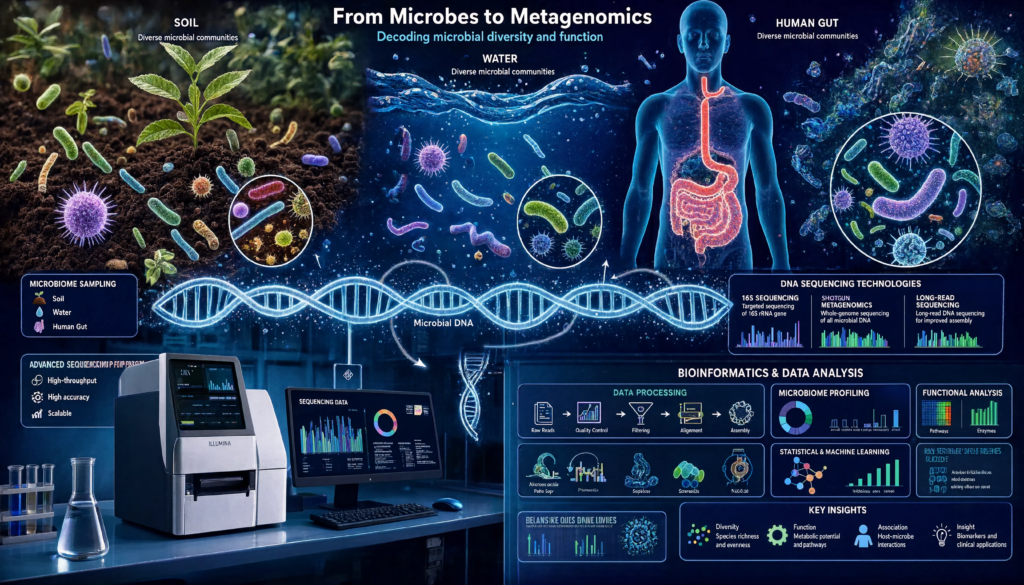
Metagenomic sequencing analyses all DNA present within a sample, enabling researchers to study entire microbial communities without culturing individual organisms. This approach has transformed research in infectious diseases, environmental science, agriculture and human health.
RT-PCR and Targeted Genomics
While sequencing provides broad genomic information, technologies such as real-time PCR remain essential for validating sequencing results, quantifying gene expression and supporting molecular diagnostics.
Each of these technologies contributes unique insights, and together they provide researchers with a comprehensive toolkit for investigating biological systems.
How CPGR Supports Genomics Research in South Africa
As genomics research becomes increasingly data-intensive and multidisciplinary, researchers require more than access to sequencing technology alone. Successful genomics projects depend on carefully planned experimental design, high-quality laboratory workflows, robust bioinformatics analysis and experienced scientific support.
CPGR provides researchers with an integrated genomics platform that supports every stage of the research journey from project planning and sample processing to sequencing, data analysis and interpretation. By combining advanced technologies with scientific expertise, CPGR enables researchers across South Africa and beyond to generate high-quality genomic data that supports impactful scientific discovery.
Whether the objective is to investigate rare genetic diseases, study microbial communities, improve agricultural productivity or understand biodiversity, CPGR works closely with researchers to deliver reliable, publication-ready results.
Advanced Sequencing Technologies for Diverse Research Needs
Every research project presents unique scientific questions and technical requirements. Selecting the appropriate sequencing technology is therefore essential to achieving accurate and meaningful results.
CPGR offers a comprehensive portfolio of genomics services that support a wide range of research applications.
Next-Generation Sequencing (NGS)
Next-Generation Sequencing (NGS) remains one of the most widely used technologies in genomics research. By sequencing millions of DNA fragments simultaneously, NGS enables researchers to investigate genomes, transcriptomes and targeted gene panels with exceptional speed and accuracy.
NGS supports numerous applications, including:
- Whole Genome Sequencing
- Whole Exome Sequencing
- Targeted sequencing panels
- RNA sequencing (RNA-Seq)
- Amplicon sequencing
- Microbial genomics
- Variant discovery
Its versatility makes NGS an essential tool across clinical research, agriculture, microbiology and population genetics.
Long-Read Sequencing
While short-read sequencing remains highly effective for many applications, certain genomic regions are difficult to resolve using short DNA fragments alone.
CPGR’s Oxford Nanopore PromethION 24 platform enables long-read sequencing, producing significantly longer DNA reads that improve genome assembly and reveal complex genetic variation.
Long-read sequencing offers important advantages for researchers working on:
- Structural variant detection
- Complete genome assembly
- Complex genomic regions
- Repeat-rich genomes
- Epigenetic analysis
- Long-read metagenomics
- Transcript isoform identification
As sequencing technologies continue to evolve, long-read sequencing is becoming an increasingly valuable complement to traditional short-read approaches, particularly for projects involving complex genomes.
Whole Genome Sequencing
Whole Genome Sequencing (WGS) provides researchers with the most comprehensive view of an organism’s genetic information by analysing its complete DNA sequence.
At CPGR, WGS supports research involving:
- Human genomics
- Animal genetics
- Plant genomics
- Bacterial genomes
- Viral surveillance
- Fungal genomics
Researchers use WGS to identify genetic variants, investigate disease mechanisms, study evolutionary relationships and better understand biological diversity across multiple species.
Metagenomics and Microbiome Research
Microbial communities influence human health, agriculture and environmental sustainability in profound ways.
CPGR supports microbiome and metagenomics research through advanced sequencing workflows that enable researchers to analyse microbial DNA directly from complex biological or environmental samples.
Applications include:
- Human gut microbiome studies
- Soil microbiology
- Water quality monitoring
- Environmental microbiology
- Agricultural microbiomes
- Pathogen surveillance
These capabilities enable researchers to characterise microbial diversity, investigate microbial function and better understand interactions between microorganisms and their environments.
RT-PCR and Molecular Validation
Sequencing technologies generate powerful genomic insights, but validation remains an essential component of many research projects.
CPGR’s Real-Time PCR platform supports:
- Gene expression analysis
- Targeted genotyping
- miRNA profiling
- SNP analysis
- Mutation detection
- Copy Number Variation (CNV)
- Methylation-specific PCR
- Pharmacogenomic profiling
These targeted molecular assays complement sequencing studies by validating discoveries and supporting downstream biological interpretation.
Bioinformatics: Turning Genomic Data into Scientific Discovery
Modern sequencing platforms generate enormous volumes of data. A single sequencing experiment may produce hundreds of gigabytes of raw information that must be processed, analysed and interpreted before meaningful biological conclusions can be drawn.
This is where bioinformatics becomes indispensable.
Bioinformatics combines computational biology, statistics and data science to transform raw sequencing data into actionable scientific insights. Without robust bioinformatics pipelines, even the highest-quality sequencing data would have limited research value.
At CPGR, experienced bioinformaticians work alongside researchers to deliver comprehensive analytical support throughout the research process.
Bioinformatics services may include:
- Sequence quality assessment
- Genome assembly
- Variant detection
- Differential gene expression analysis
- Taxonomic classification
- Functional annotation
- Pathway analysis
- Comparative genomics
- Phylogenetic analysis
- Statistical interpretation and visualisation
By integrating laboratory science with advanced computational analysis, CPGR enables researchers to confidently interpret complex genomic datasets and generate high-impact research outcomes.
Enabling Multi-OMICs Research
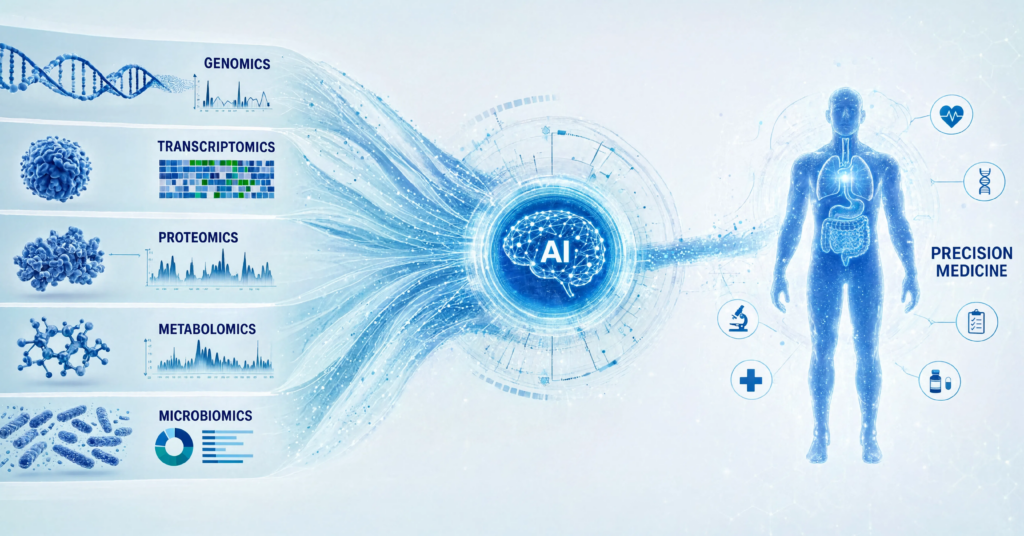
Many of today’s most significant scientific discoveries are made by combining multiple OMICS technologies rather than relying on genomics alone.
This integrated approach, known as multi-OMICs, provides a more complete understanding of biological systems by analysing DNA, RNA, proteins and other molecular components together.
For example, a researcher investigating cancer may combine:
- Whole Genome Sequencing to identify genetic variants.
- RNA sequencing to measure gene expression.
- Proteomics to understand protein abundance.
- Bioinformatics to integrate these datasets into a comprehensive biological interpretation.
Similarly, microbiome researchers increasingly combine metagenomics with transcriptomics and proteomics to understand not only which microorganisms are present but also how they function and interact within their environments.
By supporting genomics alongside complementary OMICS technologies and bioinformatics, CPGR helps researchers generate richer datasets and more meaningful scientific insights.
Supporting Research Across Multiple Scientific Disciplines
CPGR collaborates with researchers from academia, healthcare, government and industry to support projects across a diverse range of scientific fields.
These include:
- Human health and precision medicine
- Cancer research
- Infectious disease genomics
- Agricultural biotechnology
- Veterinary science
- Biodiversity and conservation genetics
- Environmental genomics
- Microbiome research
- Public health surveillance
- Translational research
By providing access to advanced technologies, experienced scientists and integrated analytical workflows, CPGR supports research that addresses both local and global scientific challenges.
Why Researchers Choose CPGR
Genomics research is only as strong as the quality of the data it produces. Achieving reliable, reproducible results requires more than access to advanced sequencing platforms, it requires scientific expertise, validated workflows and robust analytical support.
CPGR has established itself as a trusted genomics partner by providing researchers with comprehensive, end-to-end solutions tailored to diverse scientific applications. From project consultation and experimental design to sequencing, bioinformatics and data interpretation, CPGR works collaboratively with researchers to ensure every project is supported by technical excellence and scientific rigour.
Researchers choose CPGR because of its:
- Comprehensive genomics services, including Next-Generation Sequencing (NGS), Long-Read Sequencing, Whole Genome Sequencing, Whole Exome Sequencing, Amplicon Sequencing, Metagenomics and RT-PCR.
- State-of-the-art Multi-OMICS technologies, including the Oxford Nanopore PromethION 24 and other advanced genomics platforms.
- Integrated bioinformatics expertise, providing support from raw sequencing data through to biological interpretation.
- ISO 9001:2015-certified Quality Management System, ensuring consistent, high-quality laboratory processes.
- Experienced multidisciplinary team of molecular biologists, genomics specialists and bioinformaticians.
- Collaborative approach, supporting academic institutions, healthcare organisations, government agencies and biotechnology companies throughout South Africa and internationally.
By combining advanced technologies with scientific expertise, CPGR enables researchers to generate reliable genomic data that contributes to impactful scientific discoveries.
Driving the Future of Genomics Research in South Africa
South Africa is uniquely positioned to contribute to global genomics research. Its rich genetic diversity, remarkable biodiversity and complex public health landscape present opportunities to answer scientific questions that are globally significant while addressing local challenges.
The continued growth of genomics research depends on collaboration between researchers, sequencing facilities, bioinformaticians and research institutions. Studies such as the investigation of the gut microbiome in South African children demonstrate how locally generated genomic data can improve our understanding of health and disease while highlighting the importance of conducting research within African populations.
As sequencing technologies continue to evolve, genomics will play an increasingly important role in advancing precision medicine, improving agricultural resilience, strengthening infectious disease surveillance and supporting biodiversity conservation.
By providing researchers with access to advanced sequencing technologies, expert bioinformatics support and integrated multi-OMICs capabilities, CPGR is committed to supporting the next generation of scientific discovery in South Africa and beyond.
Partner with CPGR to Advance Your Genomics Research
Whether you are investigating rare genetic disorders, studying infectious diseases, exploring microbial communities or advancing agricultural innovation, access to reliable sequencing technologies and expert scientific support is essential for successful genomics research.
CPGR provides integrated genomics solutions that combine advanced sequencing platforms, comprehensive bioinformatics and experienced scientific guidance to help researchers generate high-quality, publication-ready data.
Ready to take your genomics research further?
Contact the Centre for Proteomic and Genomic Research (CPGR) to discuss your project, consult with our scientific team and discover how our genomics services can support your next research breakthrough. https://calendly.com/justin-naicker-cpgr/cpgr-chat