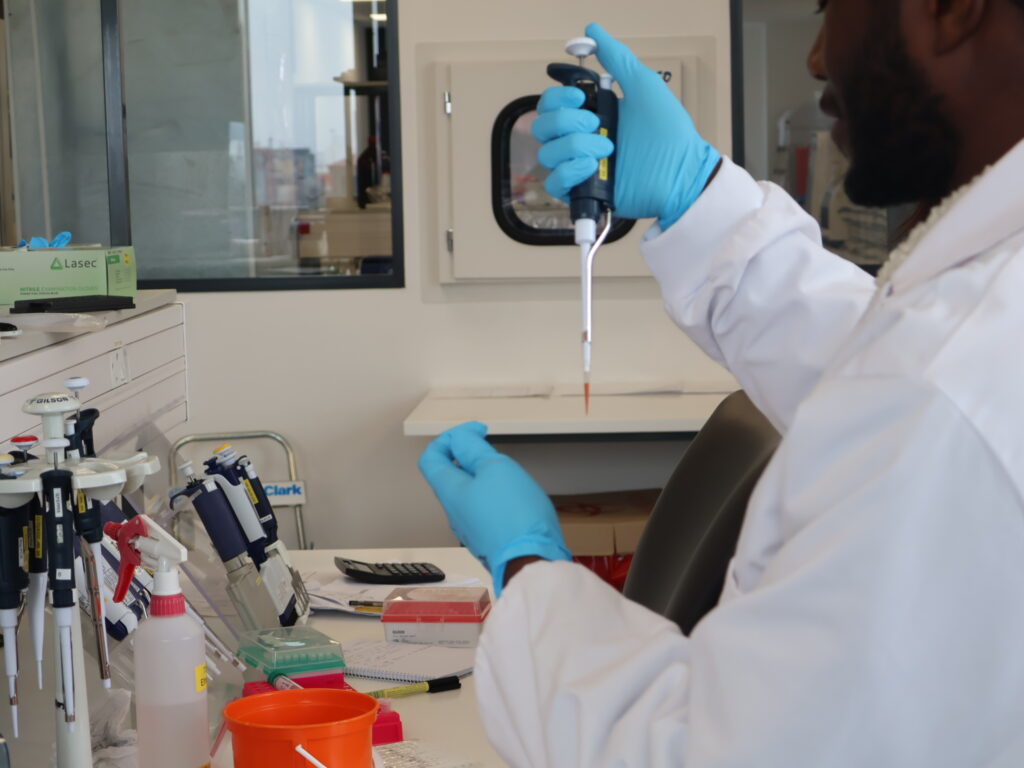
When researchers need sensitive, targeted, accurate and reproducible molecular analysis, Real-Time Polymerase Chain Reaction (RT-PCR) remains one of the most trusted laboratory techniques available. Although next-generation sequencing has transformed genomics research, RT-PCR continues to play a critical role in validating sequencing results, measuring gene expression and detecting specific genetic targets with exceptional precision.
At the Centre for Proteomic and Genomic Research (CPGR), our RT-PCR platform supports researchers across academia, healthcare, biotechnology and agriculture by providing high-quality molecular analysis backed by scientific expertise and rigorous quality standards.
Whether you are investigating gene expression, validating sequencing data or performing SNP genotyping, CPGR offers reliable RT-PCR services designed to meet the needs of modern research.
What Is RT-PCR?
Real-Time Polymerase Chain Reaction (RT-PCR), also known as quantitative PCR (qPCR), is a molecular biology technique used to amplify and quantify specific DNA sequences in real time. Unlike conventional PCR, which simply confirms whether a target sequence is present, RT-PCR measures the amount of amplified DNA during each cycle of the reaction using fluorescent chemistry. This allows researchers to quantify nucleic acids with exceptional sensitivity and accuracy.
RT-PCR has become a cornerstone of molecular research because it provides rapid, reproducible and highly specific results. It is widely used to investigate gene expression, validate sequencing findings, detect genetic mutations and analyse microbial pathogens across a broad range of research applications.
Although sequencing technologies can generate comprehensive genomic datasets, RT-PCR remains an essential complementary technique. Researchers frequently use RT-PCR to confirm sequencing results, quantify changes in gene expression and validate biomarkers identified during genomics studies.
Its speed, precision and flexibility make RT-PCR one of the most valuable tools in modern molecular biology laboratories.
Why RT-PCR Is Still One of the Most Powerful Molecular Biology Tools
Advances in sequencing technologies have expanded the possibilities of genomics research, but RT-PCR continues to play a vital role in scientific discovery. Rather than replacing sequencing, it complements it by providing targeted, high-precision analysis of specific genes and genetic markers.
Researchers choose RT-PCR because it offers:
- Exceptional sensitivity for detecting low-abundance targets.
- High specificity through sequence-specific primers and fluorescent probes.
- Rapid turnaround compared with many sequencing workflows.
- Excellent reproducibility across multiple samples.
- Cost-effective validation of sequencing results.
- Quantitative measurement of gene expression.
For many studies, sequencing identifies potential biological changes, while RT-PCR provides the validation needed to confirm those findings. This combination strengthens the reliability of research outcomes and supports publication-quality data.
Applications of RT-PCR in Modern Research
Real-Time PCR has become one of the most versatile technologies in molecular biology. Its ability to accurately detect and quantify nucleic acids makes it an essential tool across genomics, biomedical research, infectious disease surveillance, agriculture and pharmaceutical development.
At CPGR, our RT-PCR services support a broad range of research applications, helping scientists generate reliable, reproducible data with confidence.
Gene Expression Analysis
One of the most common applications of RT-PCR is measuring gene expression. Researchers use RT-PCR to determine how actively specific genes are expressed under different biological conditions by quantifying RNA transcripts.
Gene expression analysis is widely used to:
- Compare healthy and diseased tissues
- Study cancer progression
- Investigate immune responses
- Understand developmental biology
- Evaluate treatment responses
- Validate RNA sequencing (RNA-Seq) results
Because RT-PCR offers exceptional sensitivity and accuracy, it remains the gold standard for validating differential gene expression identified through high-throughput sequencing
SNP Genotyping
Single Nucleotide Polymorphisms (SNPs) are the most common form of genetic variation within genomes. These small DNA changes can influence disease susceptibility, drug response and inherited traits.
RT-PCR enables rapid and accurate SNP genotyping, allowing researchers to:
- Identify genetic variants
- Study inherited diseases
- Investigate population genetics
- Support precision medicine research
- Validate sequencing discoveries
Its speed and scalability make RT-PCR particularly valuable for studies involving large sample numbers.
Mutation Detection
Identifying genetic mutations is fundamental to understanding disease mechanisms and developing targeted therapies.
RT-PCR can detect specific mutations with high sensitivity, making it suitable for research involving:
- Cancer-associated mutations
- Inherited genetic disorders
- Somatic mutation analysis
- Biomarker validation
- Clinical research studies
Targeted mutation detection enables researchers to focus on known variants of interest while producing highly reproducible results.
Copy Number Variation (CNV) Analysis
Changes in gene copy number can have significant biological consequences and are associated with numerous diseases, including cancer and developmental disorders.
RT-PCR provides a reliable method for quantifying Copy Number Variations (CNVs), enabling researchers to investigate:
- Gene amplifications
- Gene deletions
- Chromosomal abnormalities
- Cancer genomics
- Rare genetic disorders
CNV analysis contributes to a deeper understanding of genomic variation and disease mechanisms.
microRNA (miRNA) Expression Profiling
MicroRNAs (miRNAs) are small, non-coding RNA molecules that regulate gene expression and influence numerous biological processes.
RT-PCR offers the sensitivity required to accurately quantify these small RNA molecules, supporting research in:
- Cancer biology
- Cardiovascular disease
- Neurodegenerative disorders
- Biomarker discovery
- Cell signalling
- Developmental biology
Because miRNAs are often present at low concentrations, the precision of RT-PCR makes it an ideal analytical platform for expression profiling.
Pharmacogenomics Research
Individuals respond differently to medications because of genetic variation. Pharmacogenomics seeks to understand these differences by examining how genes influence drug metabolism and therapeutic response.
RT-PCR supports pharmacogenomics by enabling researchers to analyse genetic variants associated with:
- Drug efficacy
- Drug toxicity
- Personalised medicine
- Precision therapeutics
- Clinical research
These studies contribute to the development of more personalised healthcare approaches based on an individual’s genetic profile.
DNA Methylation Studies
Gene activity is influenced not only by DNA sequence but also by epigenetic modifications, such as DNA methylation.
RT-PCR can be used alongside specialised workflows to investigate DNA methylation patterns associated with:
- Cancer research
- Epigenetics
- Developmental biology
- Ageing
- Environmental exposures
- Disease biomarkers
Studying DNA methylation provides valuable insights into gene regulation without altering the underlying DNA sequence.
Pathogen Detection and Molecular Diagnostics
RT-PCR has become one of the world’s most trusted technologies for detecting infectious organisms because of its speed, sensitivity and specificity.
Researchers use RT-PCR to detect bacterial, viral and fungal pathogens in research settings while supporting studies involving:
- Infectious disease surveillance
- Viral load analysis
- Food safety research
- Environmental microbiology
- Agricultural pathogen detection
Its ability to detect low levels of nucleic acids makes RT-PCR an indispensable tool for molecular diagnostics and pathogen research.
One Platform. Multiple Research Applications.
The versatility of RT-PCR means that a single platform can support a wide range of molecular biology applications across multiple scientific disciplines.
At CPGR, researchers benefit from RT-PCR services that are suitable for:
- Human genomics
- Cancer research
- Infectious disease research
- Agricultural biotechnology
- Plant genomics
- Animal genomics
- Microbiology
- Environmental science
- Precision medicine
- Biomarker discovery
By delivering accurate, reproducible and high-quality molecular data, RT-PCR continues to play a critical role in advancing scientific research alongside next-generation sequencing technologies.
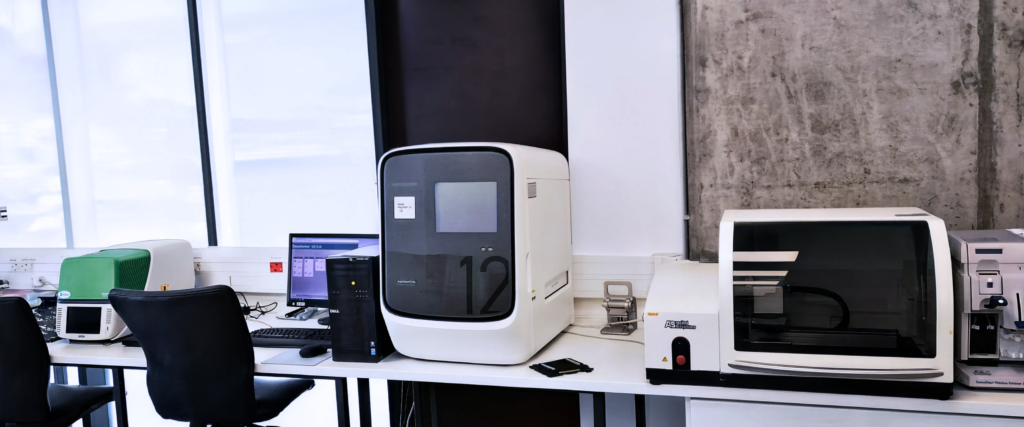
The QuantStudio™ 12K Flex Real-Time PCR System at CPGR
Delivering reliable RT-PCR results requires more than technical expertise, it also depends on using advanced instrumentation that offers precision, flexibility and reproducibility. At CPGR, researchers have access to the QuantStudio™ 12K Flex Real-Time PCR System, a high-throughput platform designed to support a broad range of molecular biology and genomics applications.
The QuantStudio™ 12K Flex combines advanced optical technology, flexible throughput options and intuitive data analysis software, enabling researchers to generate accurate and reproducible results across projects of varying scale. Whether analysing a small number of samples or conducting large-scale studies, the platform provides the performance needed to support high-quality research.
This versatility makes the system suitable for academic research, clinical research, biotechnology, pharmaceutical development and agricultural genomics.
Flexible Workflows for Diverse Research Applications
Every research project has unique objectives and sample requirements. The QuantStudio™ 12K Flex is designed to accommodate this diversity by supporting multiple workflow formats without compromising data quality.
Researchers can use the platform for:
- Gene expression analysis
- SNP genotyping
- Mutation detection
- Copy Number Variation (CNV) analysis
- microRNA (miRNA) profiling
- DNA methylation studies
- Pharmacogenomics research
- Pathogen detection
- Validation of Next-Generation Sequencing (NGS) results
This flexibility allows researchers to perform a wide range of molecular analyses using a single, highly capable platform, reducing the need for multiple specialised instruments.
Accuracy, Sensitivity and Reproducibility
Reliable molecular data is essential for producing meaningful scientific outcomes. The QuantStudio™ 12K Flex is engineered to deliver highly sensitive and reproducible RT-PCR measurements, even when analysing low-abundance targets.
Key advantages include:
- High analytical sensitivity for detecting low-copy-number targets.
- Excellent reproducibility across experiments.
- Precise quantitative analysis using advanced fluorescence detection.
- Consistent performance for single-target and multiplex assays.
- Scalable workflows suitable for both pilot studies and large research projects.
These capabilities help researchers generate robust datasets that can be confidently used in publications, collaborative studies and downstream analyses.
Supporting Modern Genomics Research
RT-PCR remains an important companion technology to modern sequencing platforms. While sequencing provides comprehensive genomic information, RT-PCR enables researchers to validate discoveries, quantify gene expression and investigate specific genetic targets with exceptional precision.
At CPGR, RT-PCR services are integrated with our broader genomics capabilities, allowing researchers to combine multiple technologies within a single project. Depending on the research objectives, RT-PCR can complement services such as:
- Whole Genome Sequencing
- Whole Exome Sequencing
- Amplicon Sequencing
- Metagenomics
- Microbiome Sequencing
- Long-Read Sequencing
- Bioinformatics analysis
This integrated approach enables researchers to move seamlessly from discovery to validation, generating stronger, more reliable scientific outcomes.
Why Researchers Choose CPGR for RT-PCR Services
Selecting the right laboratory partner is just as important as choosing the right technology. Researchers require confidence that their samples will be processed using validated workflows, supported by experienced scientists and analysed using robust quality management systems.
CPGR has built a reputation for delivering high-quality genomics services through a combination of scientific expertise, advanced instrumentation and a commitment to research excellence.
Researchers choose CPGR because we offer:
- State-of-the-art instrumentation, including the QuantStudio™ 12K Flex Real-Time PCR System.
- End-to-end project support, from experimental and primer design, assay selection to data analysis and interpretation.
- Experienced molecular biologists and genomics specialists who provide technical guidance throughout the research process.
- Integrated genomics solutions, allowing RT-PCR to be combined with sequencing and bioinformatics services.
- ISO 9001:2015-certified Quality Management System, ensuring consistent laboratory processes and high-quality results.
- Collaborative scientific partnerships with universities, research institutes, healthcare organisations and biotechnology companies across South Africa and beyond.
Whether validating sequencing results, quantifying gene expression or investigating genetic variation, CPGR provides researchers with the expertise and technology needed to produce accurate, reproducible and publication-ready data.
Conclusion
Real-Time PCR remains one of the most trusted and widely used molecular biology techniques, providing researchers with the speed, sensitivity and accuracy needed to answer targeted biological questions. From gene expression analysis and mutation detection to pharmacogenomics and pathogen research, RT-PCR continues to play a vital role in advancing scientific discovery.
At CPGR, our QuantStudio™ 12K Flex Real-Time PCR System, combined with experienced scientific support and integrated genomics expertise, enables researchers to generate reliable, high-quality molecular data across a broad range of research applications.
Whether your project involves validating sequencing results, investigating disease biomarkers or exploring gene expression, CPGR provides comprehensive RT-PCR services tailored to your research objectives.
Ready to accelerate your research with accurate and reliable RT-PCR analysis? Contact CPGR today to discuss your project and discover how our RT-PCR services can support your next scientific breakthrough. https://calendly.com/justin-naicker-cpgr/cpgr-chat