Every living organism carries a unique set of genetic instructions that determines how it grows, develops and responds to its environment. These instructions are encoded within DNA and collectively form the organism’s genome.
Whole Genome Sequencing (WGS) is a powerful genomics technology that determines the complete DNA sequence of an organism’s genome in a single analysis. Unlike targeted sequencing methods that examine only selected genes or regions of DNA, WGS captures nearly all genetic information, providing researchers with the most comprehensive view of an organism’s genetic makeup.
By analysing an entire genome, scientists can identify millions of genetic variants, investigate evolutionary relationships, detect disease-causing mutations and better understand the biological mechanisms that influence health, disease and adaptation.
Advances in sequencing technologies have made Whole Genome Sequencing faster, more accurate and more accessible than ever before. Today, WGS supports research across human health, agriculture, infectious diseases, biodiversity, environmental science and biotechnology, making it one of the most important tools in modern genomics.
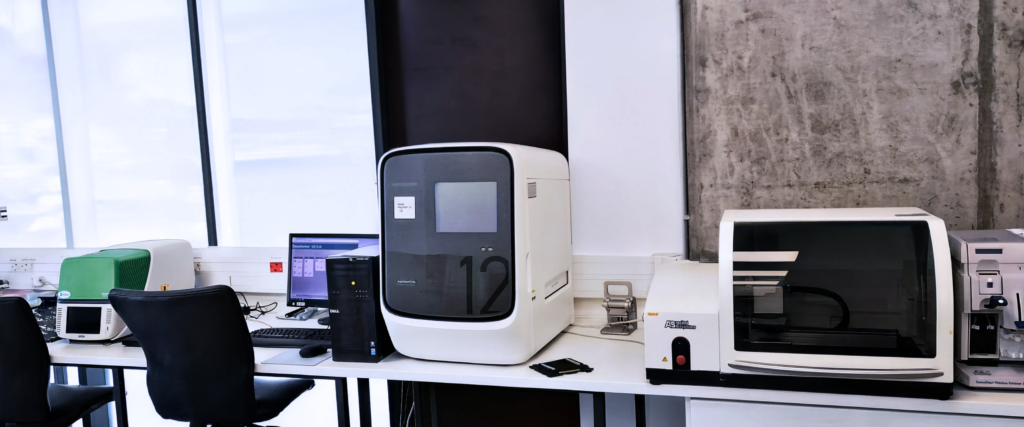
At the Centre for Proteomic and Genomic Research (CPGR), Whole Genome Sequencing forms part of an integrated genomics portfolio that combines advanced sequencing technologies, expert scientific support and comprehensive bioinformatics analysis. Whether researchers are sequencing the human genome, studying crop genetics or monitoring emerging pathogens, CPGR provides end-to-end solutions that enable high-quality, publication-ready genomic data.
Key Takeaways
- Whole Genome Sequencing analyses an organism’s complete DNA sequence rather than selected genes.
- WGS supports research across healthcare, agriculture, microbiology, conservation and biotechnology.
- Long-read sequencing is expanding the capabilities of Whole Genome Sequencing by improving genome assembly and enabling direct methylation analysis.
- Bioinformatics is essential for processing and interpreting Whole Genome Sequencing data.
- CPGR provides comprehensive Whole Genome Sequencing services supported by advanced sequencing platforms and experienced genomics and bioinformatics specialists.
Why Whole Genome Sequencing Matters
Every organism contains genetic variation that influences biological function, adaptation and disease. While targeted sequencing approaches provide valuable information about specific genes, they cannot capture the complete picture of genomic variation.
Whole Genome Sequencing overcomes this limitation by analysing the entire genome, allowing researchers to identify both common and rare genetic variants across coding and non-coding regions of DNA.
This comprehensive approach enables scientists to:
- Investigate inherited genetic disorders
- Discover disease-associated mutations
- Monitor pathogen evolution
- Characterise antimicrobial resistance
- Improve crop breeding programmes
- Study endangered species
- Understand microbial diversity
- Investigate evolutionary biology
Because WGS provides a complete genetic blueprint, it has become an indispensable tool for researchers seeking deeper biological insights than targeted sequencing methods can provide.
Applications of Whole Genome Sequencing
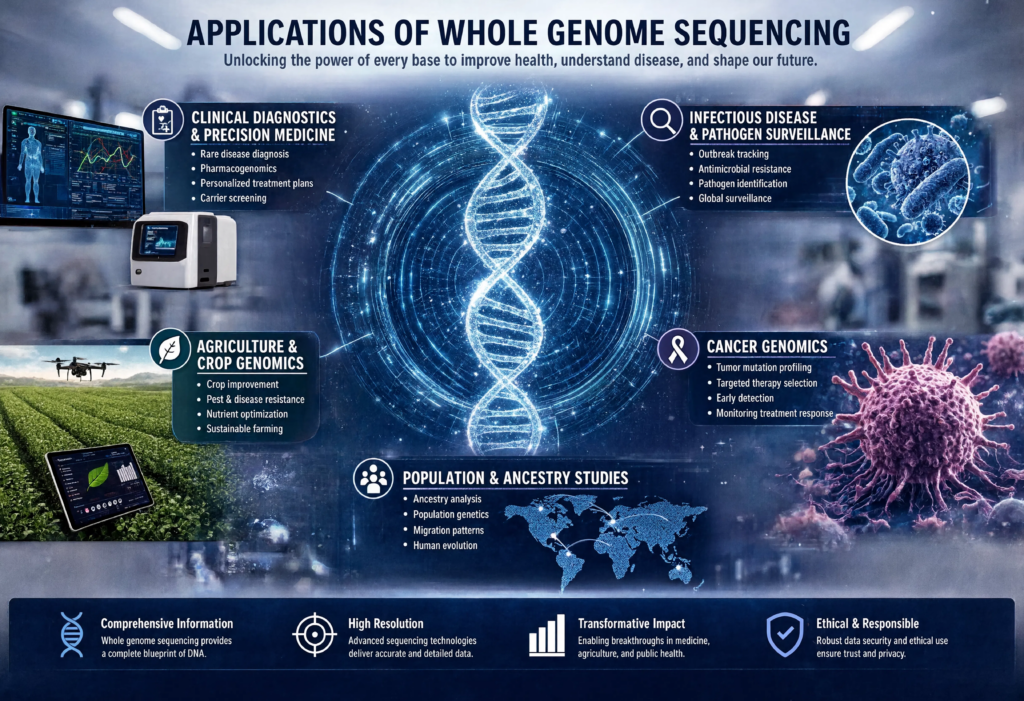
Whole Genome Sequencing in South Africa (WGS) has transformed biological research by enabling scientists to study the complete DNA sequence of an organism rather than selected genes or genomic regions. This comprehensive approach provides valuable insights into genetic variation, evolution, disease mechanisms and biological function across a wide range of species. Whole Genome Sequencing (WGS) is explored for discovery research, where the entire genome needs to be characterised to identify key biomarkers and/or mutations – especially for novel or non-sequenced organisms.
Today, WGS is applied across human health, agriculture, veterinary science, microbiology, conservation biology and environmental research. By analysing an organism’s entire genome, researchers can answer complex scientific questions with greater accuracy and confidence.
Below are some of the key applications of Whole Genome Sequencing in modern research.
Human Genomics
Human Whole Genome Sequencing has become an essential tool in biomedical research and precision medicine. By analysing an individual’s complete genome, researchers can identify genetic variants associated with inherited disorders, cancer susceptibility and complex diseases.
Applications include:
- Rare disease research
- Cancer genomics
- Pharmacogenomics
- Population genetics
- Precision medicine
- Identification of inherited genetic disorders
- Biomarker discovery
Unlike targeted gene panels, Whole Genome Sequencing captures both coding and non-coding regions of DNA, allowing researchers to investigate structural variants, copy number changes and regulatory regions that may contribute to disease.
As precision medicine continues to evolve, WGS is helping researchers better understand genetic diversity and develop more personalised approaches to diagnosis and treatment.
Animal Genomics
Whole Genome Sequencing plays an increasingly important role in veterinary research, livestock improvement and wildlife conservation.
Researchers use WGS to investigate genetic traits associated with disease resistance, reproduction, productivity and adaptation across animal populations.
Common applications include:
- Livestock breeding programmes
- Veterinary disease research
- Conservation genetics
- Wildlife population studies
- Evolutionary biology
- Identification of genetic disorders in companion animals
In conservation biology, WGS helps scientists assess genetic diversity within endangered populations, identify inbreeding risks and develop evidence-based conservation strategies to preserve biodiversity.
Plant Genomics
Agricultural research has benefited enormously from advances in Whole Genome Sequencing.
Plant genomes contain valuable information that can help researchers develop crops with improved yield, nutritional value and resistance to environmental stress.
Whole Genome Sequencing supports research involving:
- Crop improvement
- Drought tolerance
- Disease resistance
- Pest resistance
- Climate resilience
- Plant breeding programmes
- Comparative genomics
As climate change continues to affect global food production, genomics is becoming an increasingly important tool for developing sustainable agricultural systems capable of meeting future food security challenges.
Bacterial Genomics
Whole Genome Sequencing has revolutionised bacterial research by providing complete genetic information for bacterial isolates.
Researchers can identify antimicrobial resistance genes, investigate pathogen evolution and track bacterial outbreaks with unprecedented accuracy.
Applications include:
- Antimicrobial resistance surveillance
- Hospital outbreak investigations
- Food safety testing
- Public health surveillance
- Comparative bacterial genomics
- Identification of novel bacterial species
Whole Genome Sequencing enables researchers to distinguish between closely related bacterial strains, making it an invaluable tool for epidemiology and infectious disease research.
Viral Genomics
The importance of viral Whole Genome Sequencing became particularly evident during the COVID-19 pandemic, when researchers worldwide used sequencing technologies to monitor viral evolution and identify emerging variants.
Today, viral genomics supports:
- Pathogen surveillance
- Variant detection
- Vaccine research
- Viral evolution studies
- Emerging infectious disease monitoring
- Public health preparedness
By sequencing complete viral genomes, researchers can better understand transmission patterns, mutation rates and the emergence of variants that may influence disease severity or vaccine effectiveness.
Fungal Genomics
Although fungal genomes are often less studied than human or bacterial genomes, they play a vital role in medicine, agriculture and environmental science.
Whole Genome Sequencing enables researchers to investigate fungal biology at the genomic level, supporting studies on pathogenic fungi, industrial biotechnology and ecosystem health.
Applications include:
- Medical mycology
- Plant pathogenic fungi
- Industrial biotechnology
- Environmental microbiology
- Antifungal resistance research
- Comparative fungal genomics
These studies contribute to improved disease management, agricultural productivity and a deeper understanding of fungal diversity across different ecosystems.
One Technology, Countless Research Opportunities
One of the greatest strengths of Whole Genome Sequencing is its versatility. The same sequencing technology can be applied across diverse scientific disciplines, generating comprehensive genomic data that addresses a wide variety of biological questions.
Whether researchers are investigating inherited diseases in humans, improving crop performance, monitoring infectious disease outbreaks or conserving endangered wildlife, Whole Genome Sequencing provides the foundation for informed scientific discovery.
However, obtaining high-quality genomic data is only one part of the research process. Choosing the appropriate sequencing technology is equally important, particularly as researchers increasingly combine short-read and long-read sequencing approaches to gain a more complete understanding of complex genomes.
Real-World Applications of Whole Genome Sequencing
While Whole Genome Sequencing (WGS) is an advanced laboratory technique, its true value lies in the real-world problems it helps solve. Across healthcare, agriculture, conservation and public health, researchers are using WGS to generate actionable insights that improve lives, protect ecosystems and advance scientific discovery.
By analysing an organism’s complete genetic blueprint, scientists can answer complex biological questions that would be difficult or impossible to address using conventional laboratory methods alone.
Below are some of the ways Whole Genome Sequencing is making an impact across South Africa and around the world.
Tracking Infectious Disease Outbreaks
Rapidly identifying the source of an infectious disease outbreak is essential for protecting public health. Whole Genome Sequencing has become one of the most powerful tools available for outbreak investigation because it enables researchers to compare the complete genomes of pathogens with exceptional precision.
By sequencing bacterial or viral isolates from different patients, scientists can determine whether infections originated from the same outbreak, identify transmission pathways and monitor how pathogens evolve over time.
This information supports faster public health responses and helps healthcare authorities implement targeted infection control measures.
Whole Genome Sequencing has been widely used to support surveillance of diseases such as:
- Tuberculosis (TB)
- COVID-19
- Listeriosis
- Salmonella
- Cholera
- Influenza
As new infectious diseases continue to emerge, WGS is playing an increasingly important role in strengthening disease surveillance and improving outbreak preparedness.
Fighting Antimicrobial Resistance
Antimicrobial resistance (AMR) is recognised as one of the world’s greatest public health challenges. As bacteria evolve resistance to antibiotics, infections become increasingly difficult to treat, leading to longer hospital stays, higher healthcare costs and increased mortality.
Whole Genome Sequencing enables researchers to identify antimicrobial resistance genes directly from bacterial genomes, providing detailed insights into how resistance develops and spreads within populations.
Researchers use WGS to:
- Detect antibiotic resistance genes.
- Monitor the emergence of multidrug-resistant bacteria.
- Investigate hospital-acquired infections.
- Track foodborne pathogens.
- Support antimicrobial stewardship programmes.
In South Africa, where tuberculosis remains a significant public health concern, Whole Genome Sequencing has become an invaluable research tool for studying drug-resistant Mycobacterium tuberculosis strains and improving our understanding of transmission dynamics.
Advancing Cancer Research and Precision Medicine
Cancer develops through the accumulation of genetic mutations that disrupt normal cellular processes. Whole Genome Sequencing allows researchers to investigate these mutations across the entire genome, providing a more comprehensive understanding of tumour biology.
Rather than focusing on a limited number of genes, WGS enables scientists to identify both common and rare genetic alterations that may influence disease progression or treatment response.
Applications include:
- Identification of cancer-associated mutations.
- Biomarker discovery.
- Tumour evolution studies.
- Precision oncology research.
- Pharmacogenomics.
These insights are helping researchers develop more personalised approaches to cancer diagnosis and treatment while supporting the discovery of new therapeutic targets.
Improving Agriculture and Food Security
Whole Genome Sequencing is transforming agricultural research by helping scientists better understand the genetics of crops, livestock and agricultural pathogens.
Researchers can identify genes associated with desirable traits, accelerating breeding programmes and supporting the development of more resilient agricultural systems.
Applications include:
- Developing drought-tolerant crop varieties.
- Improving disease resistance in crops.
- Enhancing livestock productivity.
- Identifying beneficial genetic traits.
- Monitoring plant and animal pathogens.
For countries such as South Africa, where agriculture plays a vital role in the economy and food security, genomics provides valuable tools for addressing climate change, emerging diseases and increasing production demands.
Conserving Biodiversity and Protecting Wildlife
South Africa is one of the world’s most biodiverse countries, making conservation genomics an increasingly important area of research.
Whole Genome Sequencing enables scientists to study the genetic diversity of endangered species, understand population structure and identify genetic factors that influence survival and adaptation.
Researchers use WGS to:
- Assess genetic diversity.
- Monitor endangered wildlife populations.
- Investigate evolutionary history.
- Inform conservation breeding programmes.
- Combat illegal wildlife trafficking through forensic genomics.
For iconic species such as the rhinoceros, genomic data can help conservationists make informed management decisions while supporting efforts to preserve genetic diversity for future generations.
Monitoring the Environment Through Genomics
Environmental genomics is providing researchers with new ways to monitor ecosystems and assess environmental health.
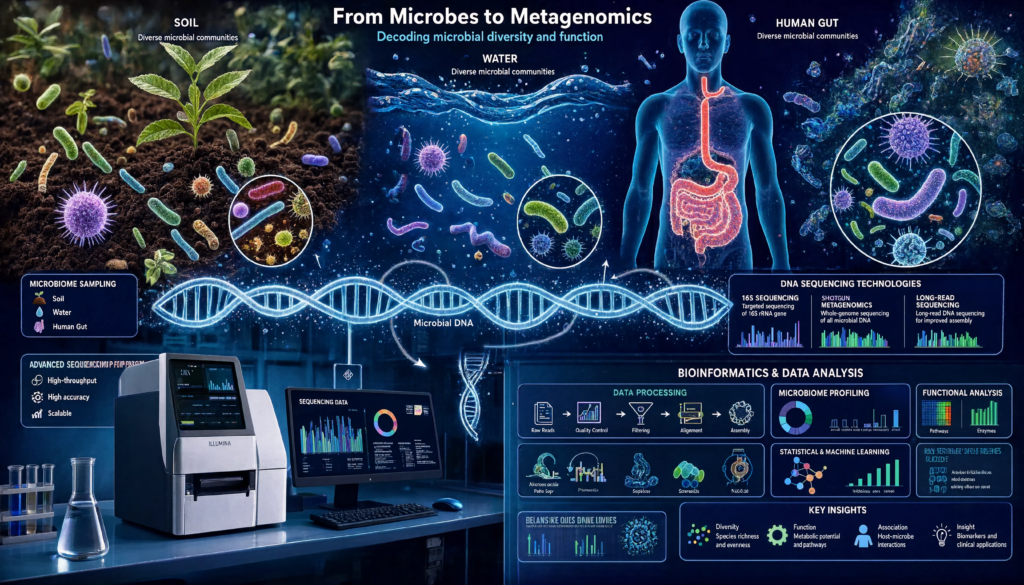
Using Whole Genome Sequencing through Shotgun Metagenomics for environmental DNA (eDNA) approaches, scientists can detect organisms directly from soil, water or air samples without the need to physically capture or culture them.
Applications include:
- Water quality monitoring.
- Wastewater surveillance.
- Environmental DNA (eDNA) studies.
- Microbial ecology.
- Biodiversity assessments.
- Detection of invasive species.
These approaches are supporting more effective environmental management by providing rapid, sensitive and non-invasive methods for monitoring ecosystems and identifying changes in biodiversity over time.
Supporting Whole Genome Sequencing Research at CPGR
Generating high-quality Whole Genome Sequencing data requires more than advanced sequencing instruments. Successful projects depend on careful experimental design, optimised laboratory workflows, rigorous quality control and robust bioinformatics analysis.
CPGR supports researchers throughout every stage of the sequencing workflow, providing access to advanced genomics technologies and experienced scientific expertise. Whether a project involves human, animal, plant, bacterial, fungal or viral genomes, our team works collaboratively with researchers to deliver reliable, publication-ready genomic data.
Our Whole Genome Sequencing capabilities are complemented by a comprehensive portfolio of genomics services, including Next-Generation Sequencing (NGS), Long-Read Sequencing, Metagenomics, RT-PCR, Microarray and Bioinformatics. This integrated approach enables researchers to select the most appropriate sequencing strategy for their scientific objectives while benefiting from end-to-end project support.
By combining advanced sequencing technologies with expert data analysis, CPGR helps researchers generate meaningful biological insights that contribute to scientific discovery across healthcare, agriculture, environmental science and biodiversity research.
Conclusion
Whole Genome Sequencing has transformed the way scientists investigate biological systems by providing a comprehensive view of an organism’s genetic blueprint. From improving disease surveillance and advancing precision medicine to strengthening agriculture, protecting biodiversity and monitoring environmental health, WGS is driving discoveries that have real-world impact across multiple scientific disciplines.
As the demand for high-quality genomic data continues to grow, access to advanced sequencing technologies and expert analytical support has become essential for successful research. Facilities such as CPGR play a critical role in supporting this work by providing researchers with integrated genomics solutions, experienced scientific guidance and comprehensive bioinformatics expertise.
Whether your research focuses on human health, infectious diseases, agriculture, wildlife conservation or environmental science, Whole Genome Sequencing offers unprecedented opportunities to uncover new biological insights and accelerate scientific innovation.
If you’re planning your next genomics project, CPGR is ready to support you from sample to scientific discovery. Book a free consultation: https://calendly.com/justin-naicker-cpgr/cpgr-chat