Genomics is entering a new era. As research questions become increasingly complex, scientists require technologies capable of revealing the full architecture of DNA and RNA, not just small fragments of genetic information. This is where Oxford Nanopore Technologies sequencing redefines Genomics.
Unlike conventional sequencing technologies that analyse short pieces of DNA, Oxford Nanopore Technologies reads exceptionally long DNA and RNA molecules in real time. This enables researchers to assemble complete genomes, detect structural variants with greater confidence, profile DNA methylation directly from native DNA, and sequence full-length RNA transcripts all within a single workflow.
This approach is transforming research in human health, infectious diseases, cancer, agriculture, environmental science, and biodiversity.
At the Centre for Proteomic and Genomic Research (CPGR), researchers have access to the Oxford Nanopore Technologies PromethION 24, one of the most advanced high-throughput long-read sequencing platforms available in Africa. Combined with expert laboratory support and comprehensive bioinformatics services, CPGR provides an end-to-end sequencing solution for researchers seeking high-quality genomic data.
Whether your project involves whole genome sequencing, metagenomics, transcriptomics, or precision medicine, Oxford Nanopore Technologies sequencing provides the flexibility and depth needed to accelerate discovery.
Why Oxford Nanopore Technologies Sequencing?
Nanopore sequencing is a third-generation sequencing technology that determines the sequence of DNA or RNA molecules by measuring changes in electrical current as individual nucleic acid strands pass through microscopic protein pores, called nanopores.
Unlike sequencing-by-synthesis technologies, Oxford Nanopore does not rely on fluorescent labels or imaging systems. Instead, DNA is analysed directly as it moves through a nanopore embedded within a specialised membrane.
Each DNA base adenine (A), thymine (T), cytosine (C), and guanine (G), produces a unique disruption in the electrical current flowing through the nanopore. Sophisticated machine learning algorithms interpret these electrical signals to identify the DNA sequence in real time.
Because DNA molecules remain intact during sequencing, Oxford Nanopore Technology routinely produces reads exceeding tens of thousands of base pairs, with ultra-long reads capable of spanning entire chromosomes or complex genomic regions.
This innovative approach allows researchers to study genomes with greater continuity, accuracy, and biological context than many traditional sequencing methods.
How Oxford Nanopore Technologies Sequencing Works
Oxford Nanopore Technologies sequencing combines molecular biology, nanotechnology, and artificial intelligence into a streamlined workflow.
Step 1: Sample Preparation
High-quality DNA or RNA is extracted from the biological sample. Depending on the research objectives, samples may originate from:
- Human tissue
- Blood
- Microbial cultures
- Environmental samples
- Plant material
- Animal tissues
- Clinical specimens
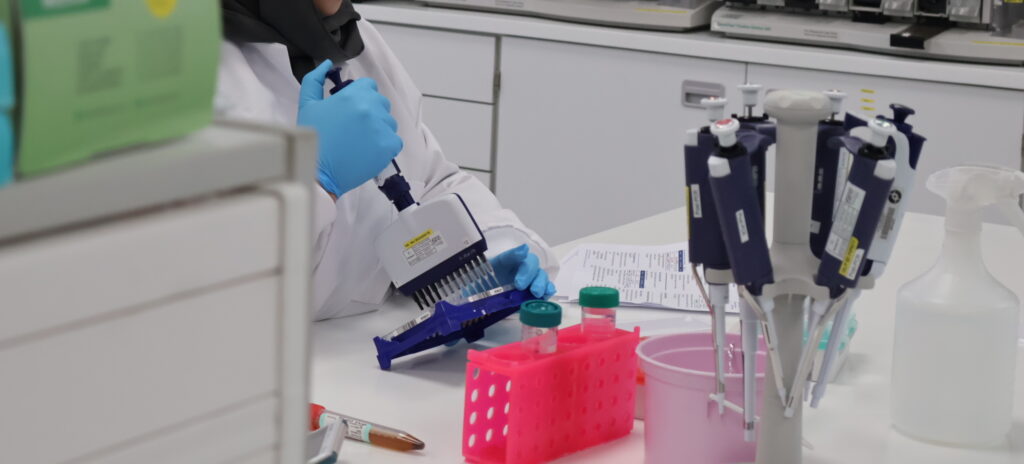
The extracted nucleic acids are prepared using sequencing libraries compatible with Oxford Nanopore flow cells.
Step 2: Loading the Flow Cell
Prepared DNA or RNA libraries are loaded onto a sequencing flow cell containing thousands of individual nanopores.
Each nanopore functions independently, allowing many DNA molecules to be analysed simultaneously.
Step 3: Real-Time Sequencing
As each DNA strand passes through a nanopore, it alters the electrical current in a characteristic way.
These tiny current changes are recorded continuously throughout the sequencing run.
Unlike traditional sequencing technologies, data becomes available immediately after sequencing begins, enabling researchers to monitor experiments in real time.
Step 4: Precision Basecalling
The electrical signal generated by each DNA molecule is converted into nucleotide sequences using advanced algorithms.
Modern basecalling software provides exceptionally high accuracy while continuously improving as machine learning models evolve.
Step 5: Bioinformatics Analysis
Once sequencing is complete, specialised bioinformatics workflows transform raw sequence data into meaningful biological insights.
Analysis may include:
- Genome assembly
- Variant detection
- Structural variant analysis
- Taxonomic classification
- Functional annotation
- DNA methylation analysis
- Transcriptome analysis
- Comparative genomics
At CPGR, experienced bioinformaticians support every stage of this analytical process, ensuring researchers receive publication-ready results. The future of analysis involves Artificial Intelligence (AI) models.
Why Oxford Nanopore Technologies Sequencing Is Transforming Genomics?
Oxford Nanopore sequencing has fundamentally changed how scientists investigate genomes.
Rather than reconstructing genomes from millions of short fragments, researchers can now observe much larger sections of DNA in their natural configuration.
This provides several important advantages.
Long-read Sequencing
Long-read sequencing simplify genome assembly, improve mapping accuracy, and resolve repetitive genomic regions that are often challenging for short-read technologies.
Real-Time Data Generation
Because sequencing data is produced immediately, researchers can monitor experiments as they happen.
Real-time sequencing is especially valuable during infectious disease outbreaks, environmental monitoring, and clinical research where rapid decision-making is essential.
Direct DNA Methylation Detection
Oxford Nanopore sequencing detects DNA methylation directly from native DNA without requiring bisulfite conversion.
This enables researchers to investigate both genetic variation and epigenetic regulation within the same experiment.
Direct RNA Sequencing
Unlike conventional RNA sequencing methods that require conversion of RNA into complementary DNA (cDNA), Oxford Nanopore can sequence native RNA molecules directly.
This allows researchers to study:
- RNA modifications
- Transcript isoforms
- Alternative splicing
- Gene expression
- RNA processing
with greater biological accuracy.
Comprehensive Structural Variant Detection
Structural variants including insertions, deletions, inversions, duplications, and translocations play an important role in many diseases.
Long-read sequencing provides significantly improved detection of these large genomic changes, supporting research into cancer, rare diseases, and inherited disorders.
Flexible Research Applications
Oxford Nanopore sequencing supports an exceptionally broad range of scientific disciplines, including:
- Human genomics
- Precision medicine
- Cancer research
- Agricultural genomics
- Microbiology
- Infectious disease surveillance
- Environmental genomics
- Conservation biology
- Metagenomics
- Transcriptomics
Its versatility makes it one of the most widely adopted long-read sequencing technologies available today.
Meet CPGR’s Oxford Nanopore PromethION 24 Platform
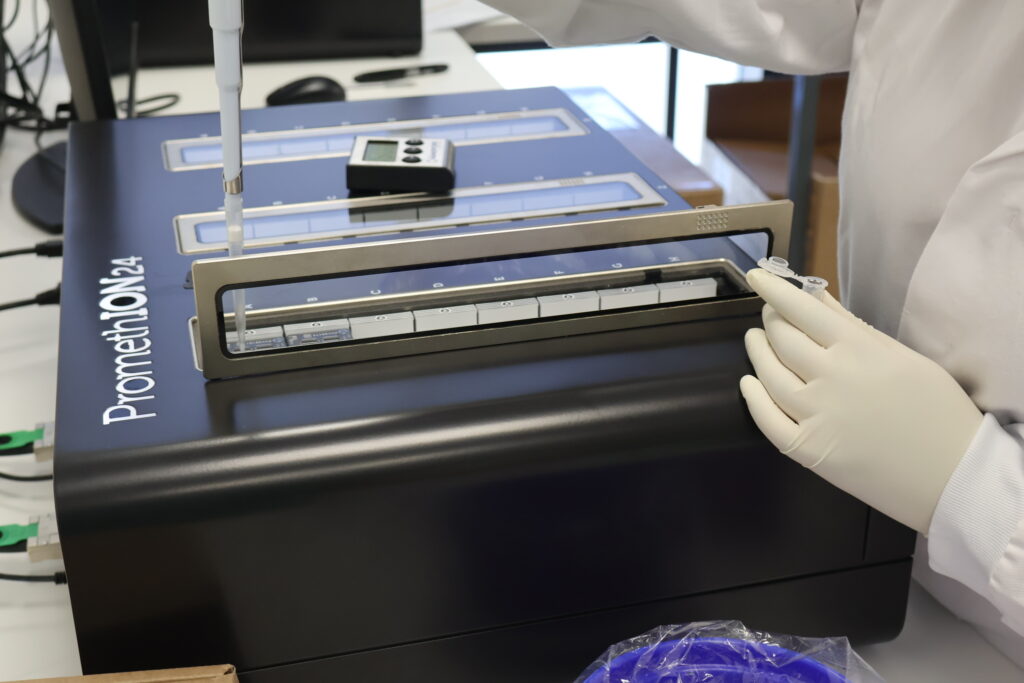
At the Centre for Proteomic and Genomic Research (CPGR), researchers have access to one of the most advanced long-read sequencing platforms available – PromethION 24 by Oxford Nanopore Technologies.
Designed for high-throughput sequencing, the PromethION 24 delivers exceptional flexibility, scalability, and sequencing performance for projects ranging from small pilot studies to large population genomics initiatives.
Unlike smaller sequencing systems, the PromethION 24 supports 24 modular flow cells, allowing multiple projects to run simultaneously while maintaining consistent data quality and throughput. This allows CPGR to sequence individual samples, process multiple projects in parallel, or scale up to large collaborative studies without compromising efficiency.
The platform enables the generation of ultra-long sequencing reads, providing the continuity needed to resolve highly repetitive genomic regions, identify complex structural variants, assemble complete genomes, and detect epigenetic modifications directly from native DNA.
Combined with CPGR’s experienced genomics team and comprehensive bioinformatics support, the PromethION 24 provides an end-to-end sequencing solution that helps researchers move confidently from sample preparation to biological discovery.
Applications of Oxford Nanopore Sequencing
Oxford Nanopore sequencing is being adopted across a broad range of scientific disciplines because of its ability to generate highly informative long-read data. Its flexibility makes it suitable for both basic research and translational applications.
Whole Genome Sequencing
Whole Genome Sequencing (WGS) provides a comprehensive view of an organism’s DNA, capturing both coding and non-coding regions of the genome.
Using long-read sequencing, researchers can:
- Assemble complete genomes with greater accuracy.
- Resolve repetitive DNA regions.
- Detect structural variants.
- Phase maternal and paternal chromosomes.
- Characterise complex genomic rearrangements.
These capabilities are particularly valuable when studying genetically diverse populations and previously uncharacterised organisms.
Human Genomics and Precision Medicine
Human genomes contain millions of genetic variants, many of which influence disease susceptibility, treatment response, and inherited disorders.
Oxford Nanopore sequencing enables researchers to investigate:
- Rare genetic diseases
- Inherited disorders
- Pharmacogenomics
- Population genomics
- Precision medicine
- Clinical research
By generating more complete genomic information, long-read sequencing supports a deeper understanding of disease mechanisms and patient-specific biology.
Cancer Genomics
Cancer genomes often contain complex rearrangements that are difficult to detect using short-read sequencing alone.
Oxford Nanopore sequencing allows researchers to investigate:
- Gene fusions
- Chromosomal rearrangements
- Structural variants
- Copy number alterations
- Epigenetic modifications
These insights contribute to biomarker discovery, treatment stratification, and personalised oncology research.
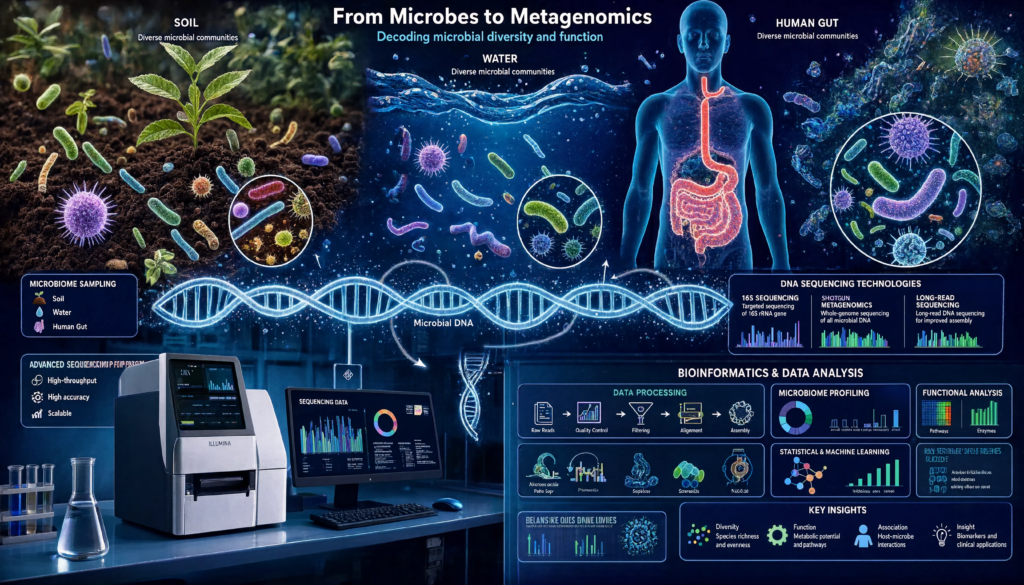
Long-Read Metagenomics
Traditional microbiome studies frequently rely on short-read sequencing, which may struggle to distinguish closely related microbial species.
Long-read metagenomics enables researchers to:
- Assemble complete microbial genomes.
- Identify bacteria, fungi, viruses and archaea.
- Detect antimicrobial resistance genes.
- Characterise microbial communities.
- Discover novel microorganisms.
- Investigate microbial evolution.
These applications support research in environmental science, infectious diseases, agriculture, food safety, and biodiversity.
Agricultural and Veterinary Genomics
South Africa’s agricultural sector increasingly depends on genomic technologies to improve crop resilience, livestock productivity, and disease resistance.
Oxford Nanopore sequencing supports:
- Plant genome assembly
- Livestock genomics
- Pathogen surveillance
- Crop improvement
- Veterinary diagnostics
- Conservation breeding programmes
High-quality genomic information helps researchers develop more sustainable agricultural systems while protecting valuable genetic resources.
Biodiversity and Conservation
South Africa is home to some of the world’s richest biodiversity.
Long-read sequencing enables conservation scientists to:
- Assemble reference genomes for endangered species.
- Study genetic diversity.
- Monitor wildlife populations.
- Investigate evolutionary relationships.
- Support species conservation strategies.
These genomic resources are becoming increasingly important for protecting biodiversity in the face of environmental change.
Oxford Nanopore Sequencing vs Short-Read Sequencing
Choosing the right sequencing technology depends on the biological question being investigated.
| Feature | Short-Read Sequencing | Oxford Nanopore Sequencing |
|---|---|---|
| Read Length | 100–300 bp | Thousands to millions of bases |
| Structural Variant Detection | Limited | Excellent |
| Genome Assembly | Reference-based | De novo and reference-based |
| DNA Methylation Detection | Requires Bisulfite conversion | Directly from native DNA |
| RNA Sequencing | cDNA conversion required | Direct RNA sequencing available |
| Genome Phasing | Challenging | Highly accurate |
| Real-Time Data | No | Yes |
| Repetitive Regions | Difficult to resolve | Easily resolved |
Rather than competing technologies, short-read and long-read sequencing often complement one another. Many research projects integrate both approaches to maximise data quality and biological insight.
Native DNA Methylation and Direct RNA Sequencing
One of the defining advantages of Oxford Nanopore Technology is its ability to analyse native nucleic acids directly.
Native DNA Methylation
DNA methylation is an important epigenetic mechanism that regulates gene expression without altering the DNA sequence itself.
Unlike conventional approaches that require bisulfite conversion, Oxford Nanopore sequencing detects DNA methylation directly during sequencing.
Researchers can investigate:
- Gene regulation
- Cancer epigenetics
- Developmental biology
- Ageing
- Environmental adaptation
- Plant epigenomics
This integrated approach reduces laboratory complexity while providing richer biological information.
Direct RNA Sequencing
Oxford Nanopore is one of the few sequencing technologies capable of sequencing native RNA molecules directly.
This allows researchers to study:
- RNA modifications
- Transcript isoforms
- Alternative splicing
- RNA stability
- Gene expression
- RNA processing
without introducing biases associated with cDNA synthesis.
Direct RNA sequencing provides a more accurate representation of the transcriptome and is increasingly valuable in molecular biology research.
Bioinformatics: From Raw Reads to Biological Discovery
Generating sequencing data is only the first step in a successful genomics project.
Transforming millions of sequencing reads into meaningful biological insights requires specialised computational analysis.
CPGR provides comprehensive bioinformatics support, including:
- Quality assessment
- Basecalling
- Genome assembly
- Variant calling
- Structural variant detection
- Functional annotation
- Taxonomic classification
- Comparative genomics
- DNA methylation analysis
- Biological interpretation
By integrating sequencing and bioinformatics under one roof, CPGR ensures researchers receive high-quality, reproducible, and publication-ready results.
Why Researchers Choose CPGR?
CPGR has established itself as one of South Africa’s leading genomics service providers by combining advanced sequencing technologies with scientific expertise and internationally recognised quality standards.
Researchers choose CPGR because of its:
- Oxford Nanopore Technologies PromethION 24 platform (First placement in Africa)
- End-to-end project management
- Expert genomics scientists
- Comprehensive bioinformatics services
- ISO 9001:2015-certified quality management system
- Support for academic, clinical, agricultural, and commercial research
- Collaborative approach to project design
- Commitment to advancing genomics research across Africa
Whether you are sequencing microbial genomes, investigating rare diseases, studying biodiversity, or developing precision medicine applications, CPGR provides the expertise and infrastructure needed to deliver reliable genomic insights.
Book a Consultation
Oxford Nanopore sequencing is transforming the way researchers study genomes, transcriptomes, and microbial communities. Choosing the right sequencing strategy and the right research partner is essential to generating meaningful, high-quality data.
At CPGR, our experienced genomics specialists work closely with researchers to design tailored sequencing solutions using the Oxford Nanopore PromethION 24 platform. From project planning and sample preparation to sequencing, bioinformatics, and biological interpretation, we provide comprehensive support at every stage of your research.
Book a consultation with CPGR today to discuss your project, explore the benefits of Oxford Nanopore sequencing, and receive a customised quotation for your research. https://calendly.com/justin-naicker-cpgr/cpgr-chat