DNA sequencing has fundamentally changed the way scientists study biology. From identifying disease-causing genetic variants and tracking infectious disease outbreaks to improving agricultural productivity and conserving biodiversity, sequencing technologies have become indispensable tools in modern life science research.
Over the past two decades, Next Generation Sequencing (NGS) has transformed genomics by enabling researchers to sequence millions of DNA fragments simultaneously. Compared to First Generation sequencing, NGS dramatically increased throughput, reduced costs, and accelerated scientific discovery across human health, agriculture, microbiology, environmental science, and precision medicine.
Today, sequencing technology is entering a new era. While second-generation short-read sequencing remains an essential research tool, third-generation long-read sequencing is overcoming many of its limitations by producing significantly longer DNA reads, improving genome assembly, resolving complex genomic regions, detecting structural variants, and analysing native DNA modifications such as methylation.
As genomic research continues to evolve, researchers increasingly combine both sequencing approaches to generate more complete and biologically meaningful datasets.
At the Centre for Proteomic and Genomic Research (CPGR), researchers have access to advanced sequencing technologies that support a broad range of genomics applications. Through comprehensive sequencing workflows, bioinformatics expertise, and long-read capabilities powered by the Oxford Nanopore Technologies PromethION 24, CPGR helps researchers generate high-quality genomic data that drives scientific discovery.
What Is Next Generation Sequencing?
Next Generation Sequencing (NGS) refers to a collection of high-throughput DNA sequencing technologies capable of analysing millions to billions of DNA fragments in parallel. Unlike first-generation Sanger sequencing, which reads one DNA fragment at a time, NGS enables researchers to sequence entire genomes, transcriptomes, or microbial communities within a single experiment.
Because of its scalability and efficiency, NGS has become a cornerstone of genomics research and is widely used across academic institutions, healthcare organisations, biotechnology companies, and agricultural research programmes.
Common applications of Next Generation Sequencing include:
- Whole Genome Sequencing
- Whole Exome Sequencing
- Targeted Sequencing
- RNA Sequencing (RNA-Seq)
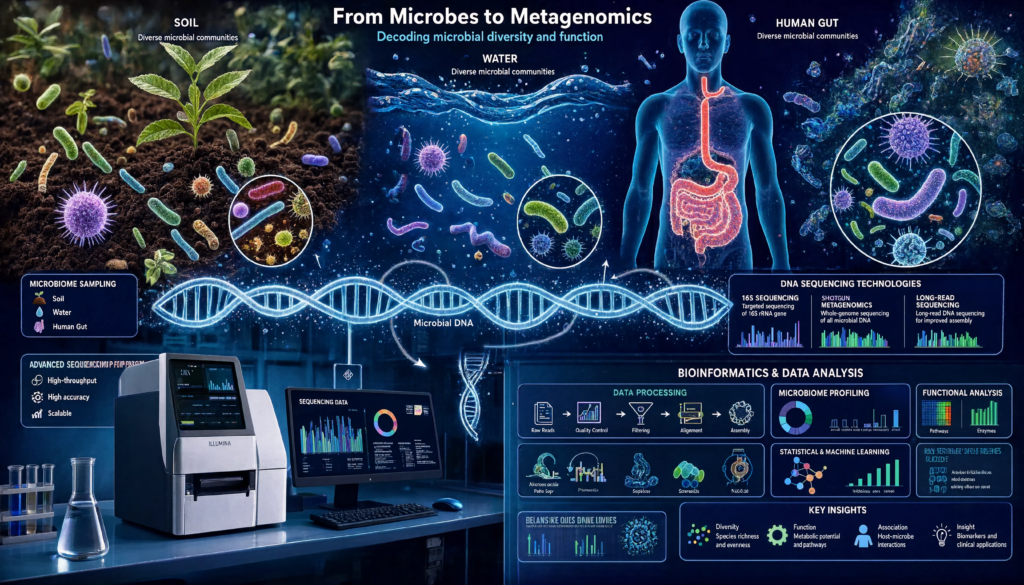
- Metagenomic Sequencing
- Amplicon Sequencing
- Microbiome Analysis
- Cancer Genomics
- Population Genomics
- Infectious Disease Surveillance
By producing massive amounts of genomic data quickly and cost-effectively, NGS has accelerated discoveries across numerous scientific disciplines and continues to underpin modern genomic research.
The Evolution of DNA Sequencing Technologies
DNA sequencing technologies have evolved significantly over the past several decades, with each generation offering improvements in speed, throughput, and the complexity of genomic questions researchers can address.
First-Generation Sequencing
The first major breakthrough came with Sanger sequencing, introduced in the late 1970s. Although highly accurate, Sanger sequencing analyses one DNA fragment at a time, making it unsuitable for large-scale genomic projects due to its relatively low throughput and higher cost.
Despite these limitations, Sanger sequencing remains valuable today for validating sequencing results and analysing smaller DNA regions.
Second-Generation Sequencing (Short-Read Sequencing)
The introduction of Next Generation Sequencing revolutionised genomics by enabling the simultaneous sequencing of millions of DNA fragments.
Second-generation sequencing platforms produce short DNA reads typically between 50 and 300 base pairs which are computationally assembled into larger genomic sequences.
This technology dramatically reduced sequencing costs while increasing throughput, making ambitious projects such as population genomics, cancer genomics, transcriptomics, and large-scale pathogen surveillance more accessible.
Today, short-read sequencing continues to play an important role in genomic research due to its high accuracy, scalability, and cost-effectiveness.
However, assembling complex genomes from short fragments presents challenges, particularly when analysing repetitive genomic regions, structural variants, highly homologous genes, and large chromosomal rearrangements.
These limitations have driven the development of a new generation of sequencing technologies.
Third-Generation Sequencing (Long-Read Sequencing)
Third-generation sequencing represents the next major advancement in genomics.
Rather than sequencing fragmented DNA into hundreds of small reads, long-read sequencing technologies can generate DNA reads spanning thousands or even hundreds of thousands of bases in a single continuous read.
This provides researchers with a much more complete view of the genome, enabling:
- Improved genome assemblies
- Accurate structural variant detection
- Complete microbial genome reconstruction
- Enhanced transcript isoform identification
- Better analysis of repetitive DNA regions
- Direct detection of native DNA methylation
- More accurate haplotype phasing
Long-read sequencing is increasingly being adopted across human genomics, cancer research, agricultural genomics, microbiology, conservation genetics, and precision medicine because it overcomes many of the challenges associated with short-read sequencing.
At CPGR, researchers can access advanced long-read sequencing through the Oxford Nanopore PromethION 24, supporting high-throughput genomic research across a diverse range of scientific applications.
Understanding Short-Read Sequencing
Short-read sequencing, also known as second-generation sequencing, has been the foundation of modern genomics for nearly two decades. By sequencing millions of short DNA fragments in parallel, it provides researchers with high-throughput, accurate, and cost-effective genomic data suitable for a wide variety of applications.
Typically producing reads between 50 and 300 base pairs, short-read sequencing has enabled landmark scientific initiatives, including the sequencing of thousands of human genomes, large-scale cancer studies, agricultural genomics programmes, and infectious disease surveillance projects.
Its ability to generate enormous amounts of data with high base-calling accuracy has made short-read sequencing an indispensable tool in research laboratories around the world.
Common applications include:
- Whole Genome Sequencing
- Whole Exome Sequencing
- RNA Sequencing (RNA-Seq)
- Targeted gene panels
- Variant discovery
- Population genomics
- Gene expression analysis
- Microbial surveillance
For many research questions, short-read sequencing remains the most practical and economical solution, particularly when analysing single nucleotide variants (SNVs), small insertions and deletions (indels), or projects involving large sample numbers.
However, because genomes are reconstructed from millions of short DNA fragments, some genomic regions remain difficult to resolve accurately.
The Limitations of Short-Read Sequencing
While short-read sequencing has transformed genomics, every technology has limitations.
Because DNA is fragmented into very small pieces before sequencing, researchers must rely on sophisticated computational methods to reconstruct the original genome. This approach works exceptionally well for many applications but becomes increasingly challenging when analysing complex genomic structures.
Short-read sequencing may struggle with:
- Highly repetitive DNA regions
- Large structural variants
- Chromosomal rearrangements
- Gene duplications
- Long insertions and deletions
- Highly similar gene families
- Complex microbial communities
- Complete genome assembly
These limitations can leave gaps in assembled genomes or make it difficult to determine the precise arrangement of genetic material.
As research questions become more complex particularly in precision medicine, biodiversity, agriculture, and infectious disease genomics scientists increasingly require technologies capable of reading much longer stretches of DNA.
This need has driven the rapid adoption of third-generation sequencing.
The Rise of Long-Read Sequencing
Long-read sequencing represents one of the most significant advances in genomics since the introduction of Next Generation Sequencing.
Unlike short-read technologies that analyse fragmented pieces of DNA, long-read sequencing reads continuous DNA molecules spanning thousands or even hundreds of thousands of bases in a single read. This provides researchers with a much clearer and more complete picture of genome architecture.
One of the leading long-read platforms available today is the Oxford Nanopore Technologies PromethION 24, available at CPGR. This advanced sequencing system supports high-throughput genomic studies while providing the flexibility needed for diverse research applications.
Long-read sequencing is transforming how scientists study genomes by enabling:
- High-quality de novo genome assembly
- Comprehensive structural variant detection
- Full-length transcript sequencing
- Improved metagenomic characterisation
- Haplotype phasing
- Resolution of repetitive genomic regions
- Native DNA methylation profiling
- Real-time sequencing and analysis
Rather than replacing short-read sequencing, long-read technologies complement existing workflows by addressing questions that were previously difficult or impossible to answer.
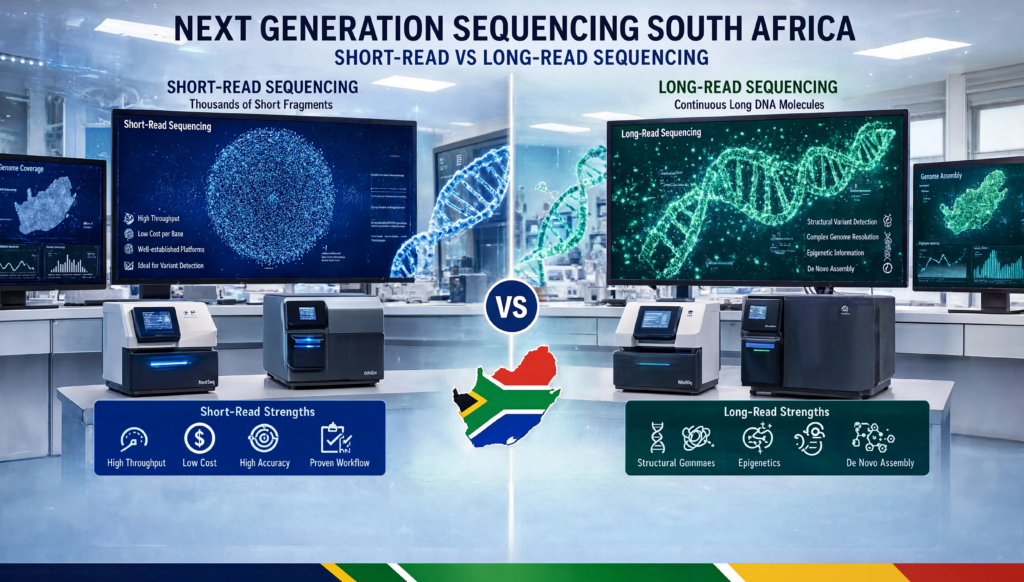
Short-Read vs Long-Read Sequencing
Choosing the appropriate sequencing technology depends on the objectives of a research project. Both approaches offer distinct strengths and are often used together to maximise the quality and completeness of genomic data.
| Feature | Short-Read Sequencing | Long-Read Sequencing |
|---|---|---|
| Typical read length | 50–300 base pairs | Thousands to hundreds of thousands of base pairs |
| Genome assembly | Good | Excellent |
| Structural variant detection | Limited | Excellent |
| Repetitive regions | Difficult to resolve | Easily resolved |
| De novo genome assembly | Challenging | Highly effective |
| Native DNA methylation detection | Not directly detected | Direct detection possible |
| Transcript isoform analysis | Limited | Comprehensive |
| Turnaround | Fast | Fast with real-time sequencing capabilities |
| Best suited for | Variant calling, RNA sequencing, targeted studies | Complex genomes, structural variants, epigenetics, metagenomics |
Rather than viewing one technology as universally superior, researchers should select the sequencing approach that best aligns with their scientific objectives.
For many studies, combining both technologies provides the most comprehensive results. Short-read sequencing delivers highly accurate base-level information, while long-read sequencing resolves complex genomic structures and captures additional biological information that short reads cannot.
This complementary approach is increasingly recognised as best practice in modern genomics research.
Why Long-Read Sequencing Is Shaping the Future of Genomics
As genomic research advances, scientists are moving beyond simply identifying individual genetic variants. Increasingly, they seek to understand how genomes are organised, regulated, and function as complete biological systems.
Long-read sequencing is helping to answer these questions.
By generating much longer DNA reads, researchers can accurately characterise structural variants, resolve highly repetitive genomic regions, assemble complete genomes, and analyse full-length transcripts without relying heavily on computational reconstruction.
Another major advantage is the ability to detect native DNA methylation directly from the same DNA molecule being sequenced. Unlike traditional methylation workflows that often require chemical conversion or additional laboratory steps, Oxford Nanopore sequencing preserves native DNA, enabling researchers to investigate both genetic variation and epigenetic modifications simultaneously.
This integrated view of the genome is opening new opportunities in:
- Precision medicine
- Cancer genomics
- Rare disease research
- Infectious disease surveillance
- Agricultural genomics
- Biodiversity and conservation
- Population genetics
- Microbiome research
As sequencing technologies continue to evolve, long-read sequencing is becoming an essential component of comprehensive genomics research, providing deeper biological insight and supporting discoveries that were previously beyond reach.
How CPGR Supports Advanced Sequencing Research
Selecting the right sequencing technology is only one part of a successful genomics project. Equally important are the expertise, laboratory infrastructure, quality management systems, and bioinformatics capabilities that transform sequencing data into meaningful biological insights.
At the Centre for Proteomic and Genomic Research (CPGR), researchers gain access to an integrated genomics platform designed to support projects from initial consultation through to data interpretation. Whether investigating human disease, infectious pathogens, agricultural species, environmental samples, or biodiversity, CPGR provides end-to-end sequencing solutions tailored to each research objective.
CPGR’s genomics services include:
- Experimental design consultation
- DNA and RNA quality assessment
- Library preparation
- Short-read and long-read sequencing
- Whole Genome Sequencing
- Whole Exome Sequencing
- Targeted sequencing
- Metagenomic sequencing
- Transcriptomics
- Bioinformatics analysis
- Data interpretation and reporting
By combining advanced sequencing technologies with experienced scientists and robust computational workflows, CPGR helps researchers generate reliable, publication-quality genomic data that supports scientific discovery across South Africa and beyond.
Long-Read Sequencing at CPGR: Powered by the Oxford Nanopore PromethION 24
As genomics research continues to evolve, the ability to sequence longer DNA fragments has become increasingly important for answering complex biological questions.
To support these emerging research needs, CPGR operates the Oxford Nanopore Technologies PromethION 24, one of the world’s leading high-throughput long-read sequencing platforms.
Unlike conventional sequencing systems that analyse short DNA fragments, the PromethION 24 reads continuous DNA molecules that can span thousands or even hundreds of thousands of bases. These longer reads provide a much more complete representation of genomic structure, enabling researchers to investigate regions that are often difficult to resolve using short-read sequencing alone.
The PromethION 24 supports a wide range of applications, including:
- Long-read Whole Genome Sequencing
- Transcriptome sequencing
- Metagenomic sequencing
- Structural variant detection
- Genome assembly
- Haplotype phasing
- Epigenetic analysis
- Biodiversity and conservation genomics
Because sequencing data is generated in real time, researchers can monitor sequencing performance throughout a run and make informed decisions as data is produced. This flexibility is particularly valuable for projects requiring rapid genomic insights or adaptive sequencing strategies.
For researchers working with complex genomes or challenging samples, long-read sequencing offers a powerful complement to traditional short-read technologies.
Long-Read Whole Genome Sequencing: Seeing the Genome as a Whole
Whole Genome Sequencing has become one of the most comprehensive approaches for investigating genetic variation. However, the quality of a genome assembly depends heavily on the sequencing technology used.
Long-read Whole Genome Sequencing enables researchers to generate more contiguous genome assemblies by reading much larger sections of DNA in a single pass. This significantly reduces the ambiguity associated with reconstructing genomes from millions of small DNA fragments.
For many applications, long-read sequencing offers advantages such as:
- Improved de novo genome assembly
- Accurate identification of structural variants
- Resolution of repetitive genomic regions
- Better characterisation of complex chromosomes
- Complete microbial genome reconstruction
- Improved haplotype phasing
- Enhanced comparative genomics
These capabilities make long-read Whole Genome Sequencing particularly valuable for research involving human genetics, agriculture, infectious diseases, microbial genomics, evolutionary biology, and biodiversity conservation.
Rather than replacing short-read sequencing, long-read sequencing expands what researchers can discover by revealing genomic features that may otherwise remain hidden.
Native DNA Methylation Profiling: Looking Beyond DNA Sequence
DNA sequence tells researchers what genetic information is present, but it does not explain how genes are regulated.
This is where DNA methylation profiling becomes invaluable.
DNA methylation is an epigenetic modification that influences gene activity without changing the underlying DNA sequence. Changes in methylation patterns have been associated with numerous biological processes, including embryonic development, ageing, cancer, neurological disorders, plant adaptation, and responses to environmental stress.
Traditionally, analysing DNA methylation required chemical treatments such as bisulfite conversion before sequencing. While effective, these methods add laboratory steps, increase sample processing time, and can reduce DNA quality.
Oxford Nanopore sequencing offers a different approach.
Using native DNA molecules, the PromethION 24 can detect DNA methylation directly during sequencing, eliminating the need for bisulfite conversion while preserving valuable epigenetic information. This allows researchers to study both genetic variation and DNA methylation simultaneously from the same sequencing experiment.
In addition to identifying the widely studied 5-methylcytosine (5mC), Oxford Nanopore technology can detect several naturally occurring DNA modifications, including 5-hydroxymethylcytosine (5hmC), N6-methyladenine (6mA), and N4-methylcytosine (4mC), providing a more comprehensive view of genome regulation.
Native DNA methylation profiling supports research across numerous disciplines, including:
- Cancer genomics
- Precision medicine
- Rare disease research
- Developmental biology
- Plant genomics
- Agricultural biotechnology
- Infectious disease research
- Evolutionary biology
- Epigenetics
By integrating long-read sequencing with methylation analysis, researchers gain a richer understanding of how genetic and epigenetic factors work together to influence biological function and disease.
From Sequencing Data to Biological Insight
Generating sequencing data is only the beginning of a genomics project.
Modern sequencing experiments produce vast amounts of information that require advanced computational analysis to identify meaningful biological patterns. Robust bioinformatics pipelines are therefore essential for transforming raw sequencing reads into accurate, interpretable results.
CPGR provides comprehensive bioinformatics support alongside its sequencing services, helping researchers analyse, interpret, and visualise complex genomic datasets.
Depending on the project, bioinformatics workflows may include:
- Quality control and data assessment
- Genome assembly
- Variant calling
- Structural variant analysis
- Gene annotation
- Differential gene expression analysis
- Taxonomic classification
- Functional annotation
- Pathway enrichment analysis
- Comparative genomics
- Epigenetic analysis
By integrating sequencing technologies with advanced bioinformatics expertise, CPGR provides researchers with complete end-to-end genomic solutions that support high-quality research outcomes.
Why Researchers Choose CPGR for Next Generation Sequencing in South Africa
Successful genomics projects require more than access to advanced sequencing instruments they require scientific expertise, quality assurance, bioinformatics capabilities, and a collaborative approach that supports researchers from project conception through to publication.
At the Centre for Proteomic and Genomic Research (CPGR), we combine cutting-edge sequencing technologies with experienced scientists and robust analytical workflows to deliver high-quality genomic solutions tailored to each research project.
Researchers partnering with CPGR benefit from:
- Comprehensive project consultation and experimental design
- Short-read and long-read sequencing capabilities
- Oxford Nanopore Technologies PromethION 24 platform
- Whole Genome, Whole Exome, RNA and Metagenomic sequencing
- Native DNA methylation profiling
- Advanced bioinformatics analysis and interpretation
- ISO 9001:2015 certified quality management system
- Support for academic, clinical, agricultural and commercial research
Whether you’re sequencing the human genome, studying microbial communities, investigating crop genetics or exploring biodiversity, CPGR provides the expertise and infrastructure to help turn complex genomic questions into meaningful scientific discoveries.
The Future of Sequencing Is Here
The field of genomics is evolving rapidly, and sequencing technologies continue to push the boundaries of scientific discovery.
While short-read sequencing remains an essential tool for many genomic applications, the emergence of third-generation long-read sequencing is allowing researchers to answer increasingly complex biological questions with greater accuracy and confidence.
Long-read sequencing is transforming how scientists assemble genomes, identify structural variants, analyse transcriptomes, characterise microbial communities and investigate epigenetic modifications such as DNA methylation all within a single workflow.
Rather than replacing existing technologies, the future of genomics lies in selecting the right sequencing strategy for each research objective and integrating multiple technologies to generate the most comprehensive biological insights.
By combining advanced sequencing platforms, experienced scientists and integrated bioinformatics expertise, CPGR is helping researchers across South Africa and beyond unlock the full potential of modern genomics.
Book a Consultation with CPGR
Whether you’re planning a Whole Genome Sequencing project, investigating microbial diversity through metagenomics, analysing gene expression, or exploring the possibilities of long-read sequencing, choosing the right sequencing strategy is critical to generating meaningful results.
The team at CPGR works closely with researchers to recommend the most appropriate sequencing approach based on your research objectives, sample type and downstream analytical requirements.
Book a consultation with our genomics specialists today to discuss your project, explore available sequencing technologies and receive a tailored quotation : https://calendly.com/justin-naicker-cpgr/cpgr-chat