The field of genomics has undergone revolutionary transformations in the past decade, and one of the most significant breakthroughs is single-cell sequencing. Unlike traditional methods that analyze bulk populations of cells, single-cell sequencing makes it possible to study individual cells in extraordinary detail. This approach has opened doors to unprecedented insights in cancer research, immunology, neuroscience, and clinical diagnostics.
In South Africa, the Centre for Proteomic and Genomic Research (CPGR) is at the forefront of this cutting-edge technology. Through its expertise and state-of-the-art infrastructure, CPGR enables researchers and clinicians to harness the power of single-cell sequencing for local and global impact. For more details, you can explore the dedicated service page here: Single-Cell Sequencing South Africa.
As part of its broader commitment to precision medicine and advanced genomics, CPGR also offers comprehensive sequencing services tailored for diverse research needs. You can learn more on their core sequencing service page here: Single-Cell Sequencing.
What is Single-Cell Sequencing?
Single-cell sequencing is a powerful technique that profiles genetic material from individual cells rather than pooled populations. By isolating cells and sequencing their RNA or DNA, researchers can uncover heterogeneity that traditional bulk sequencing often masks.
For example, in a tumor, not all cancer cells are identical. Some may drive aggressive disease progression, while others may respond differently to therapy. Single-cell sequencing identifies these variations, offering insights into disease mechanisms, potential drug targets, and personalized treatment strategies.
This ability to “zoom in” at a cellular level has made single-cell sequencing indispensable in modern biomedical research.
The Growing Importance of Single-Cell Sequencing in South Africa
South Africa faces unique healthcare challenges, from a high burden of infectious diseases like HIV and tuberculosis to rising rates of cancer and non-communicable diseases. Understanding the cellular and molecular mechanisms underlying these conditions is crucial to advancing treatment.
By providing single-cell sequencing in South Africa, CPGR ensures that local scientists and clinicians have access to world-class genomic tools. These technologies not only strengthen research capacity but also help generate insights that are directly relevant to the local population’s health profile.
With South Africa’s diverse genetic landscape, single-cell sequencing can contribute to discoveries that might not be uncovered elsewhere. This makes CPGR’s role particularly valuable in driving region-specific advancements in precision medicine.
CPGR’s Role in Advancing Single-Cell Sequencing
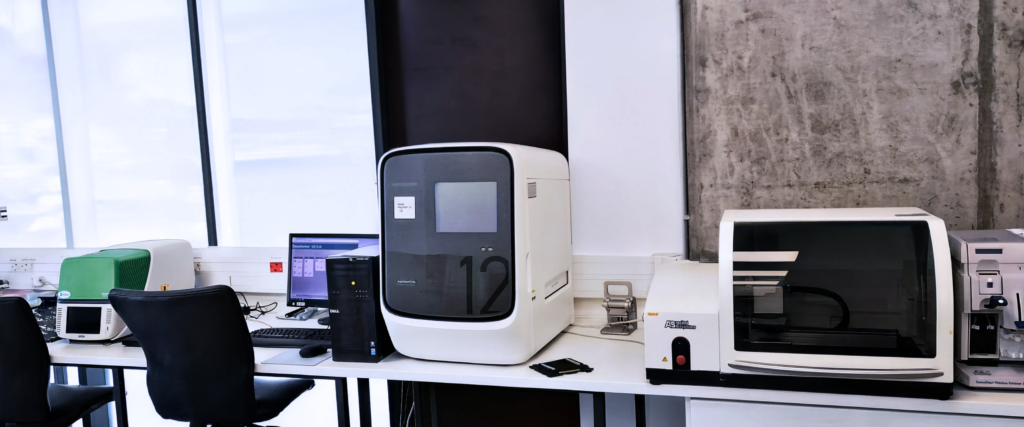
The Centre for Proteomic and Genomic Research (CPGR) is uniquely positioned as a bridge between cutting-edge technology and real-world biomedical research in South Africa. By offering single-cell sequencing services, CPGR empowers both academic researchers and clinical innovators.
Key contributions include:
- State-of-the-art infrastructure: CPGR houses advanced platforms that make high-resolution single-cell analysis possible.
- Technical expertise: The team provides end-to-end support, from experimental design to data interpretation.
- Collaborative research: CPGR partners with universities, hospitals, and biotech organizations to drive impactful discoveries.
- Tailored solutions: Services are adapted to local research questions, ensuring relevance to South African health priorities.
With its emphasis on innovation and accessibility, CPGR plays a critical role in expanding the reach of single-cell genomics across the country.
Applications of Single-Cell Sequencing in South Africa
Single-cell sequencing has a broad range of applications that directly align with South Africa’s most pressing biomedical challenges.
1. Cancer Research
Cancer remains one of the leading causes of death in South Africa. Single-cell sequencing enables researchers to identify tumor subpopulations, study tumor evolution, and design targeted therapies.
2. Infectious Diseases
For diseases like HIV and tuberculosis, understanding immune responses at a cellular level is vital. Single-cell sequencing provides insights into pathogen-host interactions and can guide vaccine development.
3. Neuroscience
Brain disorders such as Alzheimer’s disease, Parkinson’s disease, and epilepsy can be studied at unprecedented depth using single-cell methods, revealing new therapeutic pathways.
4. Precision Medicine
Single-cell data contributes to more personalized approaches in healthcare by ensuring that treatments are tailored to a patient’s unique cellular profile.
5. Drug Development
Pharmaceutical companies and biotech startups can use single-cell sequencing to better understand drug mechanisms and reduce trial-and-error in therapy development.
These applications make it clear why single-cell sequencing South Africa is more than just a technological advancement—it’s a tool for transformative change.
Why Choose CPGR for Single-Cell Sequencing?
CPGR stands out as a trusted partner for genomics research in South Africa. Their strengths include:
- Local accessibility: Researchers no longer need to send samples overseas, saving time and resources.
- High-quality data: CPGR ensures rigorous quality control at every step.
- Training and support: The organization empowers South African researchers by providing training in single-cell methodologies.
- Global competitiveness: CPGR places South African research on par with international standards, ensuring local findings can contribute to global science.
By choosing CPGR, South African researchers gain both technological access and the expertise needed to translate data into meaningful discoveries.
FAQs
What is single-cell sequencing and how does it work?
Single-cell sequencing analyzes DNA or RNA from individual cells to uncover heterogeneity. It works by isolating cells and then sequencing their genetic material.
Why is single-cell sequencing important in research?
It reveals cellular differences that bulk methods miss, enabling discoveries in disease mechanisms, drug development, and personalized medicine.
How is single-cell sequencing used in South Africa?
Researchers in South Africa use it to study cancer, infectious diseases, and genetic diversity. CPGR makes these services accessible locally.
What are the clinical applications of single-cell analysis?
It supports precision medicine, cancer diagnostics, and immune profiling. Clinicians use it to guide more targeted and effective treatments.
Where are single-cell sequencing services available in South Africa?
CPGR offers world-class single-cell sequencing services in South Africa. They provide accessible solutions for both research and clinical needs.
Conclusion
The rise of single-cell sequencing in South Africa represents a major step forward in precision research and healthcare. By enabling unprecedented insights into cellular diversity, this technology is helping to tackle pressing challenges in cancer, infectious diseases, and personalized medicine.
Through its expertise, infrastructure, and collaborative approach, CPGR ensures that South African researchers and clinicians have the tools they need to drive impactful discoveries. To learn more about these services, visit CPGR’s single-cell sequencing South Africa page.
With CPGR leading the way, single-cell sequencing is not just advancing science—it’s shaping the future of healthcare across South Africa.