Each year on World Autism Awareness Day, observed on 2 April, global communities come together to promote awareness, inclusion, and continued research into autism spectrum conditions.
Autism genetics is a rapidly evolving field that seeks to understand the complex genetic architecture underlying autism. While genetic research has long established a link between autism and genomic variation, new technologies are revealing that this relationship is far more intricate than previously understood.
Today, advances in sequencing technologies particularly long-read sequencing are enabling researchers to explore autism-related genetic variants with greater depth, accuracy, and resolution.
Understanding Autism Genetics and Genomic Complexity
Autism Spectrum Disorders (ASDs) are complex neurodevelopmental conditions characterized by challenges in social interaction, communication difficulties, and repetitive behaviors. Genetic research plays a critical role in ASDs, helping to uncover the underlying biological mechanisms, improve diagnosis, and inform more effective interventions. Rather than being caused by a single gene, autism arises from a diverse range of genetic influences, including:
- Rare genetic variants
- Common genetic variations
- Structural changes in DNA
- Gene regulation and epigenetic mechanisms
This complexity means that individuals on the autism spectrum may have highly variable genetic profiles, contributing to differences in traits, development, and biological pathways.
Understanding autism genetics requires not only identifying these variants but also interpreting how they interact within the broader genomic landscape.
Limitations of Traditional Sequencing in Autism Research
For many years, short-read sequencing technologies have been widely used in genomics research. While these methods have contributed significantly to variant discovery, they present important limitations when applied to complex conditions like autism.
Key challenges include:
- Difficulty detecting structural variants
- Limited resolution of repetitive genomic regions
- Challenges identifying large insertions and deletions
- Incomplete reconstruction of complex genomic architecture
Because autism genetics often involves these complex forms of variation, short-read sequencing may miss critical insights needed to fully understand the condition.
The Role of Long-Read Sequencing in Autism Genetics
Long-read sequencing is transforming how researchers investigate autism genetics by enabling the detection of variants that may not be visible using traditional approaches.
In autism genomics research, this technology supports:
- Improved identification of structural variation linked to neurodevelopment
- Deeper insights into gene regulation and expression
- Analysis of non-coding regions that influence genetic activity
- Accurate mapping of complex and rare genetic variants
By providing a more complete genomic picture, long-read sequencing allows researchers to better understand the biological mechanisms underlying autism and the diversity observed across individuals.
Challenges in Interpreting Autism Genetics
Understanding autism genetics is not only about identifying variants but also about interpreting their biological significance.
Researchers continue to face several challenges, including:
- Distinguishing between causative and incidental genetic variants
- Understanding interactions between genes and environmental factors
- Interpreting variants located in non-coding regions of the genome
- Linking genetic findings to clinical outcomes
These challenges highlight the importance of advanced sequencing technologies and integrated OMICS approaches in improving both discovery and interpretation.
The Importance of Inclusive Genomics
From a South African perspective, the prevalence of formally diagnosed autism is likely underestimated, with studies reporting rates far below the global average due to limited access to specialists, long wait times, and socio-economic disparities. Inclusive genomics is essential to capture the unique genetic diversity of South African populations, ensuring research, diagnosis, and interventions are relevant and effective for all communities.
A critical factor in advancing autism research is ensuring that genomic datasets are diverse and representative of global populations.
Historically, many genomic studies have relied on limited population groups, which can restrict the applicability of findings. Expanding OMICS data across diverse populations enables researchers to better understand how autism genetics varies globally.
Inclusive genomics supports:
- More accurate scientific insights
- Improved representation in research
- Broader understanding of genetic diversity
This approach is essential for building a more complete picture of autism genetics.
The Future of Autism Genetics Research
The field of autism genetics is advancing rapidly. As technologies such as long-read sequencing continue to evolve, researchers are gaining new tools to explore genomic complexity with unprecedented clarity.
These advances are enabling:
- Deeper investigation of genetic variation
- Improved understanding of gene regulation
- Comprehensive analysis of genomic structure
As a result, long-read sequencing is not only enhancing autism research but also shaping the future of genomics as a whole.
Supporting Advanced Genomics Research
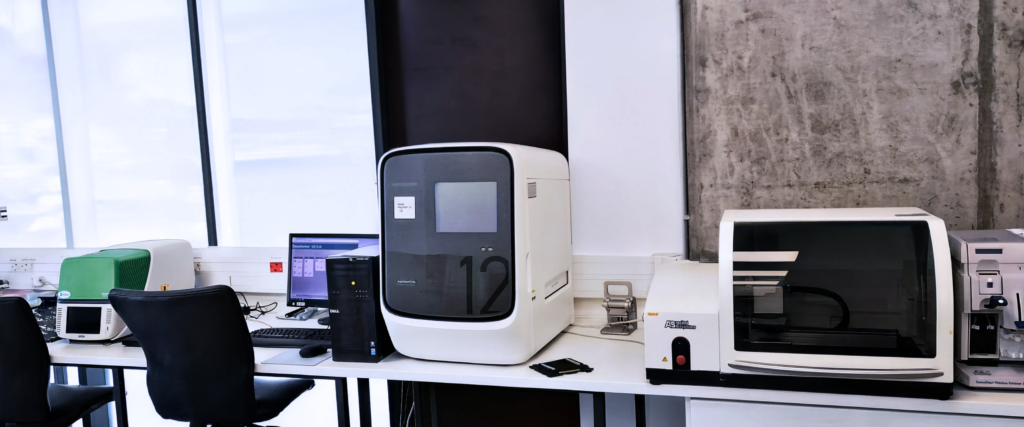
At CPGR, long-read sequencing (P24), powered by Oxford Nanopore Technologies, enables researchers to analyze complex genomic regions, detect structural variation, and explore autism-related genetic diversity in greater detail.
Discover how CPGR’s long-read sequencing platform can support your autism genetics research and unlock deeper genomic insights.
Read more about long-read sequencing- https://www.cpgr.org.za/long-read-sequencing/
Explore our Genomics Solutions – CPGR Genomics services