Proteomics South Africa is entering an exciting new era. While genomics has captured global headlines, proteomics the large-scale study of proteins expressed in cells, tissues and biological fluids is increasingly recognised as the scientific discipline closest to the actual mechanisms of disease.
Proteins are the functional molecules that drive nearly every biological process. They regulate immune responses, catalyse chemical reactions, transport molecules and determine how cells respond to infection, stress and treatment.
In South Africa, where HIV, tuberculosis (TB), cancer and metabolic disorders place a significant burden on public health, understanding disease at the protein level is essential. Proteomics enables researchers to identify biomarkers, uncover therapeutic targets and gain a deeper understanding of disease biology.
CPGR is helping lead this effort through its dedicated proteomics and metabolomics hub, D-CYPHR.
What Is Proteomics?
Proteomics is the comprehensive study of all proteins produced by a cell, tissue or organism under specific conditions.
Unlike the genome, which remains relatively stable, the proteome is highly dynamic. Protein expression changes in response to:
- Disease
- Drug treatment
- Diet and nutrition
- Environmental exposures
- Physiological stress
This makes proteomics uniquely valuable for capturing the real-time biological state of a system.
How Proteomics Works
Modern proteomics relies primarily on mass spectrometry (MS).
In a typical workflow:
- Proteins are extracted from a sample.
- Proteins are digested into peptides.
- Peptides are separated by liquid chromatography.
- The mass spectrometer identifies and quantifies peptides.
- Bioinformatics tools reconstruct protein identities and abundances.
Using liquid chromatography coupled to tandem mass spectrometry (LC-MS/MS), researchers can measure thousands of proteins from a single sample.
Why Proteomics Matters
Proteomics reveals biological information that genomics alone cannot, including:
- Post-translational modifications
- Protein-protein interactions
- Cellular signalling states
- Functional pathway activity
These insights are essential for biomarker discovery and precision medicine.
Why Proteomics South Africa Is a Research Priority for Healthcare
South Africa faces a unique and complex disease landscape.
The country carries one of the world’s highest burdens of HIV and tuberculosis, while also experiencing rising rates of:
- Cancer
- Type 2 diabetes
- Obesity
- Cardiovascular disease
- Autoimmune disorders
Proteomics South Africa is a research priority because protein-level changes often occur before clinical symptoms appear. Detecting these changes can lead to:
- Earlier diagnosis
- Improved prognosis
- Better treatment monitoring
- New therapeutic targets
Addressing the African Data Gap
African populations remain significantly underrepresented in global proteomics databases.
Generating proteomics data in South Africa is therefore critical for:
- Building population-relevant reference datasets
- Improving biomarker accuracy
- Ensuring equitable precision medicine
- Increasing Africa’s contribution to global biomedical research
CPGR and the D-CYPHR Proteomics Hub
CPGR provides advanced proteomics services through D-CYPHR, its dedicated proteomics and metabolomics platform. D-CYPHR is a strategic partnership between CPGR and University of Cape Town Institute of Infectious Disease and Molecular Medicine Department’s Proteomics capabilities to form a Proteomics hub. This venture was funded and supported by DIPLOMICS.
Established in 2022, D-CYPHR offers end-to-end support for researchers, clinicians and industry partners.
What D-CYPHR Provides
D-CYPHR supports:
- Study design consultation
- Sample preparation
- Discovery proteomics
- Targeted quantitative proteomics
- Metabolomics
- Bioinformatics analysis
- Data interpretation and reporting
Founded in 2006 as a non-profit initiative supported by South Africa’s Department of Science, Technology and Innovation (DSTI) and the Technology Innovation Agency (TIA), CPGR provides access to world-class omics technologies under an ISO 9001:2015-certified and ISO 17025-compliant quality management system.
This ensures high-quality, reproducible data suitable for clinical research and regulatory applications.
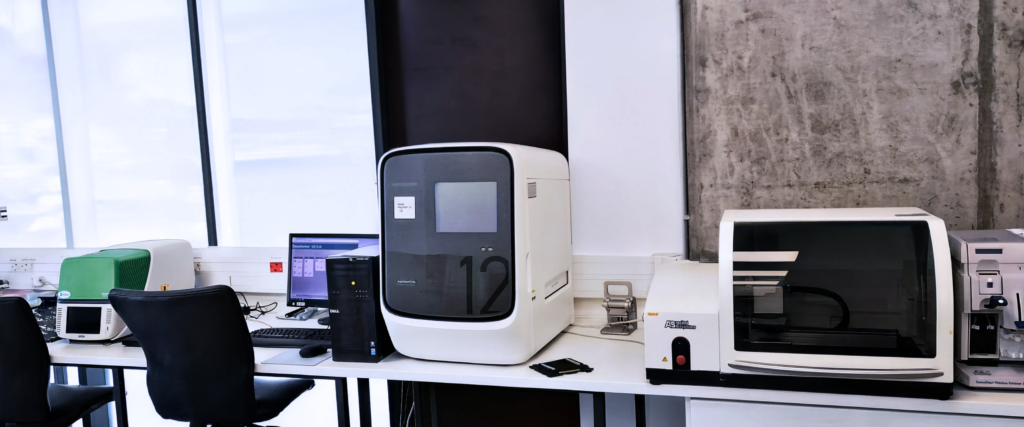
State-of-the-Art Proteomics Instruments at CPGR
CPGR’s D-CYPHR hub is equipped with some of the most advanced proteomics technologies in Africa and focused on providing the following services:
- Mass spectrometry-based Proteomics and Metabolomics
- Olink Protein arrays
Key Applications of Proteomics in South African Research
HIV and Tuberculosis
Proteomics South Africa is playing a major role in HIV and TB research.
Researchers use proteomics to:
- Identify biomarkers of active disease
- Monitor treatment response
- Investigate host-pathogen interactions
- Study HIV/TB co-infection
Cancer Biomarker Discovery
Proteomic profiling is helping identify protein signatures associated with:
- Breast cancer
- Cervical cancer
- Prostate cancer
- Oesophageal cancer
These biomarkers may improve early detection and guide personalised therapy.
Metabolic and Cardiovascular Disease
Proteomics is uncovering molecular pathways linked to insulin resistance, inflammation and cardiovascular risk.
Drug Development and Product Characterisation
CPGR supports pharmaceutical and biotechnology companies with:
- Product characterisation
- Quality control
- Biosimilar comparability studies
- Therapeutic protein analysis
Multi-OMICS Integration
CPGR integrates proteomics with:
- Genomics
- Transcriptomics
- Metabolomics
This systems biology approach provides a more complete understanding of disease mechanisms.
Translating Proteomic Discoveries Into Clinical Practice
The ultimate goal of proteomics South Africa is clinical translation.
Protein biomarkers identified through mass spectrometry can be developed into practical tests for:
- Early diagnosis
- Prognosis
- Treatment monitoring
- Patient stratification
CPGR’s quality systems and translational partnerships support the movement of discoveries from the laboratory into real-world healthcare settings.
Precision Medicine in South Africa
CPGR’s collaboration with helps connect advanced omics research with personalised clinical care.
As protein-based diagnostics become more affordable, South African patients stand to benefit from more accurate and timely disease detection.