At CPGR, we provide advanced molecular diagnostics and research solutions, and at the heart of it lies a powerful technique polymerase chain reaction. Commonly known as PCR, this method is a cornerstone in genetic science, revolutionising how researchers detect, amplify, and analyse DNA.
What is Polymerase Chain Reaction?
Polymerase chain reaction is a laboratory technique used to amplify small segments of DNA. Developed by Kary Mullis in 1983, PCR allows scientists to produce millions of copies of a specific DNA sequence from a tiny initial sample. This breakthrough not only earned Mullis the Nobel Prize but also changed the face of diagnostics and biotechnology forever.
How Does PCR Work?
The polymerase chain reaction process involves three main steps repeated in cycles:
- Denaturation: The double-stranded DNA is heated to separate it into two single strands.
- Annealing: The temperature is lowered so that short DNA primers can attach to the target sequence.
- Extension: A DNA polymerase enzyme extends the primers, synthesising new DNA strands.
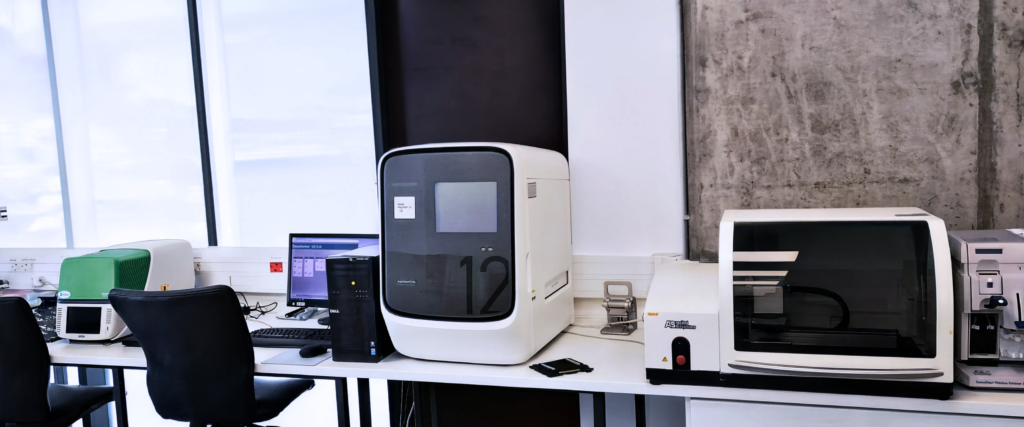
These steps are repeated multiple times (typically 30–40 cycles), leading to exponential amplification of the DNA segment. At CPGR, we use optimised thermocyclers and high-fidelity enzymes to ensure precise and efficient amplification.
Applications of Polymerase Chain Reaction
The use of polymerase chain reaction is widespread across various scientific and medical fields:
1. Medical Diagnostics
PCR plays a vital role in detecting infectious diseases, including viruses like HIV, Hepatitis, and SARS-CoV-2. By identifying even minute quantities of a pathogen’s genetic material, PCR ensures early and accurate diagnosis.
At Centre for Proteomic & Genomic Research (CPGR), our PCR-based diagnostic panels are designed for maximum sensitivity, enabling rapid and reliable test results.
2. Genetic Testing and Research
In genetics, PCR is used for mutational analysis, gene expression studies, and genotyping. Whether it’s identifying inherited conditions or mapping genes, PCR is an indispensable tool for geneticists.
CPGR supports researchers with custom PCR assays tailored to their specific study needs.
3. Forensic Science
Polymerase chain reaction is a key technique in forensic labs for DNA fingerprinting. Even from degraded samples like hair or dried blood, PCR can recover enough DNA to identify individuals.
4. Agricultural and Environmental Testing
PCR also helps detect genetically modified organisms (GMOs) in crops or identify microbial contamination in water and soil samples. At CPGR, we partner with agricultural scientists to bring accuracy to food and environment testing.
Types of PCR Techniques
Over the years, variations of the polymerase chain reaction have emerged to meet different scientific goals:
- Real-Time PCR (qPCR): Measures DNA amplification in real time using fluorescent markers.
- Reverse Transcriptase PCR (RT-PCR): Converts RNA into DNA before amplification ideal for detecting RNA viruses.
- Multiplex PCR: Allows amplification of multiple targets in a single reaction.
- Digital PCR: Offers absolute quantification of DNA molecules.
Our team at CPGR is experienced in all PCR formats and can assist with designing experiments or interpreting complex results.
Why Choose CPGR for PCR Services?
CPGR is a trusted name in genomic technologies and molecular diagnostics. Here’s why scientists, clinicians, and research institutions choose us for polymerase chain reaction services:
- Cutting-edge equipment for precise and rapid amplification.
- Expert support for assay design and optimisation.
- Custom solutions for clinical, forensic, or agricultural needs.
- Fast turnaround with validated quality protocols.
We don’t just perform tests we empower discovery.
Future of PCR and Innovation at CPGR
The future of polymerase chain reaction is moving toward automation, miniaturisation, and point-of-care diagnostics. At CPGR, we are actively investing in the next generation of PCR technologies to reduce turnaround time and increase field accessibility.
Whether you’re a lab technician, geneticist, or healthcare professional, our PCR solutions are built to enhance your workflow and accuracy.
Conclusion
The polymerase chain reaction is more than just a scientific method it’s the engine powering breakthroughs in medicine, genetics, and environmental science. At CPGR, we are proud to offer top-tier PCR services backed by expertise, innovation, and a deep commitment to scientific excellence.
Contact CPGR today to learn more about how our polymerase chain reaction services can support your project.