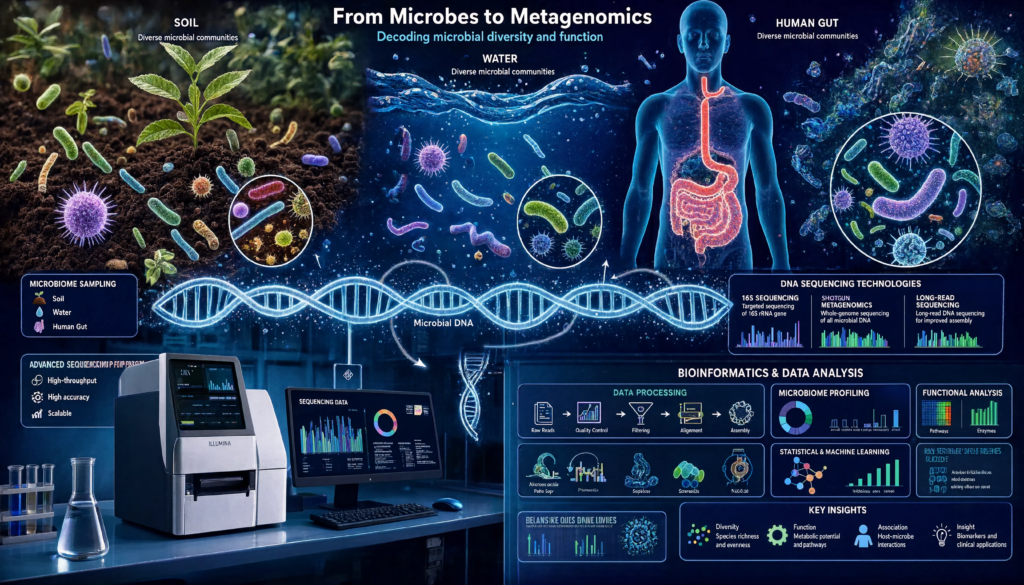
A structured OMICS research pathway is essential for successful OMICS studies. From study design to technology selection, researchers must plan their OMICS research pathway carefully to generate meaningful and reliable data.
Without proper OMICS project design, studies risk generating data that is difficult to interpret, misaligned with objectives, or insufficient for meaningful conclusions. A structured research pathway ensures that every stage from sample selection to data analysis supports reliable and reproducible outcomes.
At the Centre for Proteomic and Genomic Research (CPGR), consultation-led OMICS research supports researchers in developing effective OMICS project design strategies that improve efficiency, data quality, and scientific impact.
Why OMICS Project Design Matters in Research
Modern OMICS technologies generate complex, large-scale datasets that require careful planning and structured workflows. Poor project design can introduce significant challenges, including:
- Misalignment between research objectives and selected technologies
- Inadequate sample or cohort design
- Limited analytical capability
- Delays caused by workflow redesign
- Increased research costs and inefficiencies
A structured OMICS project design framework ensures that each research decision contributes directly to answering the scientific question. Early planning reduces risk, improves data quality, and increases the likelihood of meaningful biological insight.
Well-structured projects also improve reproducibility, which remains a critical requirement in genomics, proteomics, and broader life sciences research.
Define the Right Research Pathway
An effective OMICS project design process begins by defining the appropriate research pathway. Researchers must determine the type of biological insight required before selecting experimental methods or technologies.
Key considerations include:
- Discovery vs validation research – exploratory studies require different design strategies than targeted investigations
- Hypothesis-driven vs exploratory approaches – influences experimental structure and analysis requirements
- Scale of biological investigation – genomic, transcriptomic, or proteomic focus
- Clinical or translational objectives – impacts regulatory and study design considerations
Clearly defining the research pathway ensures that all subsequent decisions support the study’s intended outcomes.
Select the Appropriate OMICS Technology
Technology selection plays a central role in OMICS project design. Different OMICS platforms provide different types of biological insight, resolution, and analytical outputs.
Researchers should evaluate:
- Required sensitivity and resolution
- Sample size and population diversity
- Budget and project timeline
- Data output requirements
- Downstream bioinformatics needs
Technology should always support the research question rather than determine it. A strategic OMICS project design approach ensures that selected technologies generate relevant and interpretable data.
Visit Our Genomics Services
Design a Robust Study and Sample Strategy
Study design is one of the strongest predictors of research quality. Even advanced analysis cannot compensate for poor sample planning or inadequate experimental controls.
A robust OMICS project design includes:
- Appropriate sample size and statistical power
- Well-defined cohort selection and controls
- Consideration of biological variability
- Experimental reproducibility
- Standardised workflows
Careful study design improves data reliability, reduces bias, and supports meaningful interpretation.
Plan Bioinformatics and Data Analysis Early
Data generation represents only one component of OMICS research. Without early planning for data processing and interpretation, researchers may face significant analytical challenges.
Effective OMICS project design includes:
- Data processing pipelines
- Bioinformatics analysis strategies
- Data storage and governance planning
- Integration with existing datasets
- Interpretation and reporting requirements
Early bioinformatics planning ensures that generated data is structured, interpretable, and ready for downstream applications such as publication or clinical translation.
Visit our Bioinformatics services page
Common Challenges in Selecting an OMICS Research Pathway
Researchers often face challenges when defining an OMICS research pathway, including unclear study objectives, misaligned technology selection, and insufficient bioinformatics planning. A structured OMICS research pathway helps address these issues by guiding researchers toward appropriate workflows and analytical strategies.
Guided OMICS Project Design Improves Research Outcomes
As research complexity continues to grow, guided OMICS project design and structured consultation are becoming increasingly important. Expert support helps researchers:
- Identify optimal research pathways
- Align technology with study objectives
- Anticipate analytical challenges
- Reduce costly redesigns
- Improve experimental efficiency
Structured decision-making supports higher-quality data generation and more impactful scientific outcomes.
Start Smart With Structured OMICS Project Design
Effective OMICS research begins with strong foundations. After defining research objectives, structured OMICS project design ensures alignment between study goals, technology selection, and analytical workflows.
A strategic approach improves reproducibility, efficiency, and scientific impact, helping researchers move from questions to discoveries with confidence.
Planning an OMICS study?
Explore CPGR’s consultation-led services to support your OMICS project design and structure your research pathway for successful outcomes.
Book a consultation or choose your research prefered service