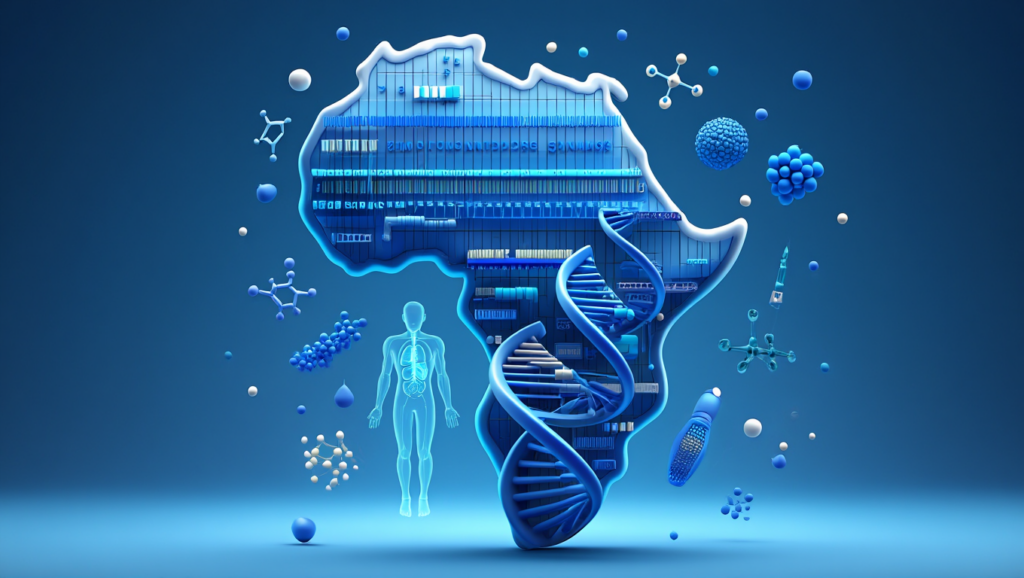
South Africa is a landscape of unparalleled genomic richness, hosting one of the world’s most genetically diverse human populations, diverse agricultural systems, and unique ecosystems. Each genome, microbial community, or crop population holds untold stories — patterns, mutations, and insights waiting to be uncovered. Next Generation Sequencing (NGS) is the key that unlocks these stories, transforming curiosity into actionable knowledge across healthcare, research, and agriculture.
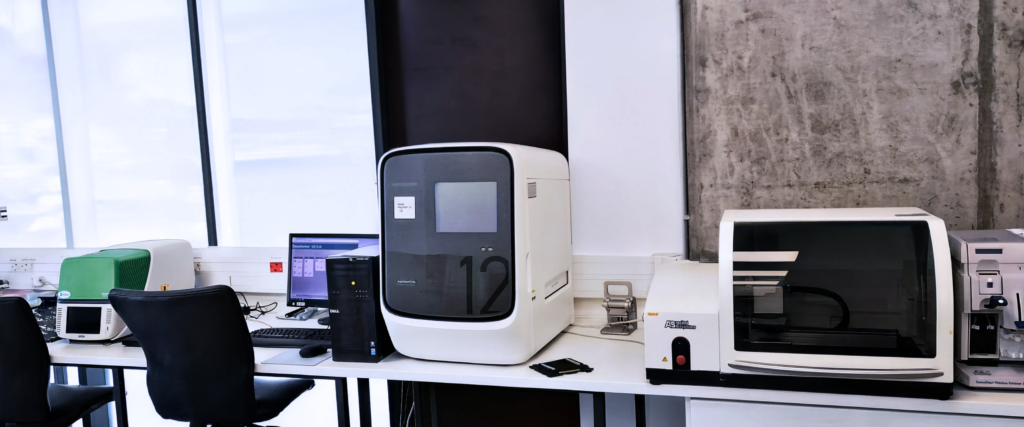
At the Centre for Proteomic and Genomic Research (CPGR), we provide South African and international researchers with access to cutting-edge NGS technologies. By combining world-class sequencing platforms, rigorous quality control, and advanced bioinformatics, CPGR transforms raw nucleic acids into discoveries that shape science, medicine, and innovation.
What is Next Generation Sequencing (NGS)?
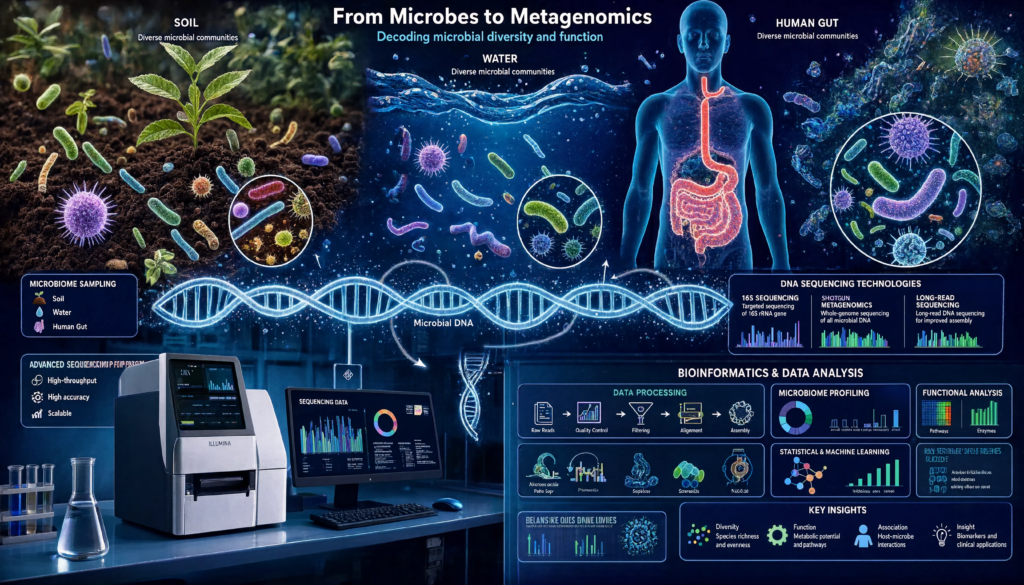
Next Generation Sequencing is more than a laboratory technique – it’s a discovery engine. Unlike traditional methods, NGS can sequence entire genomes, transcriptomes, or targeted regions with speed, scalability, and precision. Each dataset is a window into biology, enabling scientists to see patterns and variations that were previously invisible.
The NGS journey includes:
- Sample Preparation – DNA or RNA is carefully extracted and fragmented, preserving the integrity of every molecule.
- Library Preparation: Each fragment is tagged, enabling simultaneous reading of millions of sequences.
- Amplification & Sequencing – Replication creates clusters, and sequencing reads millions of fragments in parallel. Real-time monitoring ensures run metrics meet expected thresholds.
- Sequencing – Fragments are read simultaneously using optical or electrical signals.
- Data Analysis: Bioinformatics pipelines interpret sequences, detect mutations or variations, and generate meaningful insights.
At CPGR, we introduce three additional steps to the standard workflow – Quality Control steps:
- Post-Extraction QC – Assessment of DNA/RNA purity, integrity (DIN/RIN), and concentration before library prep.
- Library QC – Fragment size, adaptor ligation efficiency, and complexity checks to ensure unbiased sequencing.
- Data QC – Sequencing run metrics, read quality, coverage depth, and mapping efficiency are validated. Combined with bioinformatics, this ensures datasets are biologically meaningful and reproducible.
Applications of NGS in South Africa
- Clinical Diagnostics
- NGS enables early detection of genetic disorders, cancer mutations, and infectious agents. CPGR helps clinicians translate sequencing data into patient care, supporting precision medicine initiatives across the country.
- Research and Academia
- Population genomics
- Epidemiology and disease surveillance
- Genomic medicine
- Microbial diversity and metagenomics
- Agriculture and Environment
- From crop resistance to livestock breeding and biodiversity studies, NGS informs strategies that enhance productivity, sustainability, and conservation.
Choosing CPGR’s NGS services: Your Gateway to Discovery
Choosing CPGR is more than accessing technology – it’s partnering with a team that understands the (South) African context and global standards. Our scientists, technologists, and bioinformaticians guide projects from consultation to data interpretation, ensuring every sequencing effort leads to meaningful insight.
Furthermore, you again:
- Local infrastructure with global capabilities
- Fast turnaround without international sample shipment
- End-to-end project support, from extraction to bioinformatics
- Clinical-grade, quality-controlled workflows
- Data privacy and security
Frequently Asked Questions
What is next generation sequencing and how does it work?
Next Generation Sequencing (NGS) NGS rapidly sequences DNA or RNA, generating millions of reads processed through bioinformatics to reveal mutations, gene expression, and microbial profiles.
How is next generation sequencing used in South African research?
NGS supports disease surveillance, cancer genomics, biodiversity studies, agriculture, and population health initiatives. CPGR partners with institutions to make this possible.
What are the advantages of next generation sequencing?
High-throughput, accurate, scalable, and capable of multi-sample sequencing – NGS uncovers insights beyond traditional methods.
Where can I access next generation sequencing services in South Africa?
You can access NGS services through CPGR, a Cape Town-based genomics facility offering world-class sequencing and data analysis services locally in South Africa. Visit our Next Generation Sequencing page for more details.
Start Your Discovery with CPGR
From rare disease research to agricultural genomics and biodiversity surveillance, CPGR turns curiosity into actionable insight. Our integrated NGS, extraction, QC, and bioinformatics services empower researchers and clinicians to explore, understand, and impact South Africa and beyond.
📍 Location: Cape Town, South Africa
📧 Email: info@cpgr.co.za
🌐 Website: www.cpgr.org.za
📞 Phone: +27 (0) 21 447 5669