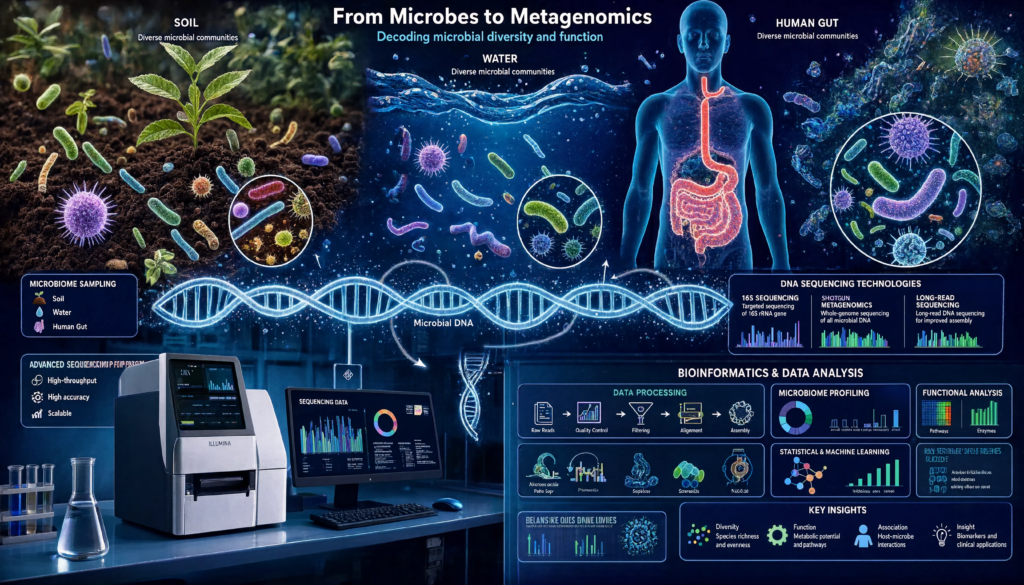
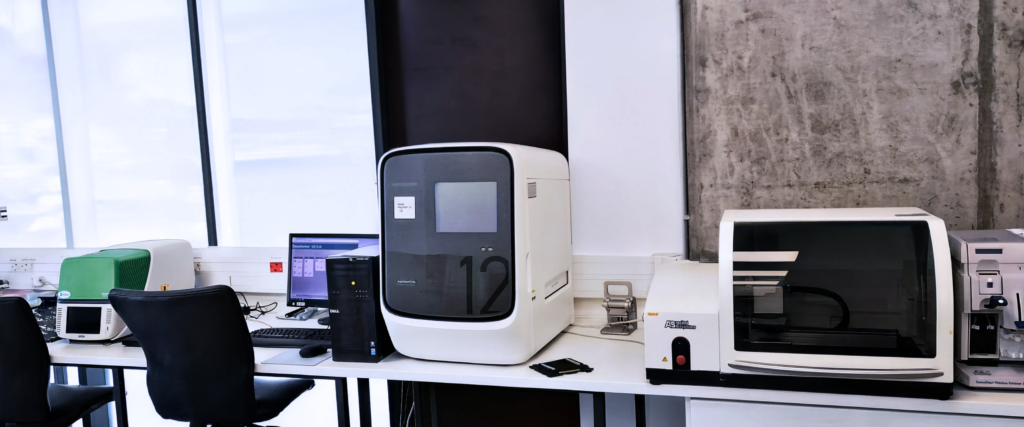
CPGR offers advanced Next Generation Sequencing (NGS) solutions that are revolutionising the field of genomics. Designed for accuracy, speed, and scalability, our sequencing services are used across clinical diagnostics, academic research, and pharmaceutical development. With our expertise and cutting-edge technology, you can explore entire genomes, transcriptomes, or microbial communities in a matter of days.
What is NGS Next Generation Sequencing?
NGS Next Generation Sequencing refers to a group of technologies that allow for rapid sequencing of DNA or RNA. Traditional sequencing methods were time-consuming and could process only one DNA fragment at a time. In contrast, NGS sequences millions of fragments simultaneously. This parallel processing leads to faster turnaround times, higher sensitivity, and the ability to analyse complex genetic structures.
Whether you are studying disease markers, conducting population genetics research, or developing personalised medicine, Next Generation Sequencing provides the power and precision you need.
Why Long Read Sequencing Matters
Long Read Sequencing is a vital complement to traditional short-read NGS methods. It allows for the sequencing of long DNA fragments in one go, often up to tens of thousands of base pairs. This method is especially helpful when mapping structural variants, repetitive regions, and gene isoforms that are challenging to detect with short reads.
At CPGR, we integrate both long-read and short-read sequencing in our workflows. This hybrid approach improves data quality, enhances genome assembly, and reduces ambiguities in analysis. Our Long Read Sequencing platforms deliver more complete, contiguous, and accurate genomes, which are critical for clinical and translational research.
Our NGS Services at CPGR
We provide a full spectrum of Next Generation Sequencing services tailored to specific research and diagnostic needs. These include:
Whole Genome Sequencing (WGS)
WGS captures the complete DNA blueprint of an organism. It is used for understanding genetic disorders, cancer research, and biodiversity studies. CPGR provides high-quality WGS using both short-read and Long Read Sequencing platforms for superior genome coverage.
RNA Sequencing (RNA-Seq)
RNA-Seq helps researchers study gene expression, alternative splicing, and transcript variants. It is widely used in immunology, cancer, and developmental biology. Our Next Generation Sequencing platforms produce reliable transcriptomic profiles from various sample types.
Metagenomic Sequencing
Metagenomics allows for the identification of microbial species in environmental or clinical samples. Our Next Generation Sequencing services make it easy to explore entire microbial communities without the need for culture-based methods.
Targeted Panel Sequencing
This approach focuses on specific genes or regions of interest, making it ideal for applications like oncology or inherited disease screening. CPGR’s targeted panels offer high sensitivity, rapid results, and cost-effective testing.
Epigenomic and Methylation Analysis
Understand gene regulation and epigenetic changes with our specialised sequencing solutions. We offer full support for DNA methylation and chromatin accessibility studies using advanced NGS Next Generation Sequencing techniques.
Benefits of Choosing CPGR
At CPGR, we prioritise quality, customisation, and client collaboration. When you choose our Next Generation Sequencing services, you gain access to:
- State-of-the-art laboratory facilities
- High-throughput sequencing platforms
- Customizable sequencing strategies
- Advanced bioinformatics analysis
- Data security and compliance with global standards
Our team of expert scientists and data analysts works closely with clients to ensure every project delivers meaningful and actionable insights. Whether you need Long Read Sequencing for structural variant analysis or short-read NGS for expression profiling, we’ve got you covered.
Industries and Research Fields We Serve
Our NGS Next Generation Sequencing services cater to a diverse range of sectors:
- Academic and research institutions
- Hospitals and clinical laboratories
- Biotechnology and pharmaceutical companies
- Agricultural and environmental research organisations
We support everything from basic research to regulatory submissions and clinical trials. With CPGR, you can scale your genomics projects with confidence.
Combining NGS and Long Read Sequencing for Maximum Results
By combining traditional NGS and Long Read Sequencing, CPGR delivers comprehensive genomic solutions. This hybrid model ensures:
- Better genome coverage
- More accurate variant detection
- Enhanced structural analysis
- Reduced sequencing gaps
It’s an ideal approach for projects that require high accuracy and deep genetic insights. Our integrated solutions help overcome limitations posed by standalone sequencing technologies.
Frequently Asked Questions
What is Next Generation Sequencing?
NGS is a modern method that enables the rapid sequencing of DNA or RNA using high-throughput technologies.
How does Long Read Sequencing differ from short-read methods?
It reads longer DNA fragments, allowing better detection of structural variations and complex regions.
Can CPGR support both research and clinical NGS projects?
Yes, we provide sequencing solutions for academic, commercial, and clinical applications.
How long does a typical NGS project take?
Depending on the project scope, most sequencing projects are completed within two to three weeks.
Is bioinformatics support included with sequencing services?
Yes, CPGR offers full bioinformatics analysis and data interpretation with every project.
Get Started with CPGR
At CPGR, we aim to make Next Generation Sequencing accessible, affordable, and impactful. Whether you’re new to genomics or looking to expand your research, our expert team will guide you every step of the way. Our advanced NGS Next Generation Sequencing and Long Read Sequencing services are designed to unlock complex biological questions with clarity and precision.
Contact us today to discuss your project needs or request a quote.