Understanding Genomic Science in the Modern Era
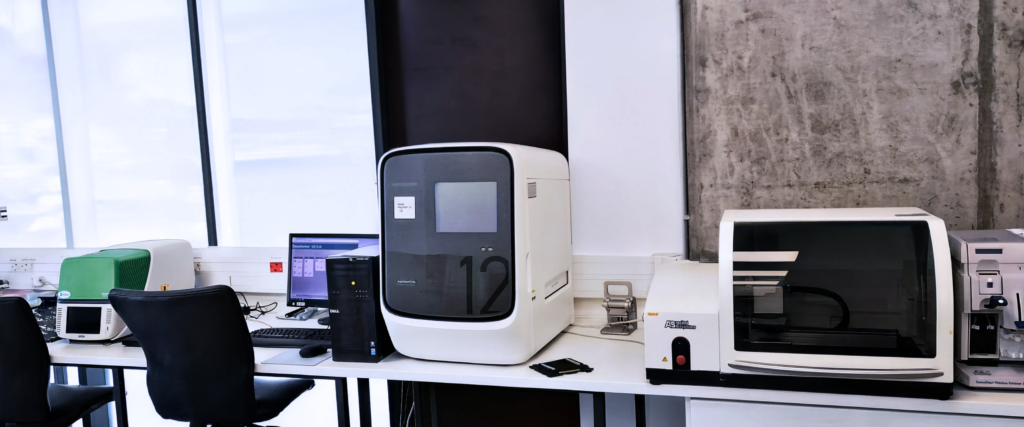
Genomic science is redefining discovery, healthcare, and innovation worldwide. In South Africa, CPGR houses a Multi-OMICS capabilities, integrating metagenomics, bioinformatics, and pharmacogenomics to translate complex biological data into actionable insights for holistic patient care and treatment. From exploring microbial ecosystems to interpreting human genomes, we empower research by scientists, clinicians, and innovators with state-of-the-art sequencing, computational pipelines, and precision medicine analysis, driving research, environmental monitoring, and personalized healthcare across the continent.
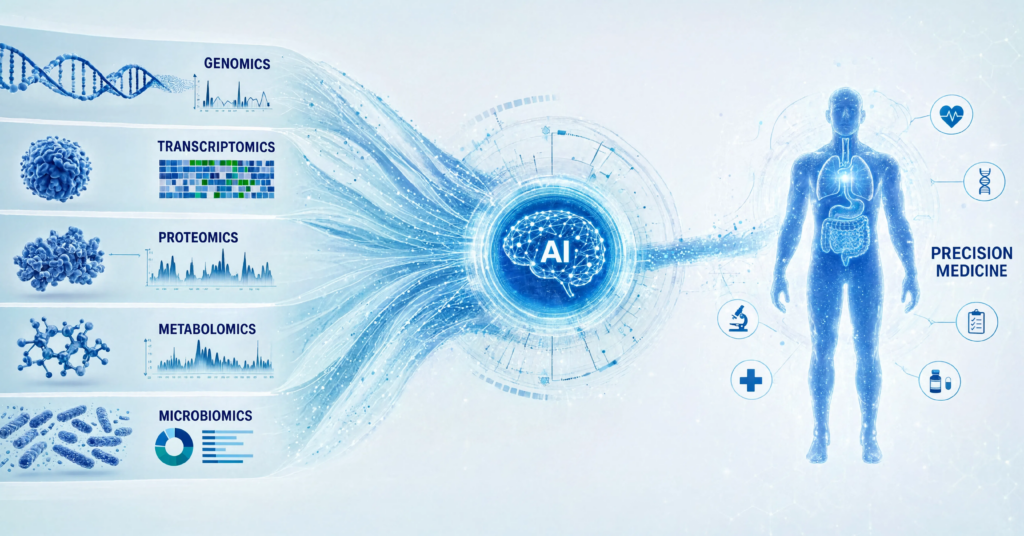
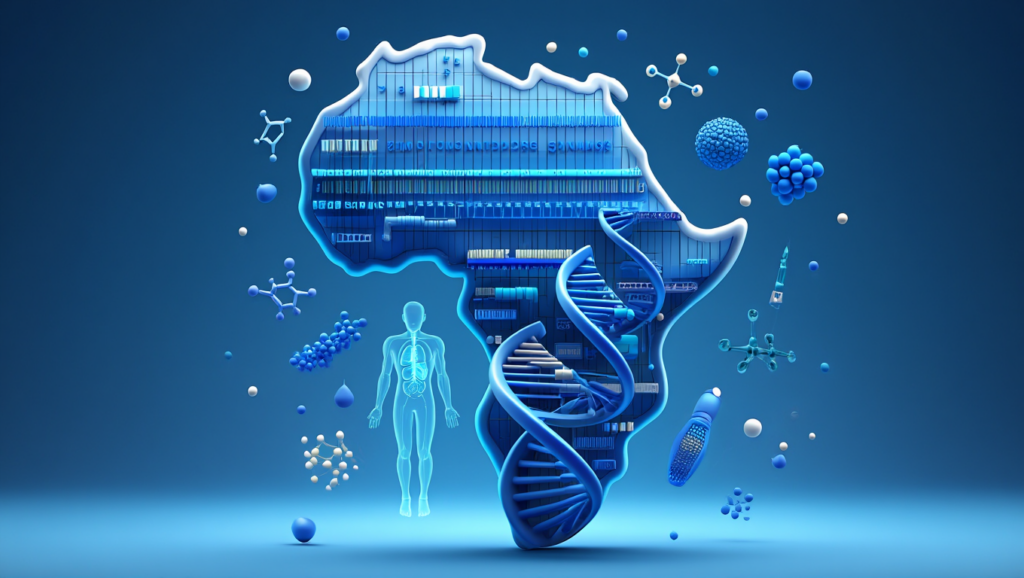
By linking microbial diversity, computational analysis, and human genetic variation, researchers can transform isolated datasets into a cohesive Multi-OMICS strategy that uncovers deep microbiome-host interactions.
The Hidden World That Shapes Us – The Metagenomics approach
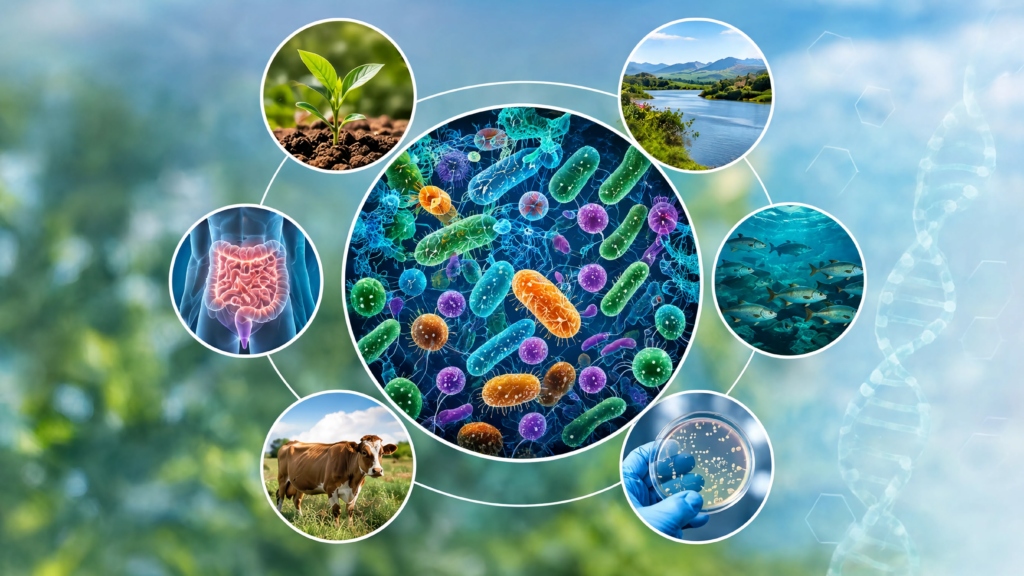
Metagenomics unlocks the genetic blueprints hidden in environmental and biological samples, enabling researchers to study microbial communities without laboratory culturing. In South Africa, this approach is essential for understanding the diversity of our oceans, soils, and human microbiomes.
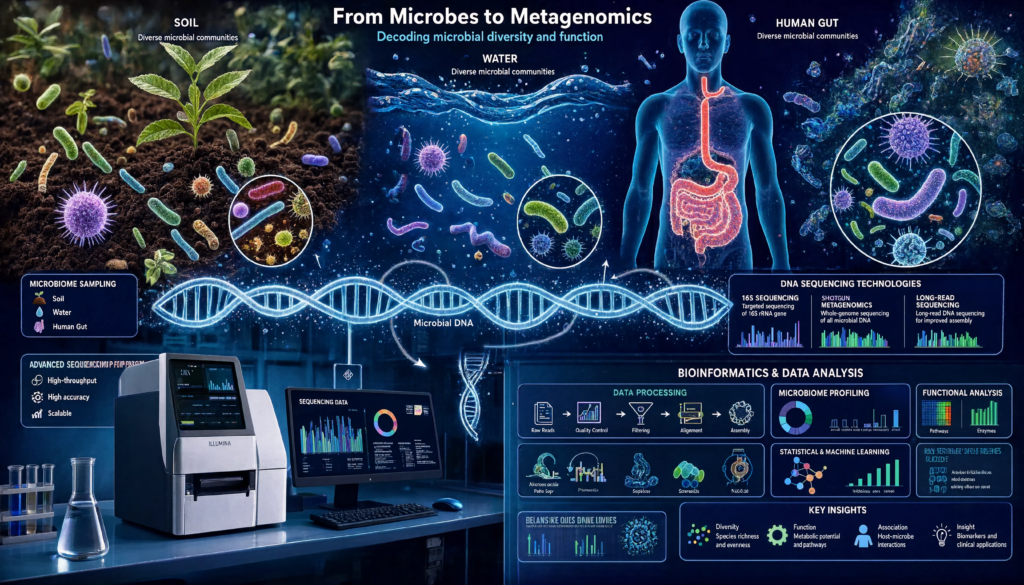
Through targeted and shotgun metagenomics, CPGR provides precise insights into microbial composition, functional potential, and ecosystem interactions. Furthermore, with second and third generation technology we have the ability to perform high-throughput or deep sequencing workflows. Critically; these studies illuminate microbiome–host interactions, understanding how microbial communities influence human health, metabolism, immune response, and disease susceptibility. Mapping these interactions drives environmental surveillance and disease research, turning microbial complexity into actionable discovery.
Bioinformatics: From Sequences to Solutions
Raw genomic sequences are powerful only when interpreted. Bioinformatics transforms these datasets into meaningful insights, integrating microbial, environmental, and human genomic information.
From genome assembly and variant analysis to functional interpretation, our pipelines reveal how host and microbiome data converge, connecting microbial patterns to human and environmental outcomes. This analytical integration forms the backbone of CPGR’s Multi-OMICS approach, translating complex sequences into predictive models, actionable research, and precision solutions.
Prescribing Precision Medicine
Building on these insights, pharmacogenomics applies genomic understanding directly to human health. By examining how genes influence medication responses, CPGR enables personalized treatment strategies that account for both human genetic variation and microbiome context.
Leveraging bioinformatics and PMDA (Precision Medicine Diversity Array) data, we optimize drug efficacy, dosage, and safety, improving patient outcomes while reducing healthcare costs. Within the Multi-OMICS framework, pharmacogenomics represents the translational layer, where microbial insights and host genomics converge to deliver precision medicine that works for every South African.
The Case for a Holistic Multi-OMICS Approach
The need for a holistic, Multi-OMICS approach (combining metagenomics, bioinformatics, and pharmacogenomics) stems from the complexity of biological systems and the richness of South Africa’s ecosystems and populations. Here’s why it matters:
- Complexity Requires Integration – Biological systems are interconnected: microbial communities influence human health, environmental shifts affect agriculture, and genetic variation shapes drug responses. Studying any one layer in isolation offers only a partial view. A Multi-OMICS approach integrates Metagenomics (microbial and environmental data), Bioinformatics (computational interpretation), and Pharmacogenomics (human health applications); capturing the full spectrum of biological information.
- African Genetic and Environmental Diversity – A holistic Multi-OMICS approach ensures that research, diagnostics, and precision medicine are accurate, relevant, and locally informed, with microbial studies guiding public health and disease surveillance, human genomic variation informing precision medicine and drug safety, and agricultural genomics supporting food security and sustainable farming.
- Translating Data Into Action – Sequencing alone is insufficient; bioinformatics bridges raw data and actionable insight, enabling evidence-based clinical decisions, environmental monitoring, and tailored public health interventions.
- Efficiency and Impact – A holistic Multi-OMICS framework reduces silos, maximizes data utility, and accelerates discovery, delivering insights that are faster, more precise, and globally competitive. In short, South Africa needs this approach because it turns complex genomic information into real-world solutions, linking microbial ecology, computational insight, and personalized medicine into one actionable, Multi-OMICS strategy.
CPGR’s Multi-OMICS Leadership in South Africa
South Africa’s growing need for integrated genomic solutions makes CPGR’s holistic Multi-OMICS approach more critical than ever. With advanced laboratory infrastructure, a specialized OMICS team, end-to-end data analysis, custom bioinformatics pipelines, and strict ethical compliance, CPGR stands at the forefront of metagenomics, bioinformatics, and pharmacogenomics in the country. Whether you’re a medical researcher, pharmaceutical innovator, or public health entity, our integrated services ensure accurate, timely, and impactful results, turning complex genomic information into real-world solutions for research, healthcare, and agriculture.