Long-Read Sequencing South Africa is transforming how researchers investigate genomes, diseases, and microbial communities. While short-read sequencing has powered genomics for nearly two decades, many complex regions of DNA remain difficult to analyse using short fragments alone.
Long-read sequencing, also known as third-generation sequencing, overcomes these limitations by reading thousands to millions of DNA bases in a single continuous molecule. The result is more complete genome assemblies, improved structural variant detection, direct DNA methylation analysis, and unprecedented insights into human, animal, plant, and microbial genomes.
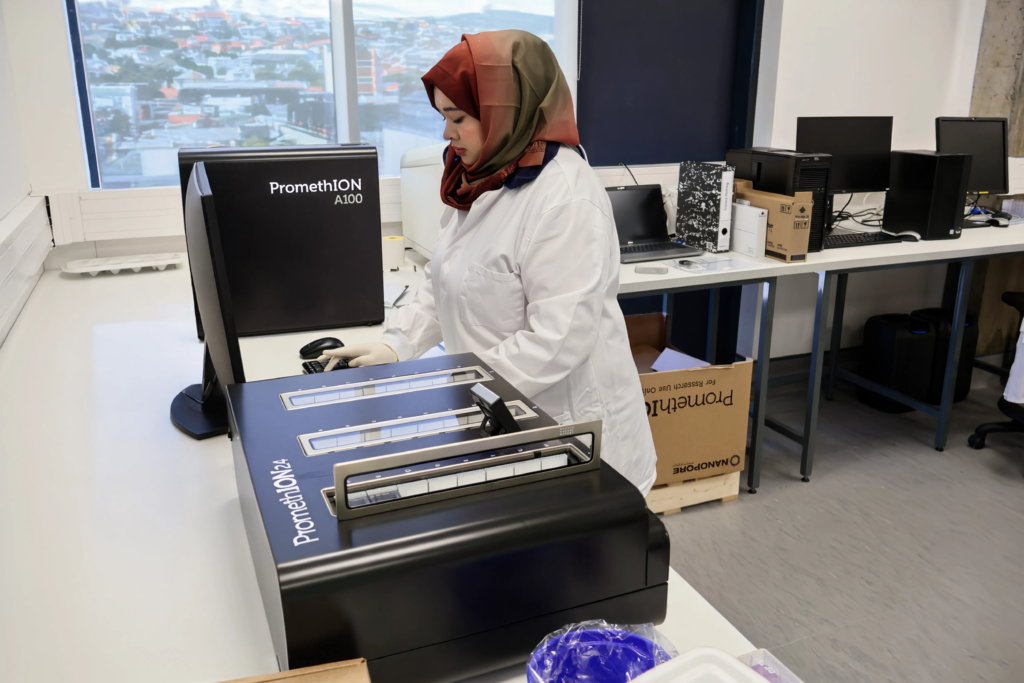
At the Centre for Proteomic and Genomic Research (CPGR), researchers have access to one of South Africa’s most advanced long-read sequencing platforms the Oxford Nanopore PromethION 24 supporting projects ranging from precision medicine to biodiversity research.
Whether you are studying rare genetic disorders, assembling novel microbial genomes, investigating antimicrobial resistance, or exploring complex environmental microbiomes, long-read sequencing provides the resolution needed to answer questions that short-read technologies often cannot.
What Is Long-Read Sequencing?
Long-read sequencing is a DNA sequencing technology capable of ultra-long reads of DNA molecules without breaking them into hundreds of short fragments.
Unlike traditional Next-Generation Sequencing (NGS), which typically produces reads between 100 and 300 base pairs, long-read sequencing routinely generates read lengths that can exceed 100 kb under optimal conditions.
Reading DNA in longer fragments allows researchers to observe genomic regions exactly as they occur naturally.
This significantly improves the ability to:
- Assemble complete genomes
- Resolve repetitive DNA sequences
- Detect structural variants
- Phase maternal and paternal chromosomes
- Characterise complex genomic rearrangements
- Analyse full-length RNA transcripts
- Detect DNA methylation directly
These capabilities are opening entirely new avenues in genomics research across medicine, agriculture, environmental science, and biotechnology.
Why Long-Read Sequencing Is Changing Genomics
Many genomes contain repetitive DNA regions, duplicated genes, structural rearrangements, and highly variable sequences that are difficult to reconstruct using short sequencing reads.
Short-read technologies often require sophisticated computational methods to piece together millions of tiny DNA fragments, creating gaps and ambiguities in assembled genomes.
Long-read sequencing dramatically reduces these challenges.
Because much longer DNA molecules are sequenced intact, researchers obtain:
- Higher-quality genome assemblies
- Greater confidence in variant detection
- Improved characterisation of repetitive regions
- More accurate identification of insertions, deletions, inversions, and translocations
- Better understanding of gene regulation
These advantages are particularly important for research involving genetically diverse populations, novel organisms, and complex diseases.
South Africa’s exceptional biodiversity and rich human genetic diversity make long-read sequencing especially valuable for local research initiatives.
Short-Read vs Long-Read Sequencing: What’s the Difference?
Although both short-read and long-read sequencing generate high-quality genomic data, they are designed to answer different research questions. Understanding their strengths helps researchers choose the most appropriate technology for their project.
| Feature | Short-Read Sequencing | Long-Read Sequencing |
|---|---|---|
| Typical Read Length | 100–300 base pairs | Can exceed 100 kb under optimal conditions |
| Genome Assembly | Excellent for reference-based assembly | Excellent for de novo assembly |
| Structural Variant Detection | Limited | Excellent |
| Repetitive Regions | Difficult to resolve | Easily resolved |
| DNA Methylation Analysis | Requires additional preparation | Detected directly from native DNA |
| Transcript Isoforms | Limited | Full-length transcript sequencing |
| Genome Phasing | Challenging | Highly accurate |
| Best Applications | Variant detection, RNA sequencing, targeted sequencing | Complete genomes, structural variants, epigenetics, metagenomics |
Rather than replacing short-read sequencing, long-read technologies complement existing workflows. Many researchers combine both approaches to generate comprehensive genomic datasets, leveraging the high accuracy of short reads alongside the continuity and structural insights provided by long reads.
Applications of Long-Read Sequencing
Long-read sequencing has transformed research across numerous scientific disciplines by enabling scientists to answer questions that were previously difficult or impossible to address.
Human Genomics and Rare Disease Research
Many inherited diseases are caused by structural variations or complex genomic rearrangements that short-read sequencing may overlook.
Long-read sequencing allows researchers to identify:
- Large insertions and deletions
- Repeat expansion disorders
- Chromosomal rearrangements
- Gene fusions
- Complex mutations
This makes it an invaluable tool for precision medicine and rare disease research.
Cancer Genomics
Cancer genomes undergo extensive genetic changes during tumour development.
Long-read sequencing enables researchers to:
- Detect complex structural variants
- Characterise fusion genes
- Analyse tumour heterogeneity
- Investigate epigenetic changes
- Study treatment resistance mechanisms
These insights support biomarker discovery and the development of more personalised cancer therapies.
Agricultural Genomics
South Africa’s agriculture sector increasingly relies on genomics to improve crop performance and livestock productivity.
Long-read sequencing helps researchers:
- Assemble high-quality plant genomes
- Identify disease-resistance genes
- Investigate drought tolerance
- Improve livestock breeding programmes
- Characterise economically important traits
These applications contribute to food security and sustainable agriculture.
Infectious Disease Research
Long-read sequencing has become an essential tool for studying bacterial, viral and fungal pathogens.
Researchers use it to:
- Assemble complete pathogen genomes
- Track disease outbreaks
- Identify antimicrobial resistance genes
- Monitor pathogen evolution
- Investigate transmission dynamics
These capabilities strengthen public health surveillance and infectious disease research across Africa.
Conservation Genomics
South Africa is recognised as one of the world’s biodiversity hotspots.
Long-read sequencing supports conservation by enabling researchers to:
- Assemble reference genomes for endangered species
- Assess genetic diversity
- Study population structure
- Inform breeding programmes
- Support wildlife conservation initiatives
High-quality genomic resources are becoming increasingly important for preserving biodiversity.
Structural Variant Detection and Complete Genome Assembly
One of the greatest advantages of long-read sequencing is its ability to detect structural variation accurately.
Structural variants include:
- Insertions
- Deletions
- Duplications
- Inversions
- Translocations
- Copy number variations
Although these variants often involve thousands or even millions of DNA bases, they can have profound biological consequences.
Long-read sequencing captures these large genomic changes in single DNA molecules, providing much greater confidence than short-read sequencing alone.
Similarly, long-read sequencing enables de novo genome assembly, where an organism’s genome is reconstructed without relying on an existing reference genome.
This is particularly valuable when studying:
- Indigenous African species
- Novel microorganisms
- Crop genomes
- Wildlife genomes
- Previously unsequenced organisms
Complete genome assemblies provide a stronger foundation for downstream analyses, including comparative genomics, evolutionary biology and functional genomics.
Native DNA Methylation Profiling
DNA sequence alone does not tell the whole story.
Gene activity is also regulated by epigenetic modifications, with DNA methylation being one of the most important.
Unlike many sequencing technologies that require chemical conversion before methylation analysis, Oxford Nanopore sequencing can detect DNA methylation directly from native DNA during sequencing.
This offers several advantages:
- Preserves the original DNA sample
- Simplifies laboratory workflows
- Reduces processing time
- Detects multiple modification types simultaneously
- Enables integrated genomic and epigenomic analysis
DNA methylation profiling has become increasingly valuable for research into:
- Cancer biology
- Ageing
- Neurological disorders
- Developmental biology
- Environmental adaptation
- Plant genomics
By combining genomic and epigenomic information in a single experiment, researchers gain a more complete understanding of biological processes.
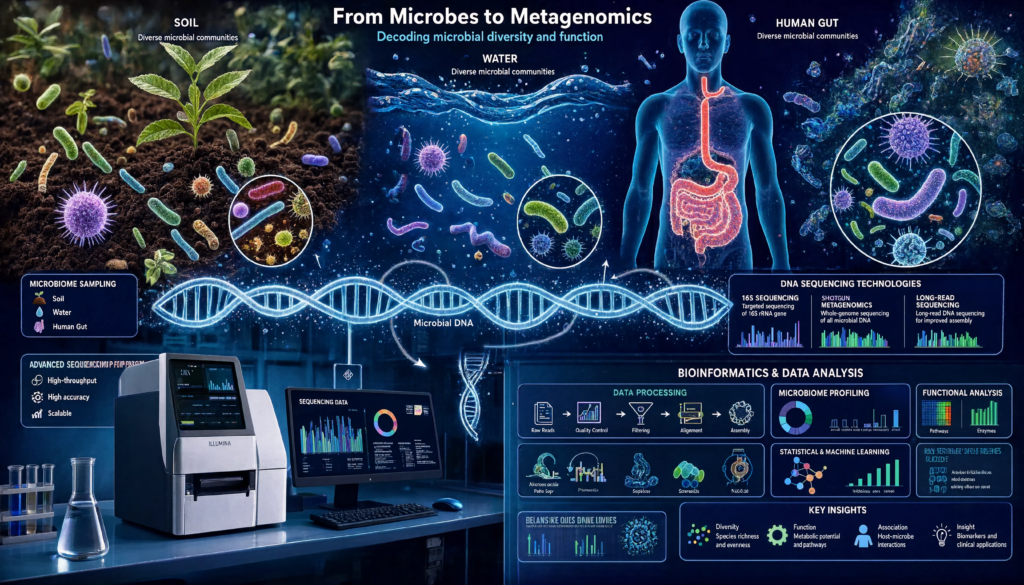
Long-Read Metagenomics: Unlocking Entire Microbial Communities
Traditional microbiome studies often rely on short-read sequencing or targeted 16S rRNA sequencing to identify microorganisms. While these methods remain valuable, they have limitations when distinguishing closely related species or reconstructing complete microbial genomes.
Long-read sequencing is transforming metagenomics by enabling researchers to sequence entire microbial genomes directly from environmental or clinical samples. This approach, known as long-read metagenomics, provides a much more comprehensive view of microbial communities.
Researchers can now:
- Assemble complete bacterial and fungal genomes from complex samples.
- Identify viruses, archaea, bacteria, and eukaryotic microorganisms simultaneously.
- Detect antimicrobial resistance (AMR) genes.
- Discover novel microbial species.
- Analyse plasmids and mobile genetic elements.
- Characterise microbial metabolic pathways.
These capabilities are particularly valuable in South Africa, where researchers are investigating diverse microbiomes across healthcare, agriculture, environmental science, and biodiversity conservation.
Long-read metagenomics is advancing research into infectious diseases, wastewater surveillance, food safety, wildlife conservation, soil health, and antimicrobial resistance providing deeper biological insights than were previously possible.
CPGR’s Oxford Nanopore PromethION 24 Platform
At the Centre for Proteomic and Genomic Research (CPGR), researchers have access to one of Africa’s most advanced long-read sequencing platforms: the Oxford Nanopore Technologies PromethION24.
Designed for high-throughput sequencing, the PromethION 24 enables researchers to generate exceptionally long reads while maintaining the flexibility required for projects of varying sizes and complexity.
The platform supports a wide range of applications, including:
- Whole Genome Sequencing
- Long-read RNA Sequencing
- Metagenomics
- Microbiome Research
- Structural Variant Detection
- Native DNA Methylation Profiling
- Cancer Genomics
- Plant Genomics
- Animal Genomics
- Microbial Genomics
Unlike many sequencing platforms that require multiple instruments to perform different workflows, the PromethION 24 provides a highly scalable solution capable of processing numerous samples simultaneously. This makes it ideal for both small research projects and large collaborative studies.
Combined with CPGR’s experienced genomics scientists and dedicated bioinformatics team, researchers receive support throughout every stage of the sequencing workflow from experimental design and sample preparation to data analysis and biological interpretation.
Bioinformatics: Turning Long Reads into Biological Insight
Generating sequencing data is only the beginning. Extracting meaningful biological insights requires advanced computational analysis.
Long-read sequencing datasets are significantly larger and more complex than traditional sequencing datasets, requiring specialised bioinformatics pipelines capable of handling:
- Basecalling and quality control
- Genome assembly
- Variant calling
- Structural variant analysis
- Genome annotation
- Taxonomic classification
- Functional annotation
- DNA methylation analysis
- Comparative genomics
- Phylogenetic analysis
CPGR offers integrated bioinformatics services that transform raw sequencing data into publication-ready results.
Researchers benefit from validated analytical workflows, experienced computational scientists, and comprehensive reporting tailored to the objectives of each project.
Whether analysing human genomes, microbial communities, agricultural species, or environmental samples, CPGR provides end-to-end support that allows researchers to focus on scientific discovery rather than computational challenges.
Why Researchers Choose CPGR for Long-Read Sequencing in South Africa
Selecting the right sequencing provider is just as important as choosing the right sequencing technology.
CPGR has established itself as one of South Africa’s leading genomics facilities by combining cutting-edge instrumentation with scientific expertise and internationally recognised quality standards.
Researchers choose CPGR because of its:
- Oxford Nanopore PromethION 24 sequencing platform
- Experienced genomics specialists
- End-to-end project support
- Integrated bioinformatics services
- ISO 9001:2015-certified quality management system
- Competitive turnaround times
- Flexible project design
- Support for academic, clinical and commercial research
- Commitment to advancing genomics research across Africa
Whether your project involves human health, infectious diseases, biodiversity, agriculture, microbiology, or precision medicine, CPGR provides the infrastructure and expertise required to generate high-quality genomic data with confidence.
The Future of Long-Read Sequencing
Long-read sequencing is rapidly becoming the preferred technology for answering some of biology’s most complex questions.
As sequencing accuracy continues to improve and costs become more accessible, researchers are increasingly adopting long-read approaches for applications that were once considered impossible.
Future developments are expected to accelerate discoveries in:
- Precision medicine
- Rare disease diagnosis
- Cancer genomics
- Single-cell sequencing
- Multi-OMICS integration
- Environmental genomics
- Microbiome research
- Agricultural biotechnology
- Wildlife conservation
Together with artificial intelligence and advanced bioinformatics, long-read sequencing is helping researchers move beyond simply reading DNA towards understanding how genomes function in health, disease, and the environment.
For South Africa, this technology represents an opportunity to generate locally relevant genomic data, strengthen scientific capacity, and contribute to global research while addressing uniquely African health and biodiversity challenges.
Book a Consultation with CPGR
Whether you’re investigating complex genomes, studying microbial communities, exploring structural variation, or integrating long-read sequencing into a multi-OMICS project, choosing the right sequencing partner is essential.
CPGR combines world-class sequencing technology, experienced scientists, and advanced bioinformatics to deliver reliable, high-quality genomic data that drives discovery.
Book a consultation with CPGR’s genomics team today to discuss your research objectives, identify the most suitable long-read sequencing approach, and receive a customised quotation for your project. https://calendly.com/justin-naicker-cpgr/cpgr-chat