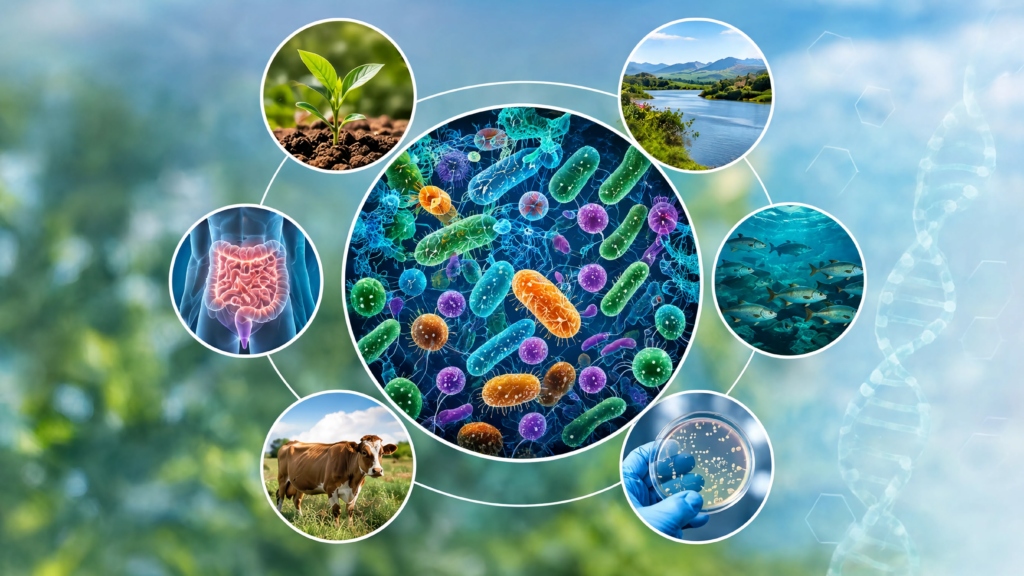
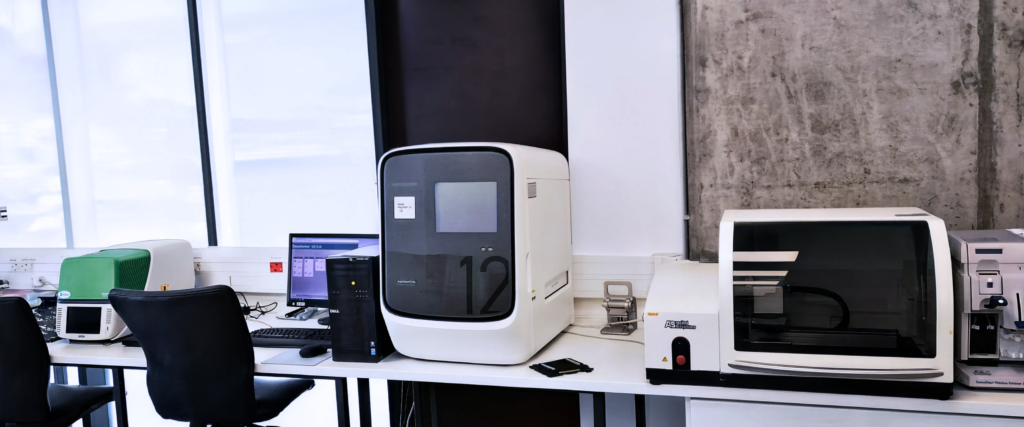
Metagenomics is a powerful and rapidly evolving field of genomic research that allows scientists to study genetic material directly from environmental samples. Unlike traditional methods that require isolating individual organisms, metagenomics enables the analysis of entire microbial communities, making it a revolutionary approach in fields like microbiology, medicine, and environmental science. CPGR is at the forefront of this innovation, utilising metagenomics to unlock new insights into the microbial world.
What is Metagenomics?
Metagenomics refers to the study of genetic material recovered directly from environmental samples, without the need for culturing microorganisms. It involves extracting DNA from a mixture of organisms within a sample, followed by sequencing and analysis to understand the diversity and function of the microbial community. This technique provides a comprehensive view of microbial ecosystems, helping researchers uncover hidden microorganisms that are difficult or impossible to culture in a laboratory setting.
The key advantage of metagenomics is its ability to capture the genetic diversity of microbial communities in their natural environments. This offers a more complete and accurate understanding of the microbial world, especially in environments where many microorganisms are unculturable.
Applications of Metagenomics in Different Fields
- Healthcare and Medicine
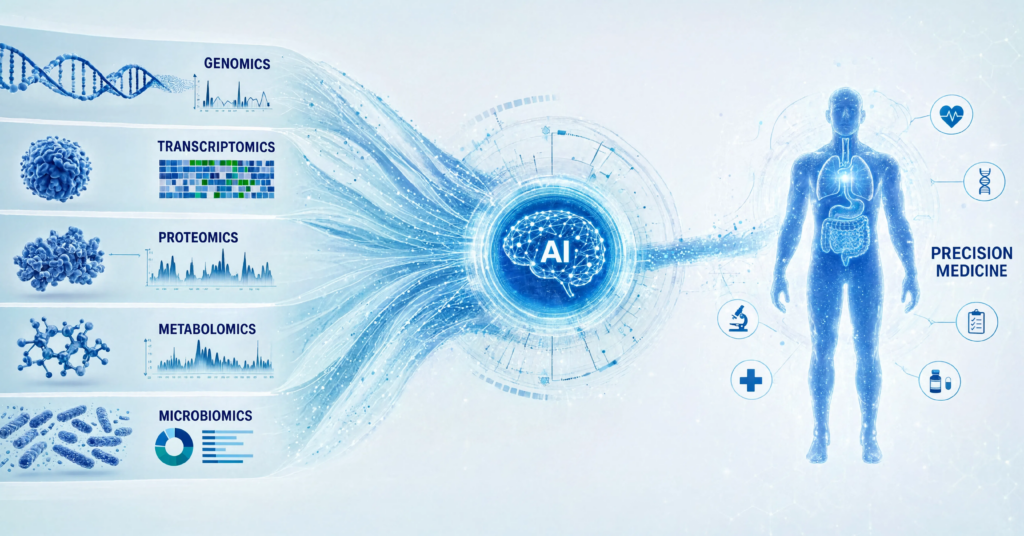
Metagenomics has revolutionised the way we understand human health and disease. By examining the microbiome—the collection of microbes living in and on the human body—researchers can gain insights into its role in various diseases, including gut disorders, obesity, and even mental health. CPGR is working on innovative applications of metagenomics to develop better diagnostic tools, improve treatments, and personalise healthcare based on a deeper understanding of microbial communities. - Environmental Science
In environmental science, metagenomics plays a crucial role in studying ecosystems, monitoring biodiversity, and understanding the impact of human activities on the environment. By analysing microbial communities in soil, water, and air, scientists can track changes in biodiversity and the effects of pollutants. CPGR’s research is focused on leveraging metagenomics for environmental monitoring and conservation efforts, making it easier to identify pollutants and assess ecosystem health. - Agriculture
Metagenomics is also finding significant applications in agriculture, where it helps in understanding soil health, plant microbiomes, and pest control. By studying the microbial communities in agricultural environments, scientists can improve crop yields, combat plant diseases, and reduce the need for harmful chemicals. CPGR’s ongoing projects aim to apply metagenomics to create more sustainable agricultural practices, enhancing food security while minimising environmental impact.
The Process of Metagenomic Analysis
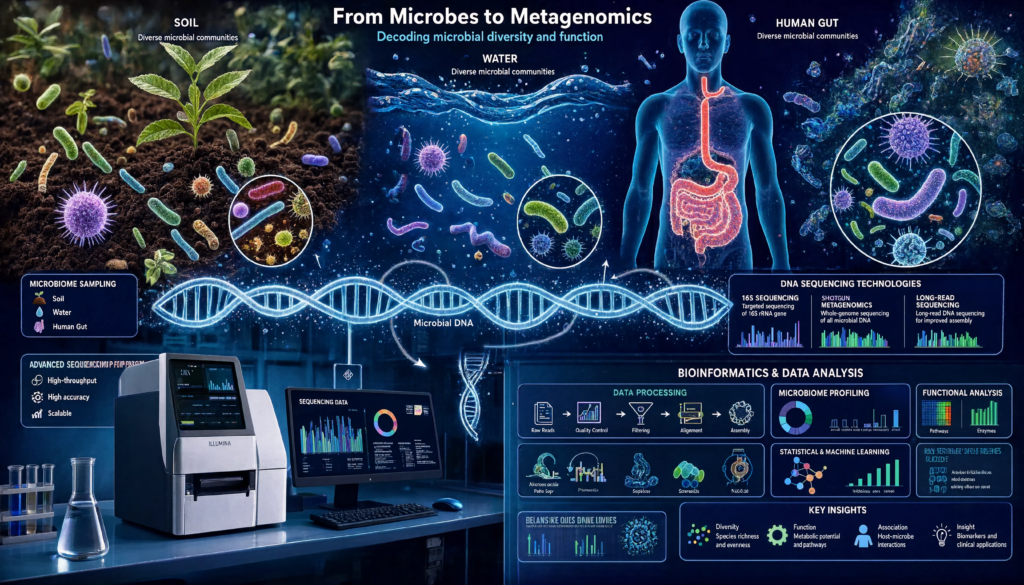
The process of metagenomic analysis typically involves several key steps:
- Sample Collection
Researchers first collect environmental samples from the target area—whether it’s soil, water, air, or a biological sample like human skin or the gut. - DNA Extraction
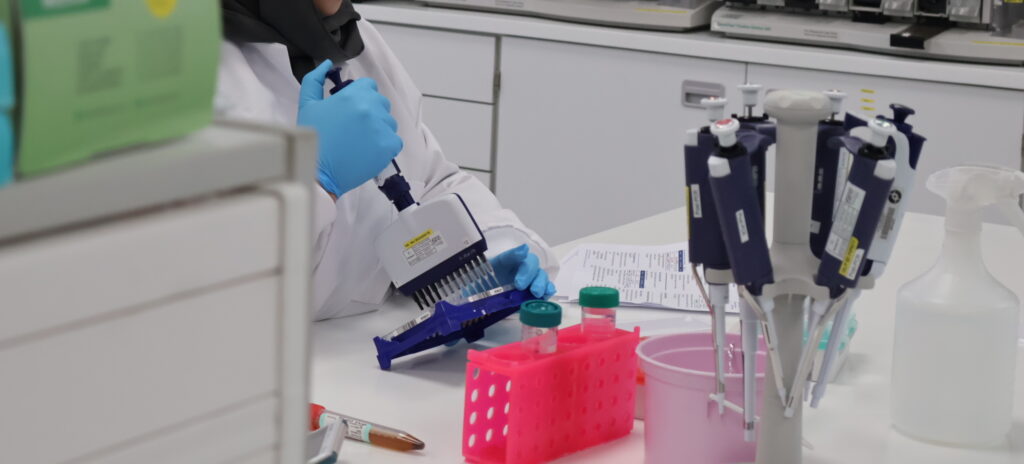
DNA is extracted from the collected sample. This step is crucial, as it must include the genetic material from all microorganisms present, including bacteria, fungi, viruses, and archaea. - Sequencing
The extracted DNA is then sequenced using high-throughput sequencing technologies. This step generates large amounts of data, which can then be analysed to identify and classify the microorganisms present in the sample. - Data Analysis
The sequencing data is analysed using bioinformatics tools to identify species, understand their functions, and map their interactions. This step allows researchers to uncover hidden patterns and functions of microorganisms in complex environments.
Challenges in Metagenomics
While metagenomics has opened up new possibilities, there are still several challenges to overcome:
- Data Complexity
The data generated by metagenomics is vast and complex. Analysing this data requires powerful computational tools and expertise in bioinformatics. - Interpretation of Results
Interpreting the results of metagenomic analysis can be difficult, especially when it comes to understanding the functional roles of microorganisms in a given environment. - Standardization
There is a lack of standardised methods for sample collection, DNA extraction, and data analysis in metagenomics. This makes it challenging to compare results across different studies.
The Future of Metagenomics
The future of metagenomics looks bright, with advancements in sequencing technologies, data analysis techniques, and bioinformatics tools. Researchers are continuously discovering new ways to apply metagenomics in diverse fields, from medicine to environmental conservation.
At CPGR, we are committed to pushing the boundaries of metagenomics research. By combining cutting-edge technologies and expert analysis, we aim to unlock new insights that can improve human health, protect the environment, and enhance agricultural practices.
Conclusion
Metagenomics is a transformative field with vast potential. From healthcare to environmental science, it has the power to revolutionise the way we understand and interact with the microbial world. CPGR is proud to be part of this exciting journey, contributing to innovations that will shape the future of science and technology. As research in metagenomics continues to grow, the possibilities for discovery and application are endless.
By embracing metagenomics, we can better understand the complexity of life at the microscopic level and apply this knowledge to improve the world around us.