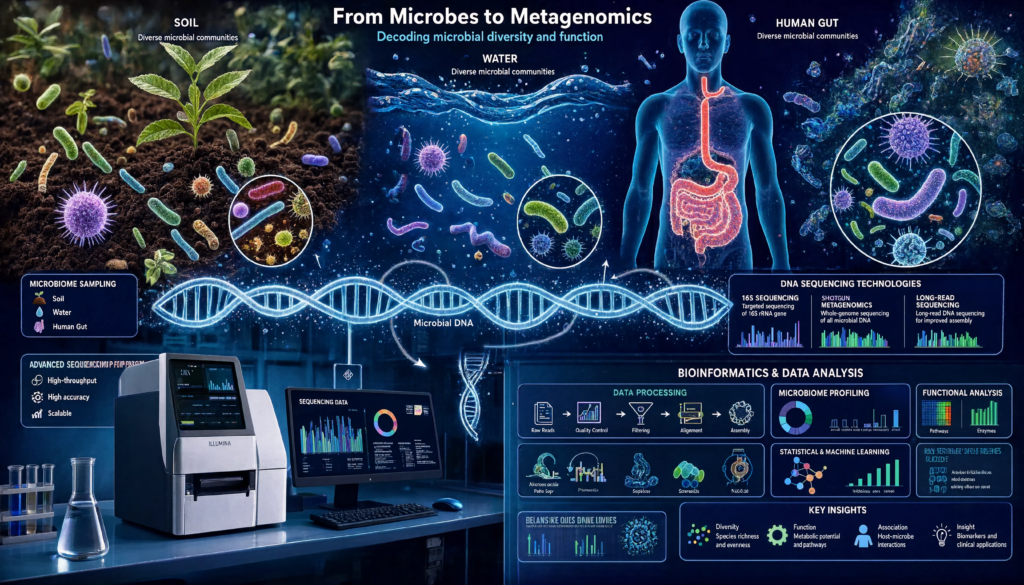
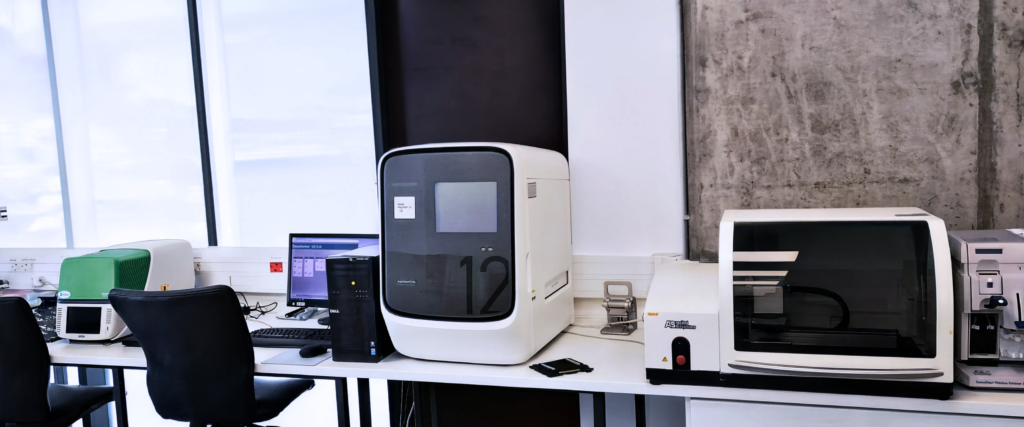
Choosing the right genomics service is one of the most important decisions you’ll make in a research project. From experimental design to data analysis, the genomics workflow you select directly affects data quality, interpretability, cost, and timelines.
With the growing range of sequencing technologies and analytical options available, making the right choice can be challenging. This is where informed planning and expert guidance make the difference between a smooth, successful study and one that requires costly redesign.
At the Centre for Proteomics and Genomics Research (CPGR), we support researchers through genomics consulting and service selection, ensuring each project starts with a workflow aligned to its scientific goals.
Why Choosing the Right Genomics Service Matters
Not all genomics services are designed to answer the same questions. Selecting a service without clearly defining objectives can result in data that is difficult to interpret or insufficient for publication.
Key risks of choosing the wrong genomics service include:
- Generating data that does not answer the biological question
- Insufficient sequencing depth or coverage
- Underpowered sample sizes
- Unexpected bioinformatics complexity
- Increased costs and extended timelines
Choosing the right genomics service early ensures that the data generated is fit for purpose and supports meaningful biological insight.
Step 1: Define Your Research Question Clearly
Before selecting a genomics service, it’s essential to clarify what you want the data to reveal.
Ask yourself:
- Are you exploring novel variants or validating known ones?
- Is the study hypothesis-driven or exploratory?
- Are you analysing individuals, populations, or disease cohorts?
- What defines success, discovery, validation, or translation?
Clear research questions help determine whether you need high-resolution sequencing, targeted approaches, or population-scale genotyping.
Step 2: Understand Common Genomics Service Options
Different genomics services are designed to answer different types of research questions. Understanding these options is key to making an informed choice.
Whole Genome Sequencing (WGS)
Provides comprehensive coverage of the entire genome and is best suited for novel variant discovery, population genomics, and structural variant analysis. WGS offers high resolution but requires careful experimental design and bioinformatics planning.
Whole Exome Sequencing (WES)
Targets protein-coding regions of the genome and is commonly used for disease gene discovery and clinical research. WES is more cost-effective than WGS but does not capture non-coding regions.
Targeted Sequencing
Focuses on predefined gene panels or regions of interest. Ideal for hypothesis-driven studies, clinical validation, and projects with specific genomic targets.
Microarray Genotyping
Designed for high-throughput screening of known variants across large cohorts. Microarrays are cost-effective for population studies and pharmacogenomics but are not suitable for novel variant discovery.
Step 3: Align Experimental Design with the Genomics Service
Even the most advanced genomics service cannot compensate for weak experimental design. Key considerations include:
- Appropriate sample size and biological replication
- Selection of relevant controls
- Managing batch effects and confounding variables
- Matching study design to sequencing depth and platform capabilities
At CPGR, genomics consulting ensures that experimental design decisions support the chosen service and downstream analysis.
Step 4: Plan for Bioinformatics and Data Analysis Early
Genomics projects generate large, complex datasets. Choosing the right genomics service must include consideration of bioinformatics capacity and analytical goals.
Important questions include:
- What type of analysis is required to answer the research question?
- Are reference genomes and annotation databases available?
- How will data quality be assessed and validated?
- What expertise is needed for interpretation and reporting?
Planning bioinformatics early ensures that generated data can be analysed efficiently and reproducibly.
Step 5: Consider Consultation Before Processing Samples
One of the most effective ways to choose the right genomics service is through pre-project consultation. Early discussions help researchers:
- Evaluate trade-offs between cost, resolution, and scalability
- Identify potential risks or limitations
- Select workflows that align with project timelines and resources
- Reduce the likelihood of redesign or repeat experiments
This consultative approach ensures informed decision-making before samples enter the laboratory.
Choosing the Right Genomics Service with CPGR
Selecting the right genomics service is not just a technical decision, it’s a strategic one. With expert consultation, researchers can align scientific goals, experimental design, and analytical strategy from the start.
CPGR supports researchers through genomics services and consulting, helping projects move forward with clarity and confidence.
👉 Schedule a Genomics Consultation
Discuss your research objectives with CPGR’s experts and identify the genomics service best suited to your project.
https://calendly.com/justin-naicker-cpgr/cpgr-chat