In the rapidly evolving field of genetics, Genome Wide Association Studies (GWAS) have become the map to understanding how our genes shape health, traits, and disease. By scanning the genome at scale, GWAS enables researchers to uncover subtle genetic variations known as single-nucleotide polymorphisms (SNPs) – single-point mutations in the DNA sequence that can influence disease susceptibility to drug response. These tiny variations, when compared across thousands of individuals, reveal powerful insights into how genes interact, adapt, and contribute to complex biological traits.
At the Centre for Proteomic and Genomic Research (CPGR), we transform this power into purpose. Through our high-throughput microarray and sequencing platforms, supported by rigorous QC and bioinformatics pipelines, we make genome wide association studies accessible, reliable, and deeply insightful for researchers, clinicians, and biotech innovators.
What Are Genome Wide Association Studies (GWAS)?
Genome wide association studies (GWAS) is an approach to scan the genomes of thousands of individuals to find SNPs associated with diseases, traits, or responses to drugs.
These studies have transformed biomedical research by providing a data-driven lens through which scientists can connect genotype to phenotype, revealing the genetic foundations of common conditions such as diabetes, cardiovascular disease, cancer, and neurological disorders.
At CPGR, GWAS isn’t just a service – it’s a discovery journey. Our workflows integrate sample QC, genotyping precision, and data interpretation to ensure that every association uncovered is backed by scientific and statistical confidence.
The Power of GWAS in Modern Research
Genome wide association studies are at the core of precision medicine and translational research. They illuminate how genetic variation contributes to complex diseases, enabling:
- Improved risk prediction for earlier interventions.
- Targeted therapies tailored to genetic profiles.
- Better understanding of gene-environment interactions.
In the African context (where genetic diversity is the richest in the world yet underrepresented in global data) GWAS is a transformative tool. It enables South African researchers to contribute vital genomic insights to the global health landscape while improving local diagnostics and treatment strategies.
CPGR’s GWAS Workflow: From Sample to Discovery
Behind every successful GWAS lies a meticulous workflow that should prioritize precision, reproducibility, and data integrity.
Our GWAS workflow at CPGR includes:
- Sample Collection & DNA Extraction
- High-quality DNA is extracted from biological samples under controlled conditions.
- Stringent QC ensures DNA purity, concentration, and integrity before genotyping begins.
- Genotyping & Platform Precision
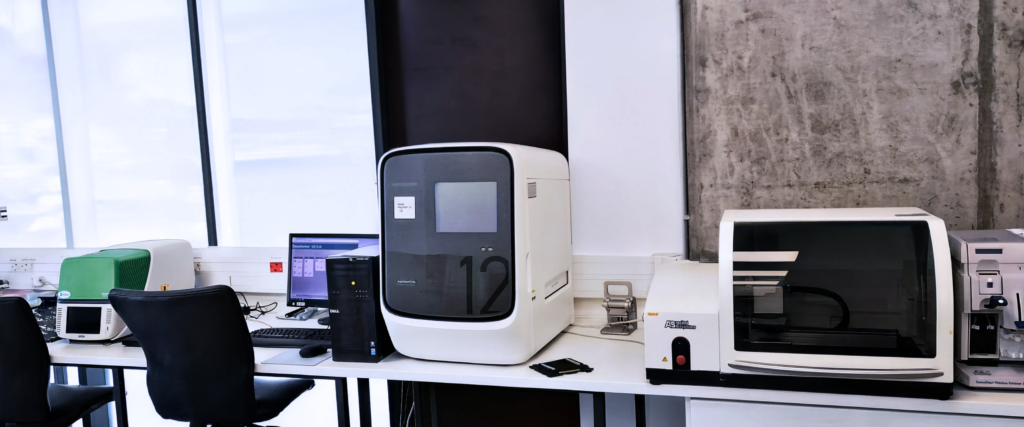
- Using our high-throughput and versatile microarray platforms;the GeneTitan™ MC Fast Scan Instrument and iScan™ System; CPGR generates high-quality, genome-wide SNP data across thousands of markers.
- Our team performs validated array screening on these platforms with a dedicated focus on African genomic diversity, ensuring precise variant detection and reliable insights across complex population structures.
- Data QC & Bioinformatics Analysis
- Raw genotyping data undergoes comprehensive QC checks to validate call rates, allele frequency distributions, and population structure.
- We are connected with bioinformatics teams that perform downstream analyses (including association testing, population stratification, and annotation) to turn data into discovery.
By integrating QC at every stage, from extraction to data, CPGR ensures that each GWAS result is scientifically robust, statistically sound, and biologically meaningful.
Applications of Genome Wide Association Studies
Genome wide association studies have a wide range of applications across different sectors:
Healthcare and Medicine
GWAS helps identify genetic risk factors that underpin disease susceptibility, drug response, and disease progression.
At CPGR, we extend this knowledge through pharmacogenomics and nutrigenomics—exploring how genetic variations influence individual responses to drugs and nutrients. By integrating these insights, we support the development of more personalized treatment and dietary strategies that improve patient outcomes.
CPGR provides services to clinicians and research institutions to advance precision medicine, translating genomic discoveries into actionable insights that inform healthcare decisions and enable truly individualized care.
Agriculture and Biotechnology
In Africa, GWAS in agriculture is on the rise as researchers seek to address challenges like climate change, crop diseases, and food security. GWAS enables the identification of genetic markers linked to yield, drought tolerance, and disease resistance. CPGR supports agri-genomics projects that enhance crop resilience and livestock breeding, helping drive sustainable production and strengthen food systems across the continent.
3. Drug Development
Pharmaceutical and biotech companies use GWAS to identify novel drug targets and predict patient response variability.
Through collaboration with CPGR, these organizations accelerate discovery and innovation in therapeutic design.
CPGR’s Expertise in Genome Wide Association Studies
CPGR provides end-to-end support for genome wide association studies, including:
- Sample collection and DNA extraction
- Genotyping using advanced platforms
- High-throughput sequencing from pilot to scale
- Data analysis and bioinformatics interpretation
- Customized reporting for researchers
Our team of genomic scientists and bioinformatics experts ensures that genome wide association studies conducted at CPGR meet the highest quality standards.
Benefits of Genome Wide Association Studies with CPGR
1. Accurate Genetic Insights
CPGR leverages cutting-edge technology to deliver precise results from genome wide association studies, ensuring accurate identification of genetic variants.
2. Scalable Solutions
Whether your study involves hundreds or thousands of samples, CPGR offers scalable solutions for genome wide association studies tailored to your project needs.
3. Expert Support
Our experienced team provides guidance throughout every step of genome wide association studies, from study design to data interpretation.
Why Choose CPGR for Genome Wide Association Studies
As South Africa’s leading non-profit OMICS platform, CPGR provides access to infrastructure and expertise that enables world-class genomics research locally.
Our GWAS advantage includes:.
- Local infrastructure, global relevance – Enabling studies designed for Africa’s diverse populations.
- End-to-end project support – From study design to statistical interpretation.
- ISO 9001:2015 certification – Ensuring quality and reproducibility.
- Expert-led bioinformatics – Turning data into insights through advanced computational analysis.
- Data security and confidentiality – Protecting sensitive research information. We do not own your data
Whether you are exploring population health, agricultural traits, or disease mechanisms, CPGR’s GWAS platform provides the technical precision and scientific partnership needed to transform your research vision into discovery.
The Future of GWAS: Mapping Complexity, Empowering Precision
As the frontier of genomics expands, genome wide association studies are evolving to capture rare variants, epigenetic influences, and multi-OMICS correlations.
At CPGR, we are not just enabling these discoveries – we are building the genomic infrastructure that makes them possible in South Africa and beyond.
Through continued innovation in genotyping, sequencing, and bioinformatics, we are driving a new era of discovery where genetics informs every layer of health, sustainability, and innovation.
Partner with CPGR for Genome Wide Association Studies
From the lab bench to the bioinformatics pipeline, CPGR bridges technology, expertise, and discovery. Our genome wide association studies empower researchers, healthcare providers, and biotech innovators to uncover the genetic foundations of the world’s most pressing challenges.
Start your GWAS journey with CPGR and shape the future of precision medicine, agriculture, and genetic research in Africa.
Contact us to begin your project today –www.cpgr.org.za