Each year on World Down Syndrome Day, observed globally on 21 March, the scientific and medical communities reflect on the importance of awareness, inclusion, and continued research into genetic conditions.
Among these conditions is Down syndrome one of the most widely studied chromosomal conditions in human genetics. While researchers have long known that Down syndrome is caused by an extra copy of chromosome 21, advances in genomic technologies are revealing that the biology of trisomy 21 is far more complex than once understood.
Today; third generation sequencing technology, in the form of long-read sequencing, is opening new possibilities for exploring the genomic architecture of chromosome 21 and advancing Down syndrome genomics research.
Understanding the Genomics of Down Syndrome
Down syndrome is when an individual carries three copies of chromosome 21 instead of two, a genetic condition known as trisomy 21. This additional chromosome introduces hundreds of extra gene copies into the genome causing myriad effects on cellular function. This change in gene dosage can affect development, metabolism, and neurological processes. However, trisomy 21 does not affect every individual in the same way. Variability in outcomes suggests that factors such as gene regulation, structural variation, and epigenetic mechanisms may play important roles in shaping how the extra chromosome influences biological pathways. Understanding these mechanisms is a central focus of Down syndrome genomics research.
Why Traditional Sequencing Technologies Have Limitations
For many years, genomic studies relied on first and second generation sequencing technologies, which analyze DNA in small fragments before computationally assembling the genome.
While these technologies revolutionised genomics research, they can struggle to resolve complex genomic regions. Areas containing repetitive sequences, structural rearrangements, or large chromosomal segments can be difficult to reconstruct accurately when DNA is read in small pieces.
For researchers studying trisomy 21 and the genomic structure of chromosome 21, these limitations can obscure important insights into gene organisation and regulatory elements.
This is where long-read sequencing technology is beginning to transform genomic research.
What Is Long-Read Sequencing?
Long-read sequencing is a third generation sequencing approach that allows scientists to analyze longer DNA fragments in a single sequencing read. Instead of reconstructing genomes from thousands of short fragments, long-read technologies can capture extended stretches of DNA. This provides a clearer view of genomic structure and enables researchers to explore regions that were previously difficult to analyze.
Long-read sequencing is particularly valuable for studying:
- Structural variation across chromosomes
- Complex genomic rearrangements
- Repetitive DNA sequences
- Haplotype phasing – which separates maternal and paternal genetic variants
- Epigenetic patterns that influence gene activity
By offering a more complete picture of the genome, long-read sequencing is helping scientists examine how genetic variation contributes to biological diversity and diseases on a individual or population scale.
Exploring Chromosome 21 With Advanced Genomic Technologies
For researchers investigating Down syndrome genomics, chromosome 21 represents a unique genomic landscape.
With three copies present in trisomy 21, the structure, regulation, and interaction of genes across this chromosome become particularly important. Long-read sequencing allows scientists to examine chromosome 21 with unprecedented resolution.
Using long DNA reads, researchers can explore:
- the organization of genes across chromosome 21
- how structural variants influence gene regulation
- the role of non-coding regulatory regions
- interactions between chromosome 21 and other parts of the genome
These insights help build a more detailed understanding of how trisomy 21 influences biological systems.
Emerging Research: Experimental Approaches to Trisomy 21
Alongside sequencing advances, researchers have explored experimental strategies to better understand the genetic imbalance associated with trisomy 21.
Scientists at University of Massachusetts Medical School demonstrated that the XIST gene is responsible for silencing one X chromosome in female cells could be inserted into the extra chromosome 21 to suppress its activity in laboratory cell models.
Other studies have investigated genome-editing technologies such as CRISPR‑Cas9 to explore whether additional chromosomes could be selectively targeted or removed in experimental systems.
Although these approaches remain experimental and confined to laboratory research, they demonstrate how rapidly genomic science is advancing in its ability to investigate chromosomal biology.
The Role of Inclusive Genomics and OMICS Data
As genomic technologies evolve, another critical factor in advancing scientific understanding is representation in genomic datasets.
Historically, many genomic studies have relied on data derived from limited populations. Ensuring that genomic research includes diverse and globally representative datasets helps scientists build a more comprehensive understanding of genetic conditions across populations.
Generating inclusive OMICS data including genomics, transcriptomics, and epigenomics supports research efforts aimed at understanding the full complexity of the human genome and the diversity of genetic variation that exists across populations.
Looking Ahead: The Future of Down Syndrome Genomics Research
The field of genomics is evolving rapidly, and technologies such as long-read sequencing are enabling researchers to explore the genome in ways that were not possible only a decade ago.
For Down syndrome research, these advances are helping scientists investigate chromosome structure, gene regulation, and genomic complexity with greater clarity.
As sequencing technologies continue to advance and genomic datasets become more inclusive, researchers are gaining deeper insights into the genetic architecture of trisomy 21 and the broader mechanisms that shape human biology.
On World Down Syndrome Day, these scientific advances serve as a reminder that continued research plays an essential role in expanding our understanding of the genome and the diversity that defines humanity.
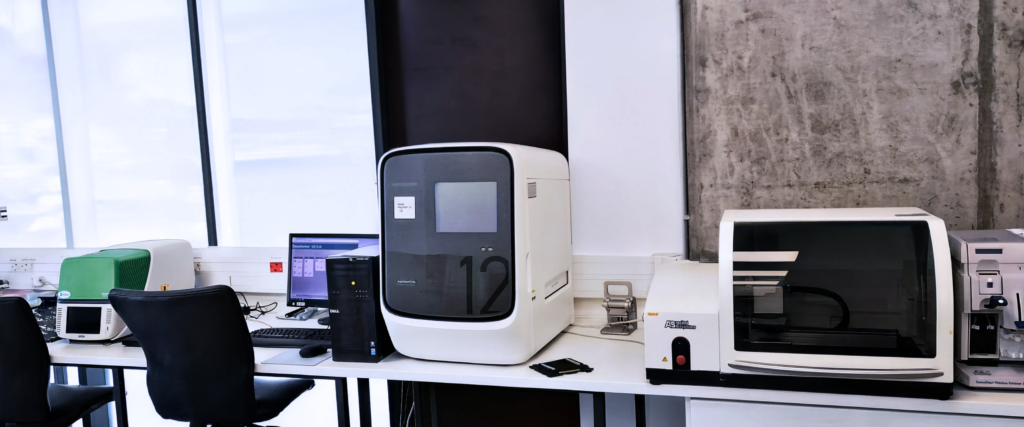
The CPGR’s long-read sequencing capability achieves 50-100 Gb ultra-long native DNA reads on the PromethION24 by Oxford Nanopore Technologies. This technology allows researchers to analyze long DNA molecules, uncover structural variation, and investigate complex genomic regions that are difficult to resolve with traditional sequencing approaches.
Discover how CPGR’s Long-Read Sequencing (P24) platform can support your genomics research projects.